
 LU konference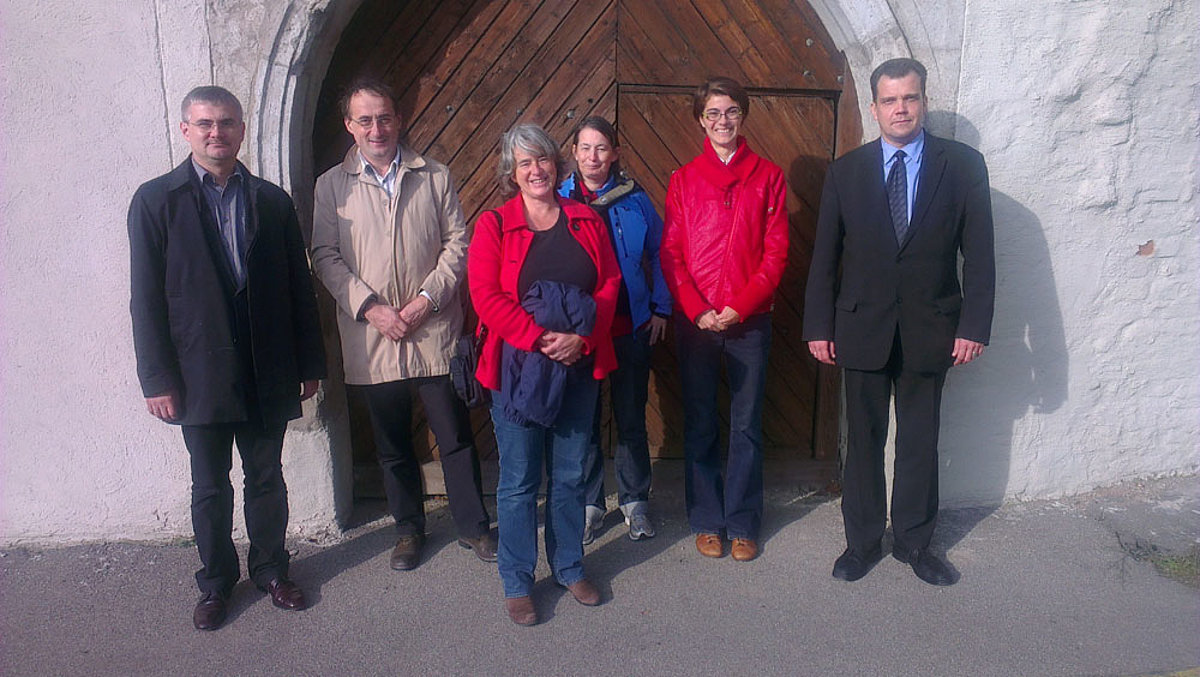
The project began in 2010 as part of the European Commission’s Lifelong Learning Programme Leonardo da Vinci. It continued elaboration of distance or e-learning material in the domain of the European archaeological heritage. Groundwork had been provided by the previous projects – "E-learning as a tool of knowledge transfer in the field of protection and management of archaeological heritage” (with the participation of the University of Latvia) and “Archaeology and Construction Engineering Skills” – within the same programme. Both of these projects were completed in 2007–2009.
The project on the vocational training system produced a volume of interactive learning material on 20 issues in the archaeological heritage domain, specifically on the theoretical facets of heritage, discovery and research of archaeological evidence (especially non-destructive research methods, e.g. geophysical methods, archaeology, the Geographic Information System), the relationship between archaeology, politics and archaeological community, promotion of archaeological heritage, protection and management of archaeological heritage including the international law on cultural heritage, illegal trade of artifacts, the role of archaeology in planning for sustainable development, and commercial archaeology as well as separate directions in topical archaeological research (hydro archaeology and urban archaeology). These and other aspects of protection, research and management of the European archaeological heritage were studied theoretically as well as by analyzing practical solutions to relevant issues.
The ready-made material will be available in English, Polish, Spanish and Latvian to make it accessible for a wider range of researchers in cultural and archaeological heritage. The project seminar in Riga summarized experience in the production of curriculum and distance learning in the project-involved countries; it stressed the potential of the produced learning material that allows to transform the course resources available electronically into curricula for a variety of target groups (e.g. students, cultural heritage specialists, museum staff, teachers, local authorities, experts on territorial development, construction specialists) in a very wide thematic range. The project also includes establishing of a virtual repository of the learning resources where teaching staff would be able to find the relevant materials and use them in teaching.
The leading partner of the project is the Institute of Prehistory at Adam Mickiewicz University, Faculty of History (Poznan, Poland). The UL Faculty of History and Philosophy participates in the project together with the Department of Historical Studies at the University of Gothenburg (Sweden), the Institute of Archaeology at the University of Amsterdam (the Netherlands), the non-profit scientific association “The Aranzadi Society of Sciences” (Spain) and the public organization “The Institute of Archaeology” (United Kingdom).
Find more information on the project here: www.e-archaeology.org
Translated by students of the professional study programme Translator of the University of Latvia.
Translated by students of the professional study programme Translator of the University of Latvia.
