
 LU konference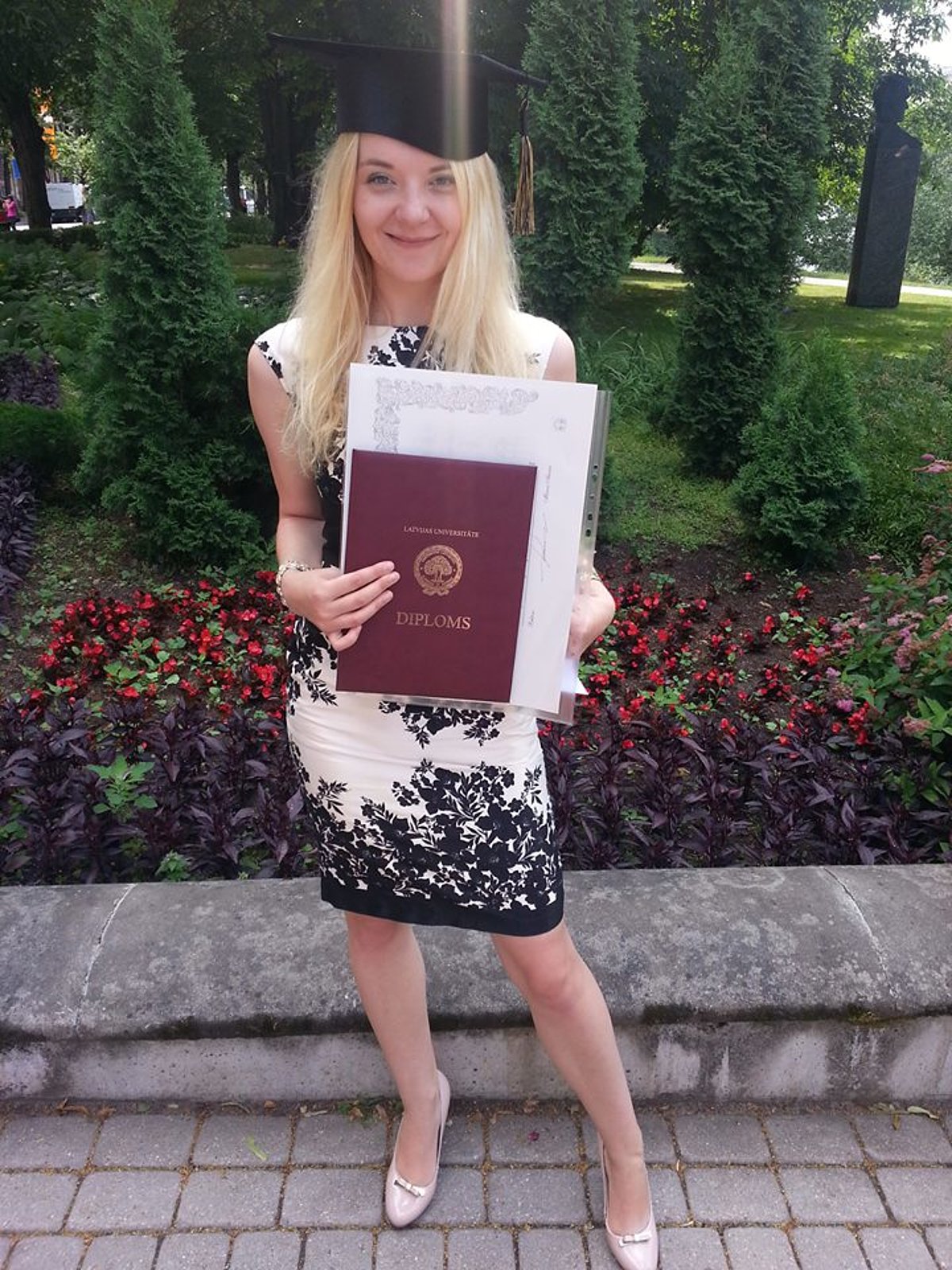
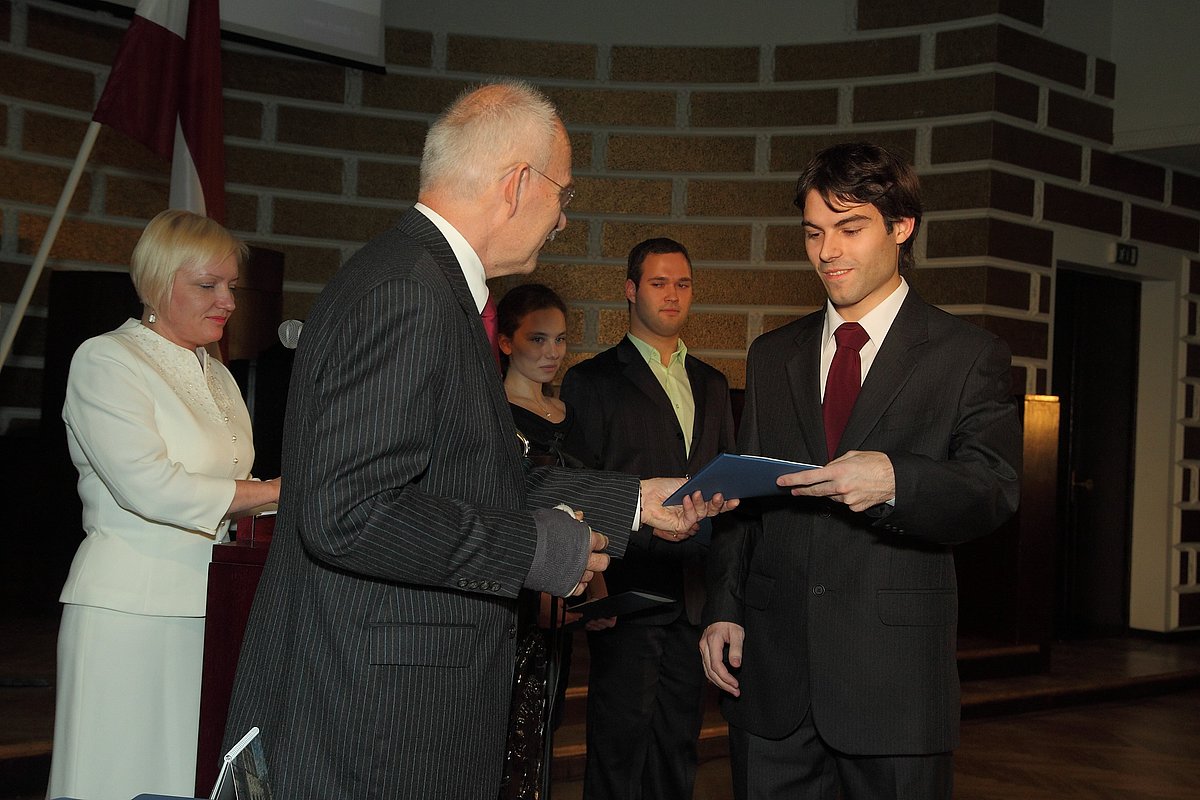
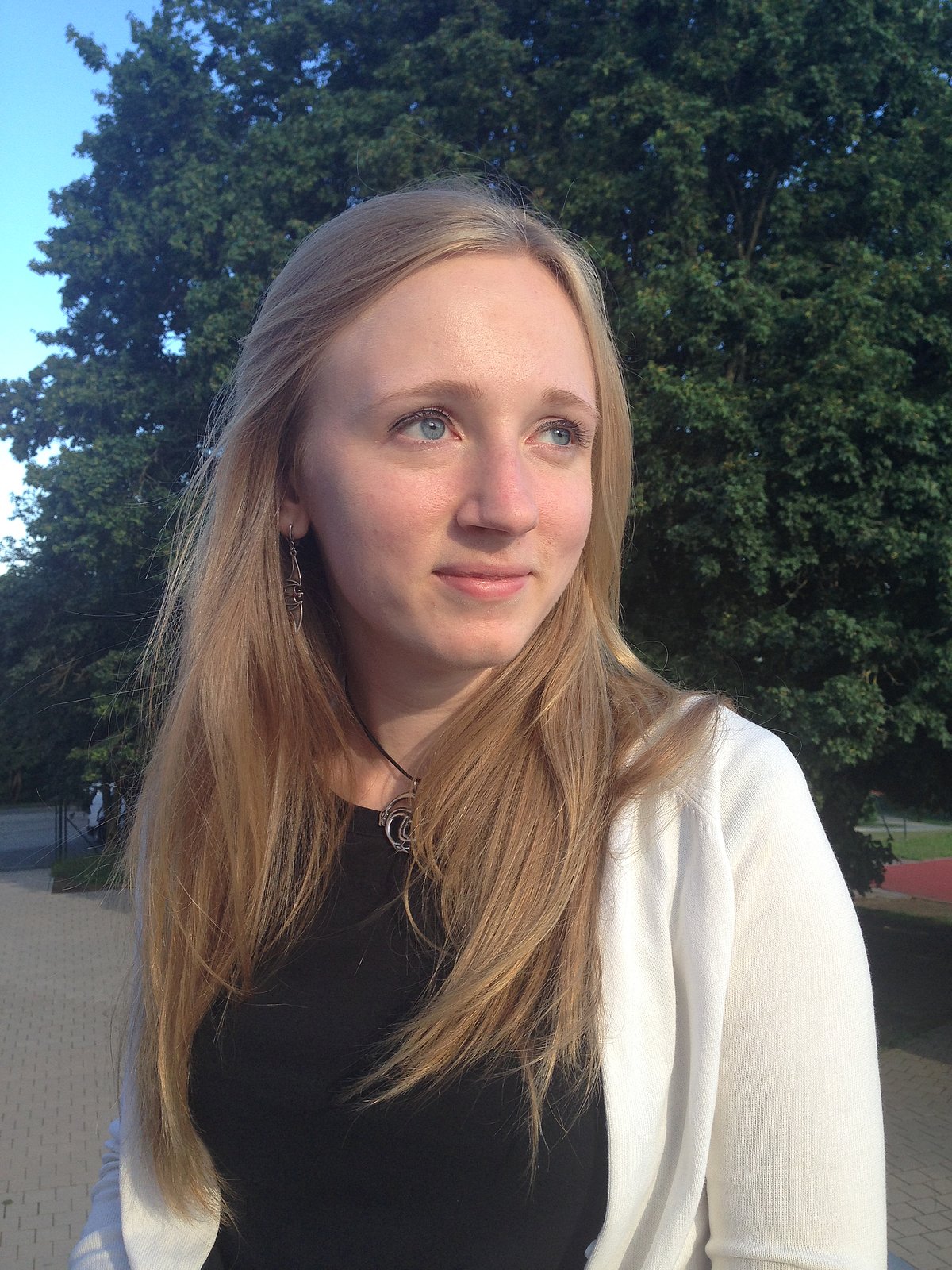
These are five stories about UL honours students who, in addition to receiving various grants and top grades in their studies, have found a field that is both challenging and rewarding.
Inga Jēkabsone with the gene of excellence
UL Faculty of Economics and Management, Master’s Degree in Economics
At 8 o’clock in the morning at the UL Faculty of Economics and Management, where several years have been spent studying, Inga explains that she possesses the gene of excellence; she just cannot do things superficially! ‘I don’t know what the key to receiving good marks is. I am simply conscientious! I do everything in time; I study systematically and don’t leave things for the last moment.’ Therefore, examination periods have not caused her worry or sleepless nights. The only ‘crisis management’ method Inga uses is to get up early, at 5a.m., and devote two hours to revising all of the material so that some of it stays in the short-term memory.
Upon graduating her Master’s studies, Inga received a diploma with honours, known as a red diploma. She is planning to hang it on the wall at her new workplace. ‘Red diplomas are beautiful! And I am not ashamed to acknowledge that I’ve deserved it. So much work has been invested; it gives me the feeling of fulfilment.’
In the future, Inga plans to pursue a doctorate. She deliberately went to doctoral studies: ‘I knew I wanted to be a PhD student. At the time, when communicating with PhD students, I couldn’t wait to reach their level of knowledge. Already in secondary school my dream was to form an academic career at the UL. Now I am not 100 per cent sure of it, but I haven’t abandoned the idea altogether.’
She admits having had a different, slightly contemptuous view of students with excellent grades during secondary school. The attitude at the University is completely different. This is the place you feel good about your excellent marks.
Inga believes that honours students’ possess an inner motivation and confidence in their strengths. Therefore, her slogan is that nothing is impossible, you only have to try harder!
Jevgēnijs Vihrovs for persistent work
UL Faculty of Computing, Bachelor of Science in Computer Science
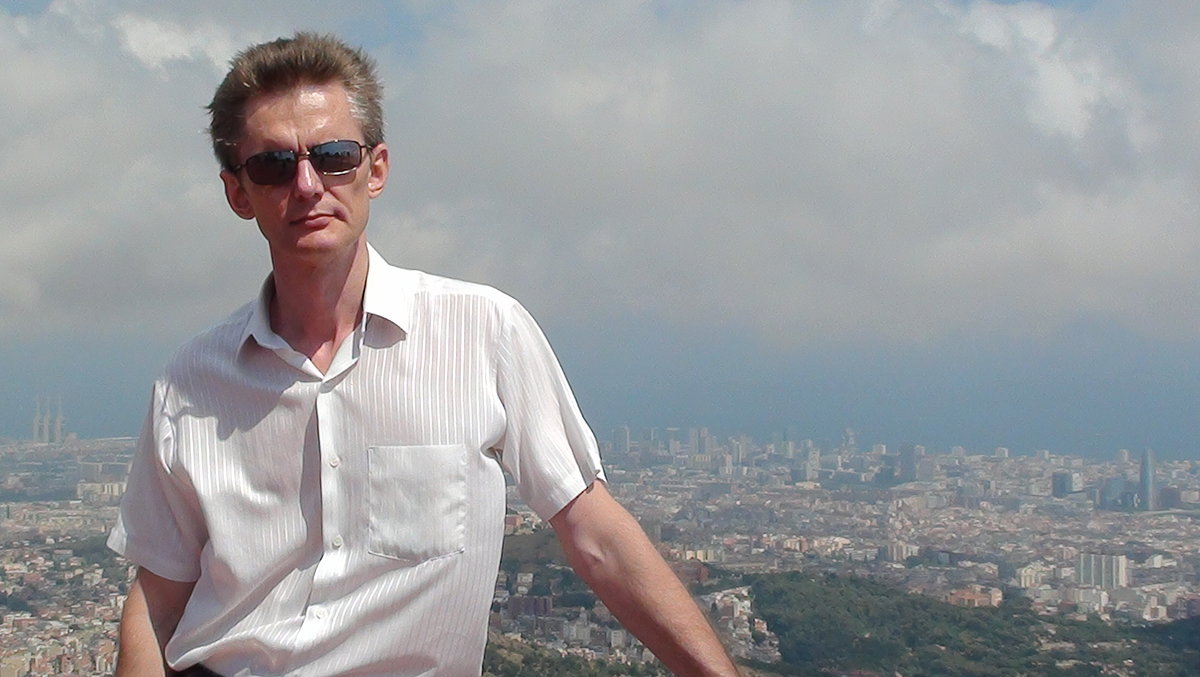
Jevgēnijs is a true computer freak, who has just returned from the UL Computer Science Days 2013. Despite being tired after a three-day conference, he explains that he planned his study schedule himself because all the study material was available on e-studies. The key to good grades is doing everything in time.
In addition to receiving high marks in his studies, Jevgēnijs has participated in several International Collegiate Programming Contests. During the contests, Jevgēnijs and his team of three people were given five hours to solve several challenging algorithmic tasks. Last year, together with Eduards Kaļiņičenko and Normunds Vilciņš, he achieved a shared 18th place.
Already at school, Jevgēnijs participated in mathematics and computer science olympiads, he wanted to study at physics and mathematics, but his brother Andrejs, a student at the UL Faculty of Computing at the time, convinced him to choose computing. By the way, his brother is also an honours student, but Jevgēnijs denies there being any competition between them. Now Jevgēņijs works at the UL Institute of Mathematics and Computer Science where he helps to put together tasks for mathematics and computer science olympiads and participates in organizing matters.
Although the theme of Jevgēnijs’ Bachelor Paper is, as he says, ‘pure mathematics’, and it was assessed to be excellent, he points out that he prefers practical work. ‘If you are excellent at studies and you have the red diploma, it doesn’t necessarily mean an academic career in future. Yes, there is pressure to do research and write scientific articles, but I prefer programming.’
Jevgēnijs defines an honours student as one who works persistently and reaches his goals. He has received Charles Babbage Award as best student of the UL Faculty of Computing, and admits that it is not a pleasure to get an 8 in his test scores. Jevgēnijs claims that, from the point of view of mathematics, it is better to do things straight off, as it guarantees the best results. Besides, he advises rewarding yourself only after the work is done.
Rūta Veinalde: biology allows us to understand the world
UL Faculty of Biology, Master of Science in Biology
Rūta points out that the term ‘honours student’ confuses her because she does not pay much attention to her grades. She considers that it is not difficult to get high grades if you have true interest in the subject matter. ‘Besides an evaluation doesn’t mean that those with higher grades are better in real life work. Those are only numbers!’
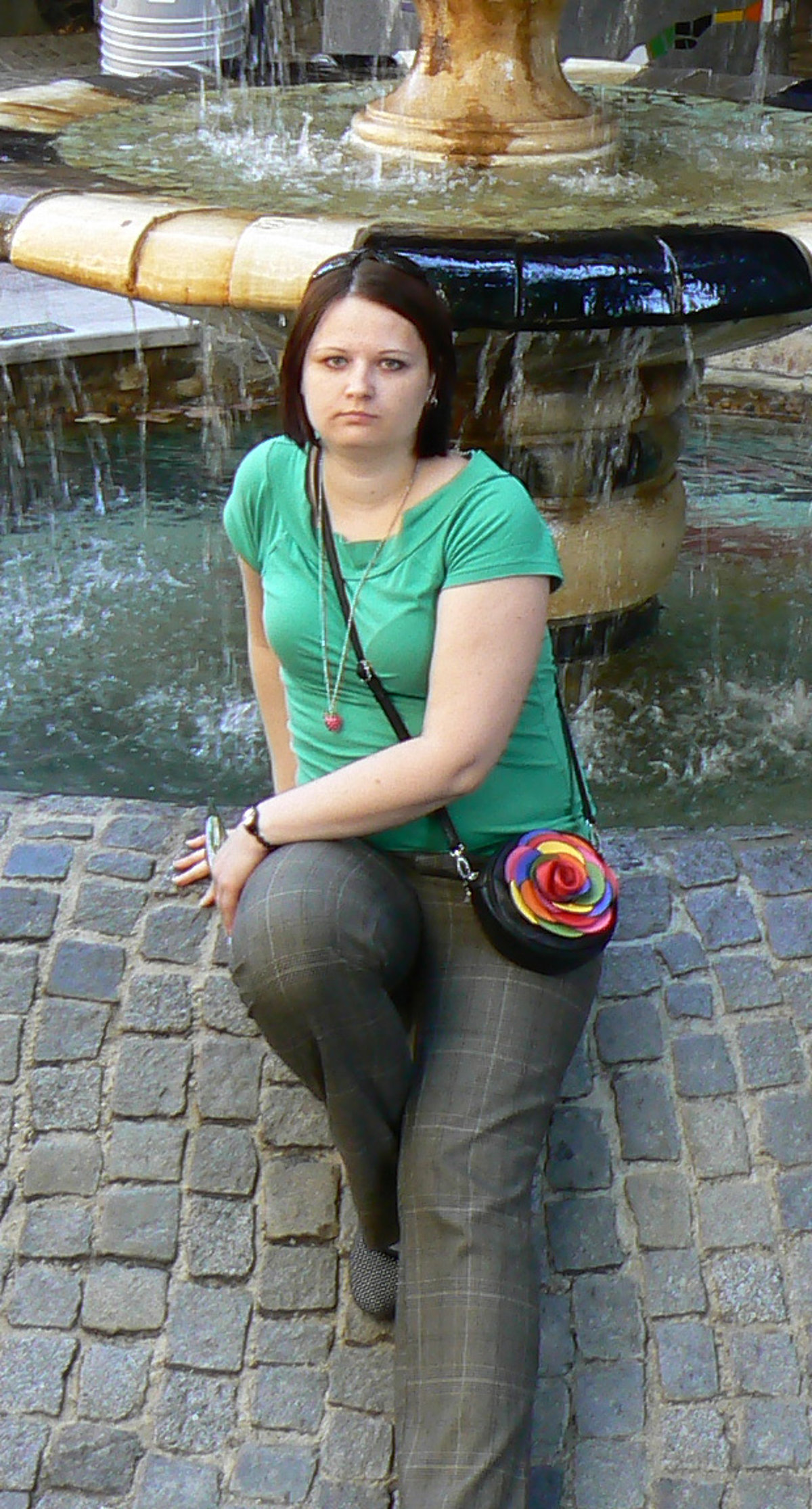
Rūta is a molecular biologist; she is also rather self-critical. Although her Masters’ Paper was evaluated with a 10, she indicates that there are still some mistakes that should be corrected. ‘Biologists are like physicists, because we, too, want to understand the world. And I am interested in biology not only as a science but as a way for me to understand the world around me.’
Already during elementary school, biology lessons were the ones Rūta expected the most. She considered studying medicine because she wanted to find some practical use for education. ‘Nevertheless, I chose biology and after 5 years of studies, I realize that everything depends on me.’ Now Rūta works as a scientific assistant at Latvian Biomedical Research and Study Centre. She emphasizes that science is exciting: in the process of research it may turn out that the solution is to be found somewhere else. ‘Starting work in one place can lead you to the next and so on. Science is the unknown; therefore, I can’t say anything about my future plans; I haven’t decided about Doctoral Studies, either.
The formula of success is simple: if you want to do more, do more. The less free time, the more you can do. Everything depends on time management. Besides, you must devote time only to what you love. You must find a feeling inside you that tells you are in the right place.’ Rūta says with confidence.
Jānis Misiņš about successful circumstance contingency
UL Faculty of Medicine, doctoral degree candidate
Jānis is found in the territory of Hospital of Traumatology and Orthopaedics, the Centre for Disease Prevention and Control. After 6 years of doctoral studies at the UL, Jānis finishes his studies in the fall.
He made his first serious decision to focus on medicine when he was 16 and worked as an operating room attendant at the Hospital of Traumatology and Orthopaedics during his summer vacation. ‘I wanted to know what doctors’ everyday life is like; the white robe also seemed romantic. Though others were convinced the romance would disappear in real life and I would quit medicine, I spent all of my secondary school years working at the hospital. My initial thought about architecture was forgotten and, although everyone was trying to discourage me from studying medicine, I made the decision during my final year of secondary school.’
In 1995, Jānis graduated the Riga Medical Institute (now Riga Stradiņš University) and worked as a trauma surgeon for several years. Jānis has been busy in the field of health statistics and research for 14 years now. He indicates that much depends on luck is surprised that his grades are so high. ‘Probably, it is a testimony for the work contributed and not fooling around. The doctoral thesis has been finished and the only thing left is the presentation.’
Jānis describes himself as very determined; he remembers his study years with a smile; it was a fun time. ‘It allows you to keep focused; besides doctoral studies require constant self-development. You must maintain a high level of knowledge, or else students might drive you to the wall with their questions. Last year of writing the doctoral thesis was especially intense; I was writing constantly. I usually try to do things at once and as well as I possibly can, since I don’t like doing the same thing twice.’
Laura Hūne with the red diploma as a goal
Faculty of Humanities, Bachelors’ degree in English philology
‘Blonds who don’t know what they want to study, that is the stereotype about English philologists,’ says Laura. She is a brunette who loves British TV series, such as ‘Downton Abbey’ and ‘Keeping up Appearances’, and subtle British black humour.
The sciences are closer to heart for her mom, dad and sister, which makes Laura the only member of her family representing the humanities. Her initial choice was to study information technologies. Laura has also tried to study geography and history, but in the end, she chose English as a subject closer to her heart. Bachelor studies and the first year in Master studies are behind her already with the Master’s thesis looming like a black cloud.
‘I’ve been conscientious ever since I can remember myself. In school, my older sister set the bar high participating in various olympiads, which might be the reason for my competitive nature.’ Laura confesses she was not the most dutiful student; she cut classes and did things at the last moment as well. Her silent goal is to graduate her Master’s studies with a red diploma.
Ironically, in secondary school, her only ‘average’ mark was in English! She laughs about that and speaks about her future plans: a well-earned rest and a trip to Scotland to enjoy the nature and atmosphere. At the moment, she is still enjoying her studies and acknowledges that in a year she would miss them ’.
Translated by students of the professional study programme Translator of the University of Latvia.
Translated by students of the professional study programme Translator of the University of Latvia.
 who really love their studies and what they are doing in life. Therefore, their average grade is not lower than 9. )