
 LU konference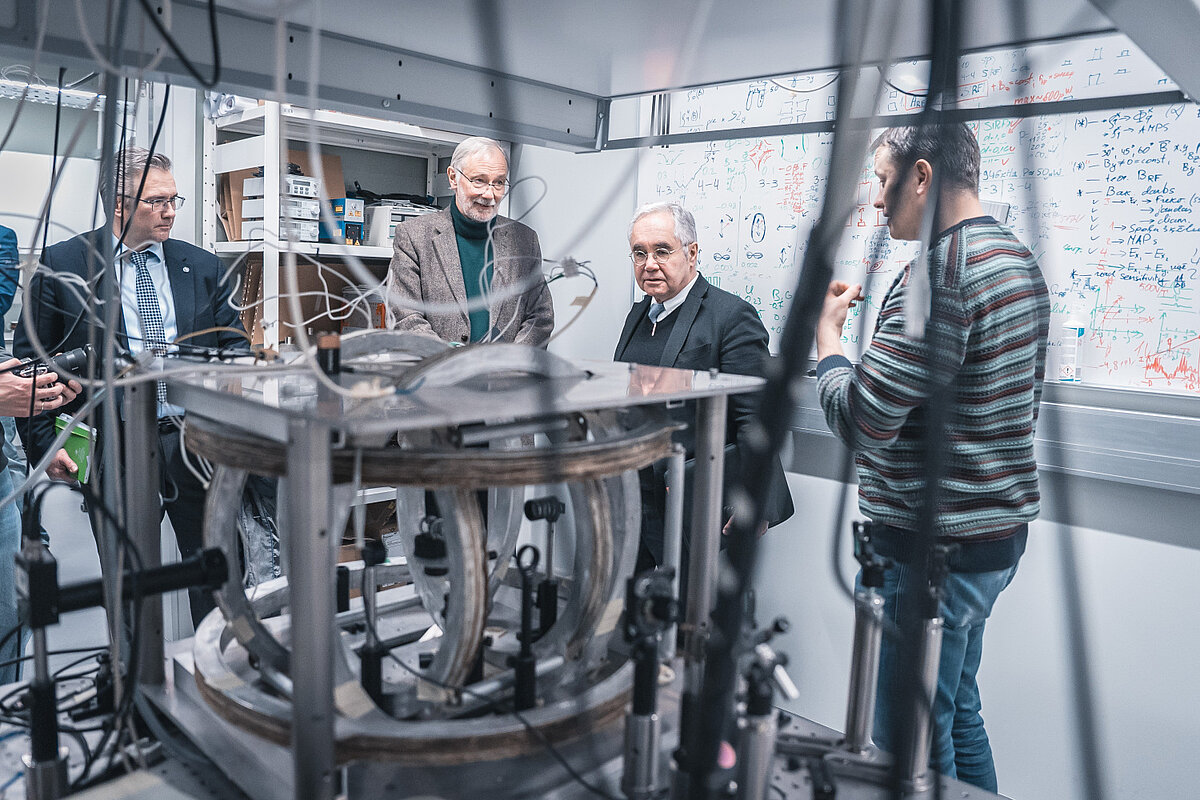
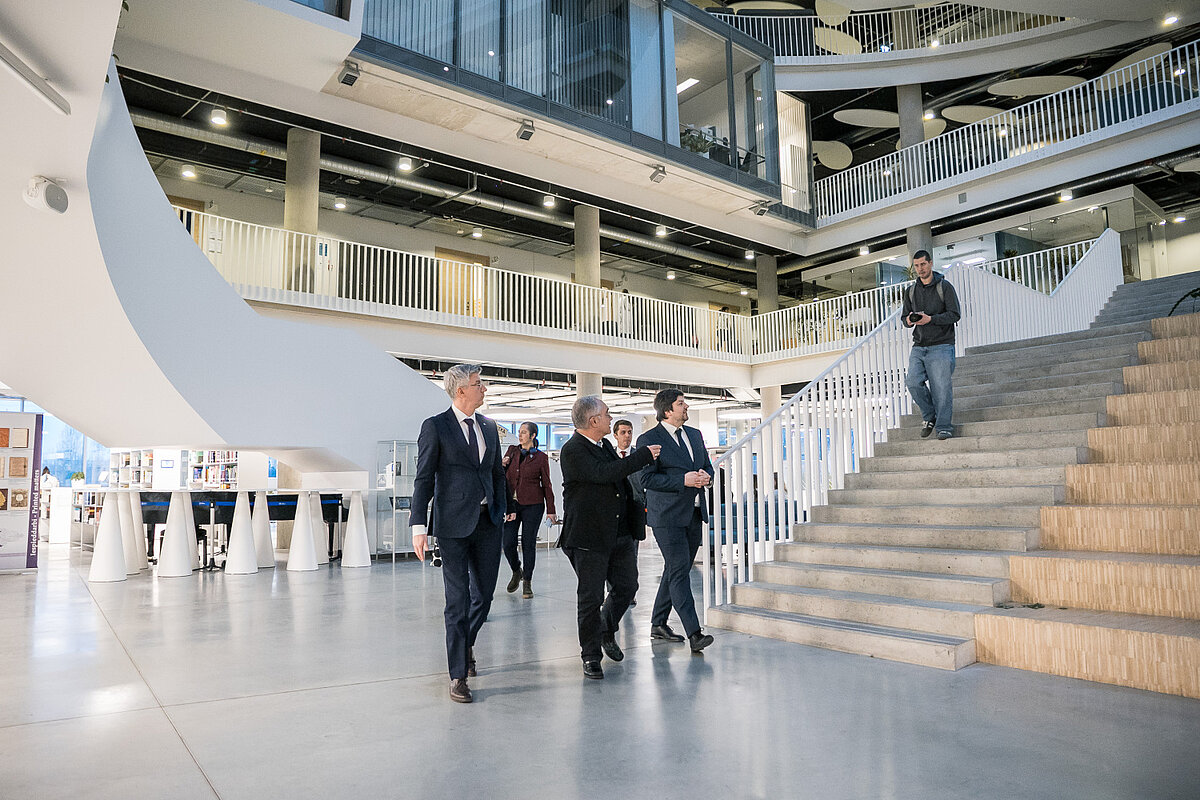
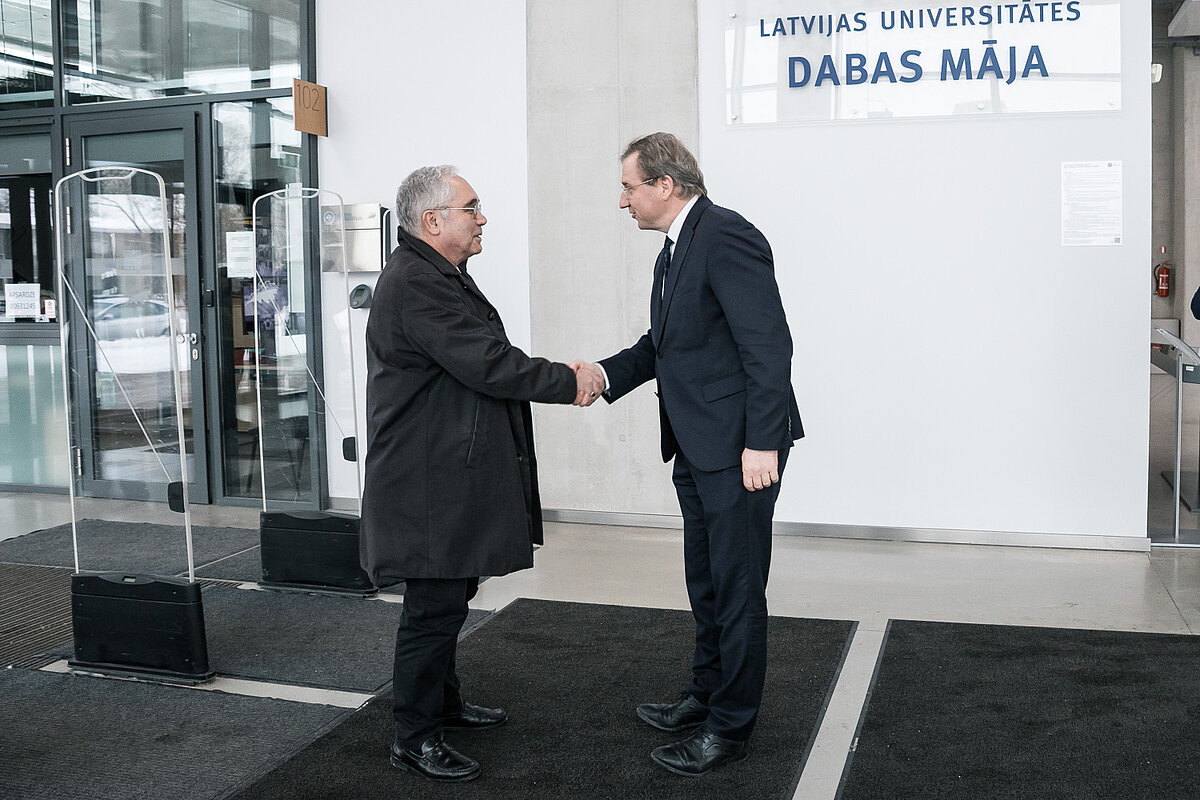

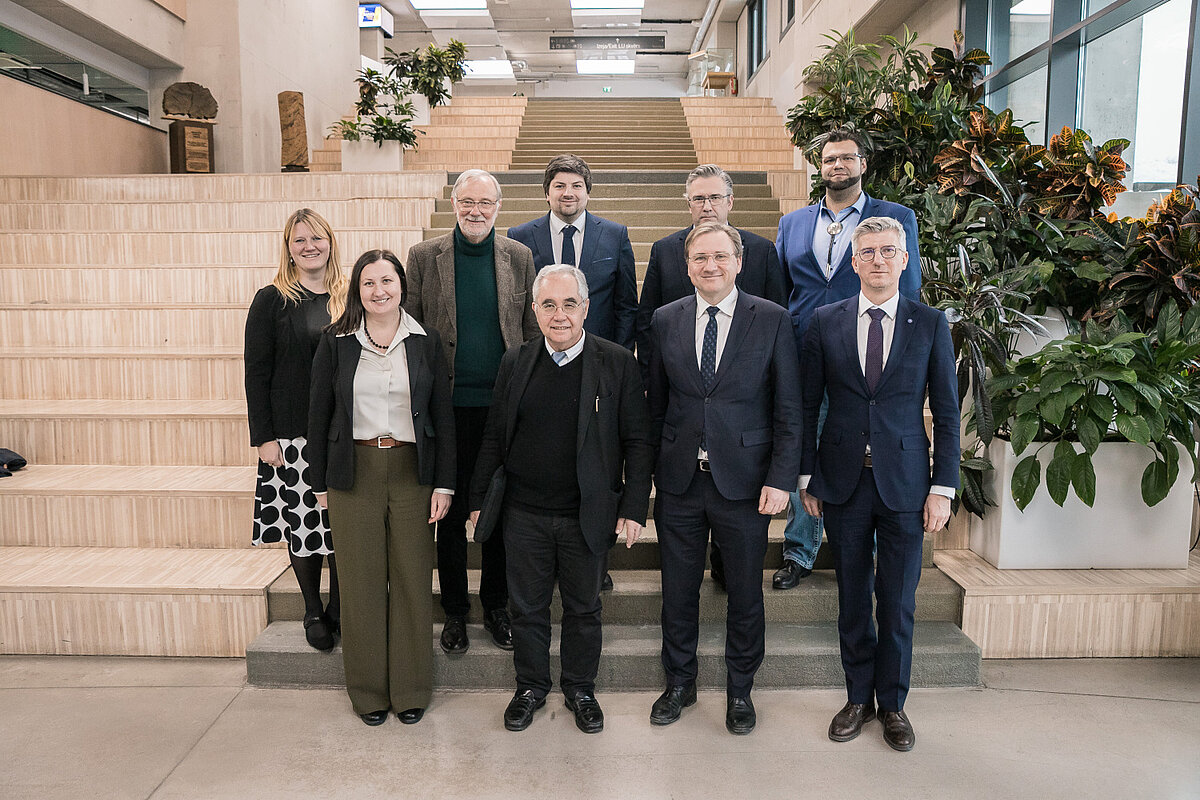
The CERN Council President was welcomed at the UL Academic Centre, House of Nature by UL Rector Gundars Bērziņš, Vice-Rector for Science Guntars Kitenbergs, Vice-Rector for Development Enno Ence and the Chair of the UL Council Mārcis Auziņš. The talks focused on the role of UL in CERN cooperation, scientific capacity and the development of particle physics in Latvia. The distinguished guest was also received by the Dean of the UL Faculty of Science and Technology (FST) Aigars Ekers, the Director of the UL FST Institute of Chemical Physics Elīna Pajuste and the Director of the UL Innovation Acceleration Centre Gunita Deksne.
Cooperation with CERN has significantly accelerated the development of high-energy physics and accelerator technologies in Latvia, providing Latvian scientists and students with opportunities to participate in the work of CERN.
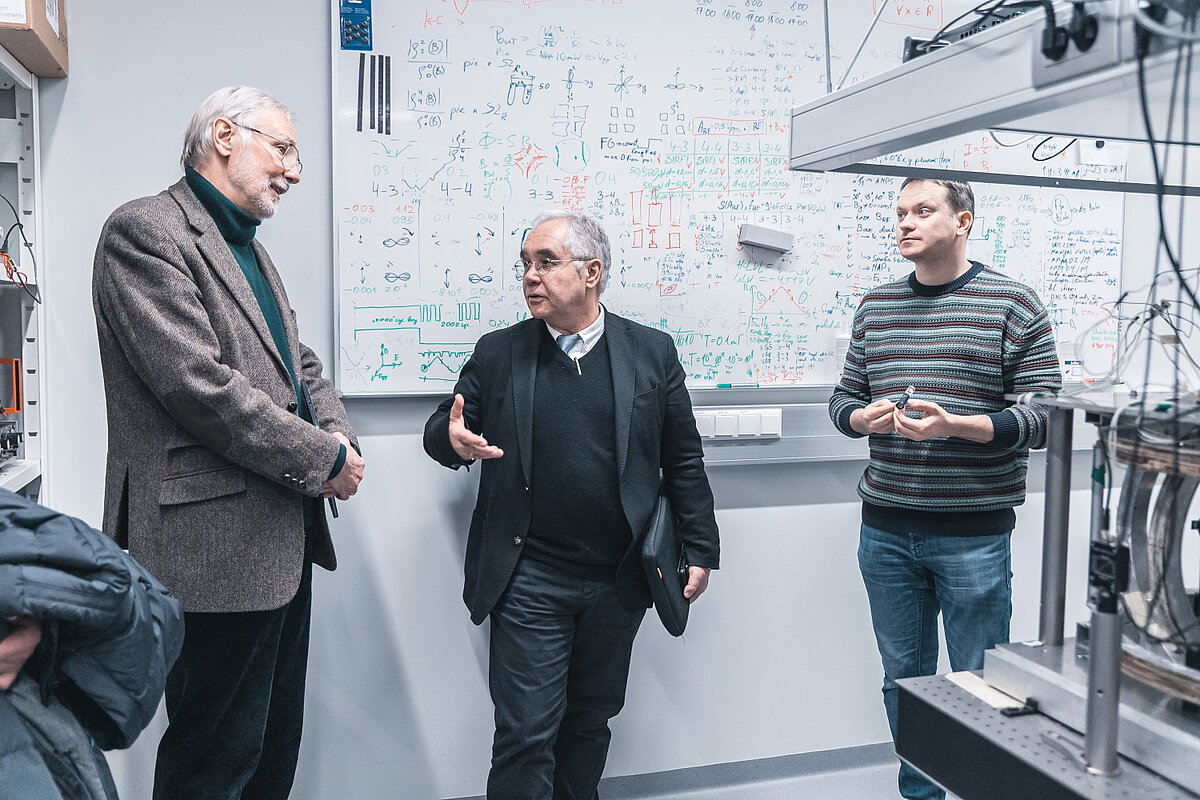
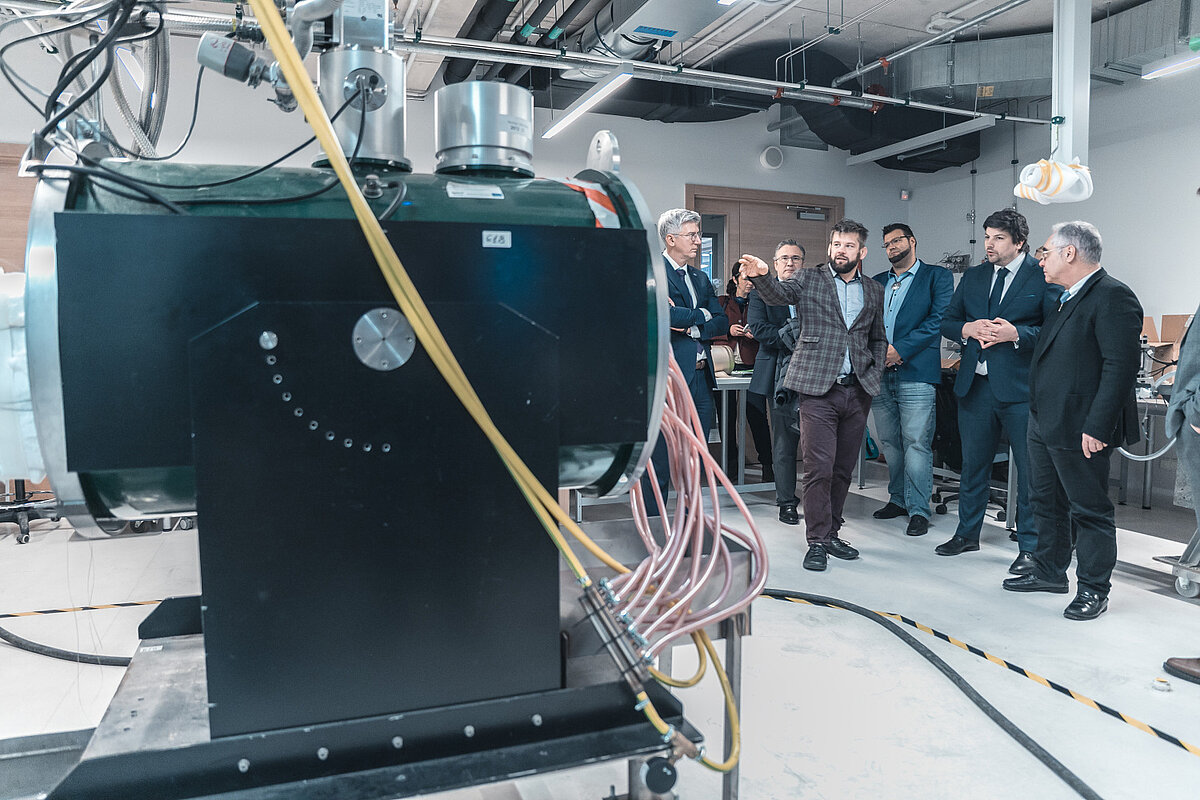
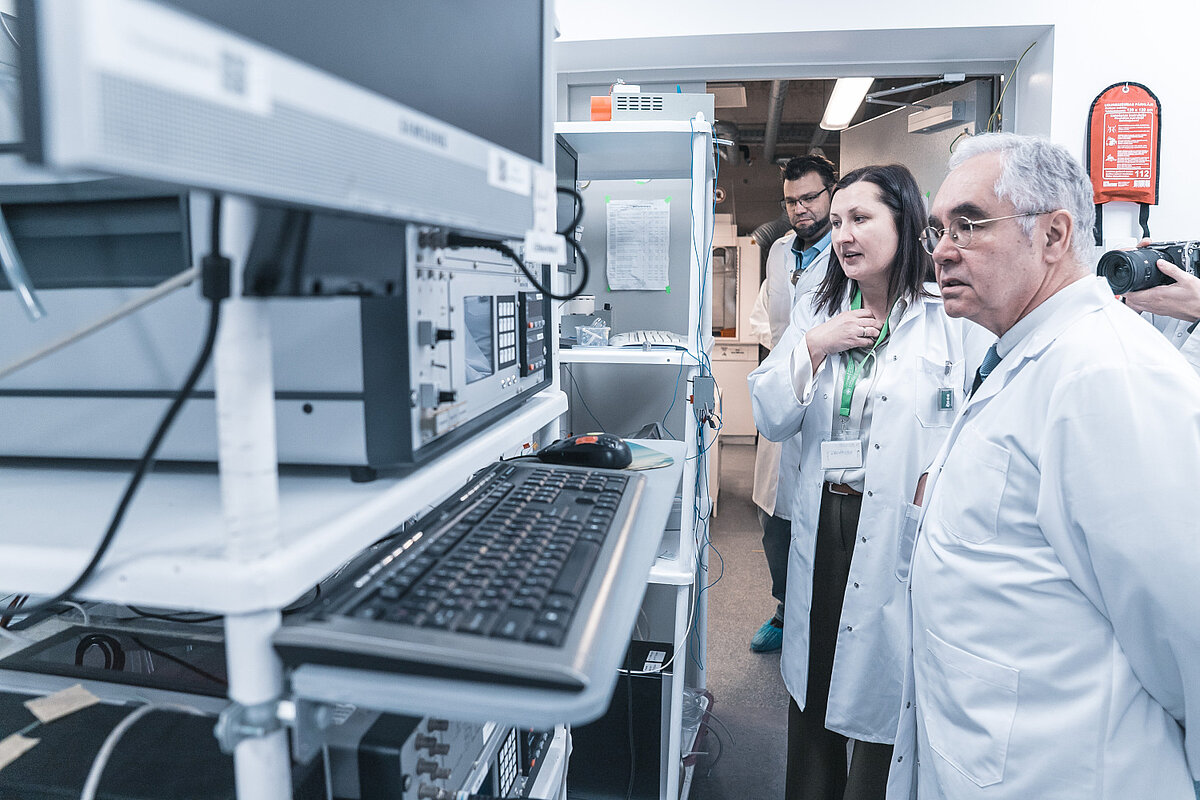
The President of the CERN Council could further ascertain the high potential of UL in science and research by visiting the FST Laser Centre, the Institute of Chemical Physics and the Institute of Physics. In all laboratories, C. Fountas engaged in conversations with researchers, discussing various issues in the field of physics and the progress of the ongoing experiments.
Latvia has officially expressed its desire to become a full CERN Member State, and during the visit, Latvian scientific institutions and decision-makers affirmed the country’s readiness and potential for long-term cooperation with this science centre.
Experimental high-energy particle physics is one of the most prominent scientific fields worldwide, and Latvia – an Associate Member State of CERN since 2 August 2021 – aspires to integrate even more closely into this scientific community of global significance. With this goal in mind, for nearly a decade the country has been purposefully building its particle physics community, also involving other key science and engineering disciplines closely linked to CERN.
Cooperation of Latvia with CERN
Collaboration with CERN has significantly accelerated the development of high-energy physics and accelerator technologies in Latvia, provided Latvian scientists and students – particle physicists and engineers alike – with opportunities to participate in the work of this globally significant scientific institution. Latvian researchers are involved in the CMS (Compact Muon Solenoid) and AEgIS (Antimatter Experiment: Gravity, Interferometry, Spectroscopy) experiments, conducting fundamental research, while Latvia’s scientific collaboration with CERN is far more diverse. For example, Latvia also participates in the MEDICIS (Medical Isotopes Collected from ISOLDE) project experiment.
To foster the next generation of scientists, Latvia has established a joint doctoral programme implemented by UL and Riga Technical University, “Particle Physics and Accelerator Technologies”, which enables the students to carry out their doctoral research at CERN. In December, Andris Potrebko defended his doctoral thesis, becoming the first person in Latvia to earn a PhD in physics and astronomy specializing in particle physics. This programme is a testimony of the productive cooperation between Latvia’s largest research universities, ensuring the education of young scientists to support both long-term collaboration with CERN and the continued advancement of research excellence in Latvia.
Located on the border between Switzerland and France, over the decades CERN has become one of the world’s most influential scientific centres, where new physical phenomena have been discovered and technologies developed for the benefit of society. Although CERN was established primarily for fundamental research, it has also produced discoveries unrelated directly to particle physics that have had a profound impact on everyday life. One notable example is the creation of the World Wide Web (www) data transfer protocol in 1989. CERN’s accelerator technologies have likewise found broader applications, including in the treatment and diagnosis of oncological diseases.
C. Fountas is a professor of physics who adopted the responsibilities of President of the CERN Council one year ago, on 1 January 2025. Prior to this, he held several positions within the CMS leadership at CERN and served as Vice-President of the CERN Council from 2022. He has also led the high-energy physics group at the University of Ioannina in Greece, earned his doctoral degree at Columbia University, worked at the University of Wisconsin, and since 2000 has been affiliated with King’s College London, where he also joined the CERN CMS collaboration group.
, visited the University of Latvia (UL). During his two-day visit to Latvia, he aims to gain an insight into the scientific achievements of Latvian researchers and the accomplishments of the country in building a particle physics community.)