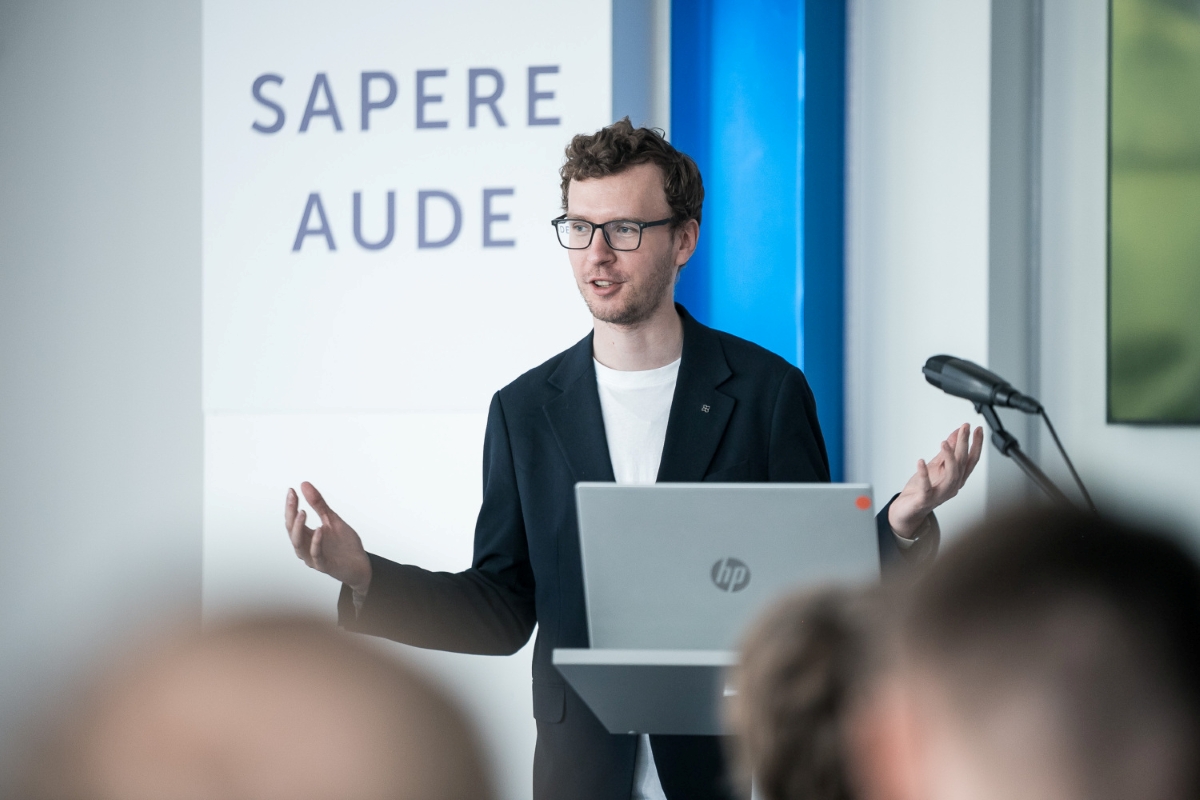
The training programme opened with a video message from UL tenured professor and quantum physicist Vyacheslavs Kashcheyevs, who encouraged researchers to share their work with enthusiasm and to convey the joy of discovery: "Each of us has a unique story to tell. Whenever I share my own stories, I try to remember the excitement I felt when I first learned, understood or discovered something new. If the audience can experience even a small part of that excitement, then the communication has succeeded."
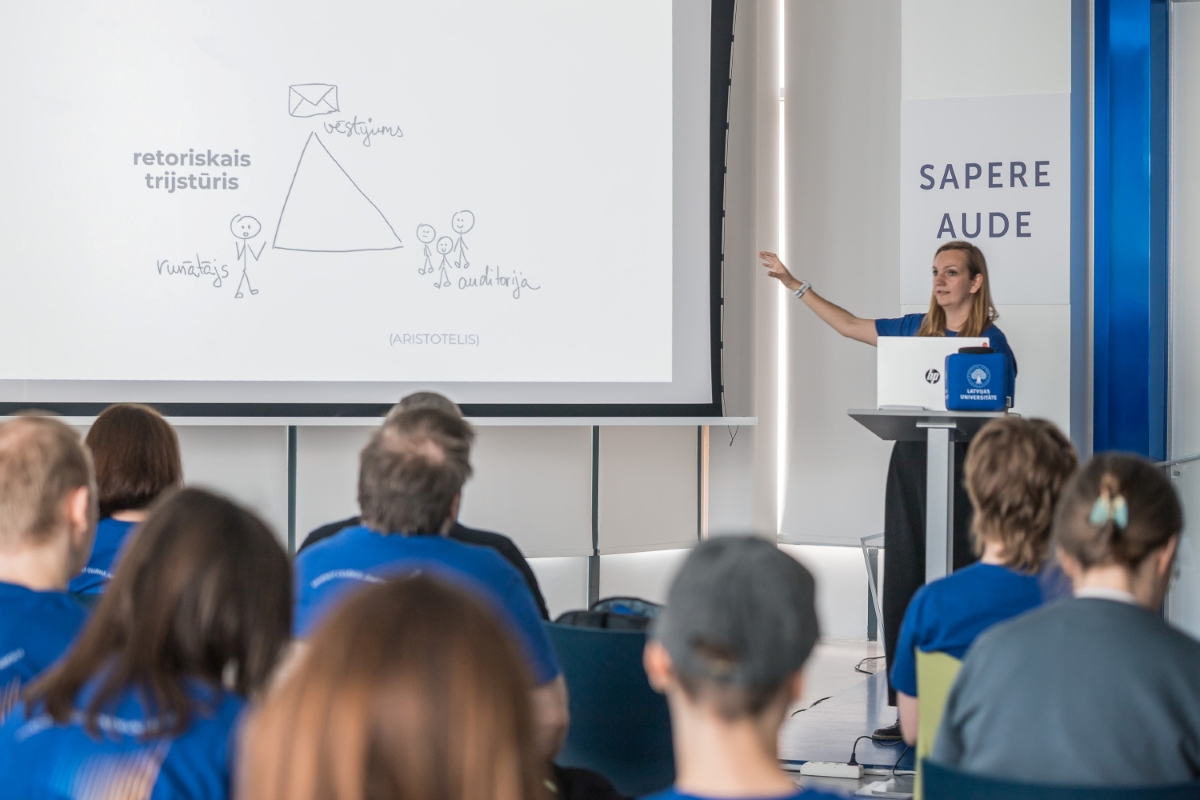
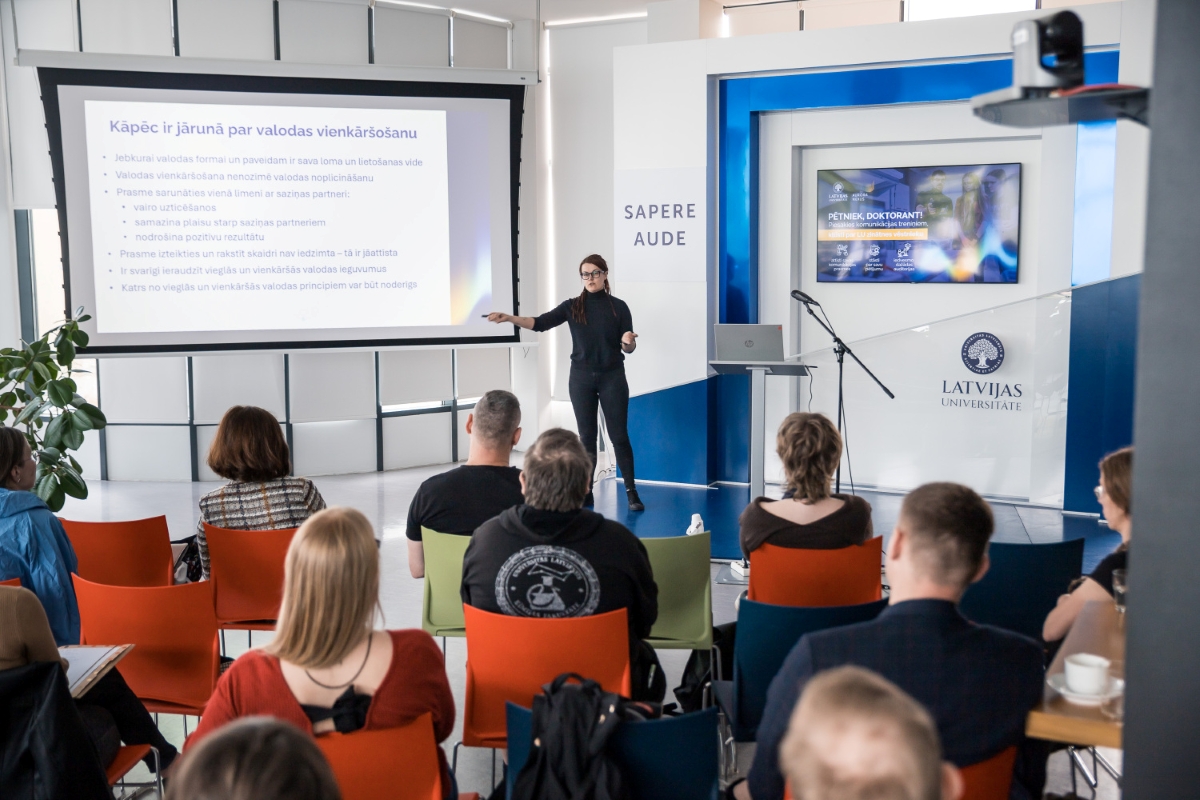
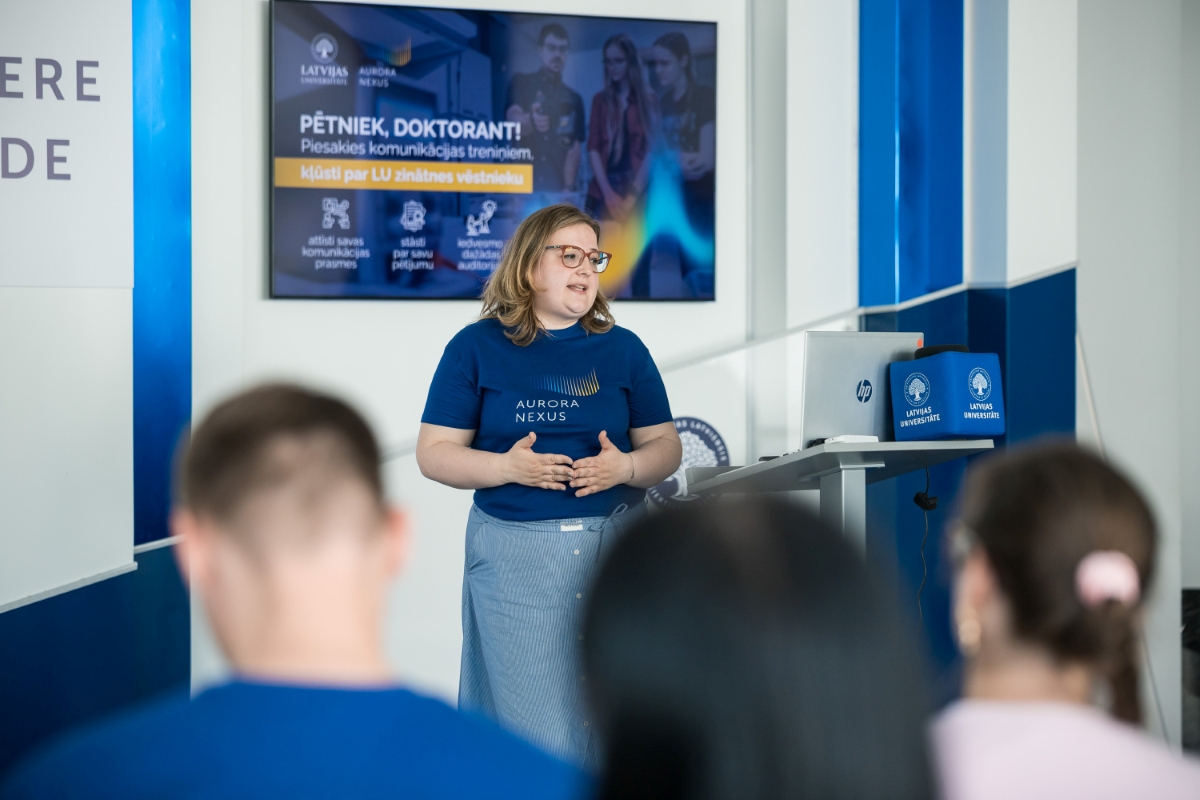
The programme aims to strengthen the ability of University of Latvia researchers and doctoral students to communicate their research confidently, fostering stronger connections between science and society. During two days of training, participants expanded their knowledge of the principles of science communication, storytelling, plain language, visual communication and other essential communication skills. The programme was delivered by a team of four UL lecturers: Associate Professor Sanita Baranova of the Department of Educational Sciences and Pedagogical Innovations at the Faculty of Education Sciences and Psychology and Leading Researcher at the Institute of Pedagogical Sciences; Research Assistant Velga Polinska of the Institute of Latvian Language at the Faculty of Humanities; Mārtiņš Pričins, Lecturer at the Department of Communication and Information of the Faculty of Economics and Social Sciences and Doctoral Candidate in Social Sciences; and Velta Skolmeistere, Project Coordinator at the Faculty of Economics and Social Sciences and Scientific Secretary of the Institute of Social and Political Research.
"This is a programme I would gladly join as a participant myself," says M. Pričins, one of the programme lecturers. "It was a pleasure to contribute as a lecturer and share my experience in science communication and storytelling. I was inspired by the participants' genuine enthusiasm and commitment to improving their communication skills. Science communication is a subtle art – it requires both compelling personalities and meaningful research. I believe we have both, and now we simply need to continue developing our ability to engage different audiences."
The programme brought together representatives from a wide range of scientific disciplines, including doctoral students, early-career researchers and experienced scientists. The knowledge and practical skills acquired during the training will support participants both within academia and in public engagement activities, including conference presentations, media interviews, social media communication and other science outreach initiatives. Many participants will soon take part in other Aurora Nexus activities, including visits to schools, public events and initiatives that strengthen public engagement with science.
Participants also highlighted the value of the programme. One participant commented: "Thank you for this opportunity. It is an excellent initiative, and the two-day training was highly valuable for both my academic and research work. I sincerely appreciate the experience and look forward to future collaboration."
The UL Science Ambassadors Programme is implemented as part of the UL project “Aurora Nexus: Connecting People, Science & Art”. Over the next two years, the initiative aims to train more than 150 Science Ambassadors, creating a strong community of science communicators at the University of Latvia and strengthening connections between researchers and society.