


The exhibition is open to the public free of charge from 6 November 2026 to 13 March 2027 at the UL Library, Rūpniecības Street 10, Riga, during the Library’s opening hours.
The exhibition was developed as part of the UL’s science communication project “Aurora Nexus: Connecting People, Science and Art”. Through historical sources, scientific discoveries and artistic interpretation, it aims to inspire public curiosity and deepen understanding of the role of science in exploring the world, particularly among young people.
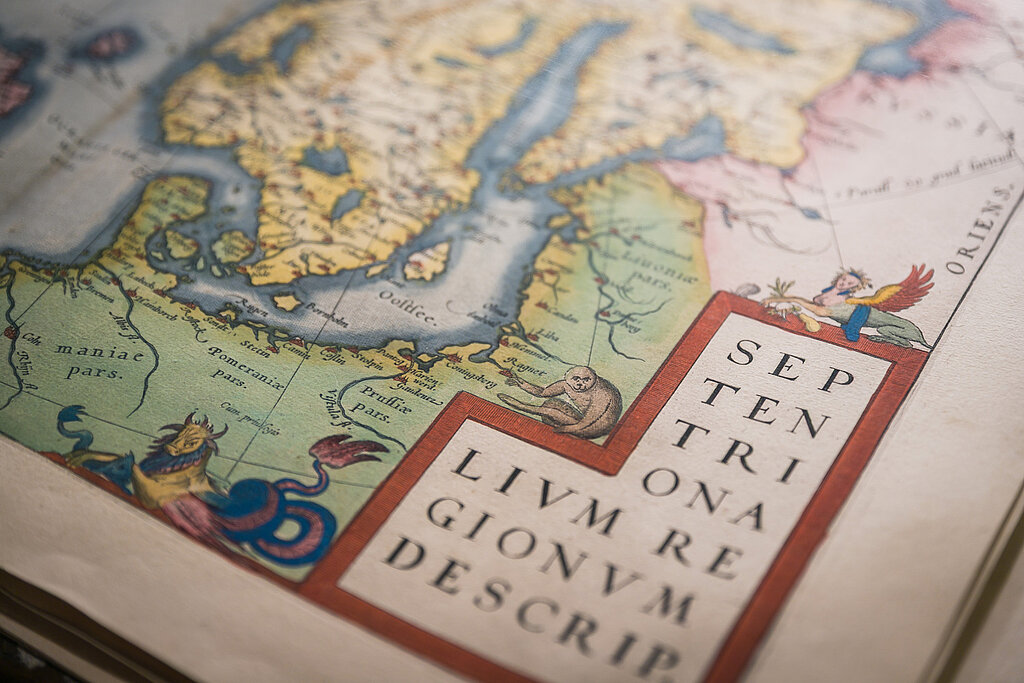
Unusual natural phenomena, comets, anatomical peculiarities, monsters and fantastical animals have stirred people’s imaginations, fears and curiosity for centuries. The centrepieces of the exhibition – early and rare books in which authors from different periods sought to understand and explain the world around them – trace the evolution of these ideas. The pages and engravings of these books reveal a shift from interpreting strange events as supernatural signs and warnings from God to observing and scientifically investigating unusual phenomena. Exhibits from the Pauls Stradiņš Museum of the History of Medicine are also on display.
In the ancient world, monsters were regarded as anomalies of nature, and the birth of a monster was seen as a sign of impending disaster. In Christian tradition, monsters and fantastical creatures were regarded both as warnings sent by God to those who had sinned greatly and as omens of evil.
“The unknown continues to spark our curiosity. Even in an age when information is more accessible than ever, we continue to seek answers to complex questions and learn to distinguish facts from assumptions. This exhibition takes us on a journey tracing humanity’s curiosity, showing how scientific discoveries have shaped our understanding of the world over the centuries. By bringing together historical sources, science and art, we make the history of science vivid and engaging for everyone,” says Klāvs Zariņš, PhD, Deputy Director of the UL Library.
At the centre of the exhibition is De monstroso partu (‘On Monstrous Birth’), a poem by the Riga-based humanist Daniel Hermann, held in the Bibliotheca Rigensis collection of the UL Library’s Rare Books and Manuscripts Library. Published in Riga in 1596, this Renaissance poem about a monster and its interpretation is likely the only surviving literary work on the subject written in Livonia.
The exhibition features significant printed works from the 15th to 18th centuries, with striking and even perplexing illustrations. These include works by some of the era’s most prominent cosmographers and chroniclers, including Sebastian Münster and Hartmann Schedel, as well as Caspar Hennenberger’s description of the lands of Prussia. The exhibition also includes books on astronomy and astrology, along with significant medical publications – notably Des monstres et prodiges (‘On Monsters and Marvels’) by the French surgeon Ambroise Paré, one of the best-known 16th-century works on bodily anomalies in humans and animals, unusual births and wondrous phenomena.
The exhibition’s title was inspired by a Lutheran congregational hymn composed in Germany in the late 16th century, ‘Es ist gewisslich an der Zeit’ (‘The Day Is Surely Drawing Near’). Translated into Latvian by Christoph Fürecker, it appeared in several editions of Latvian hymnbooks among Advent hymns devoted to the Last Judgement and eternity.
The exhibition is curated by Aija Taimiņa, Dr. philol., and Laura Kreigere-Liepiņa, Mg. hum.
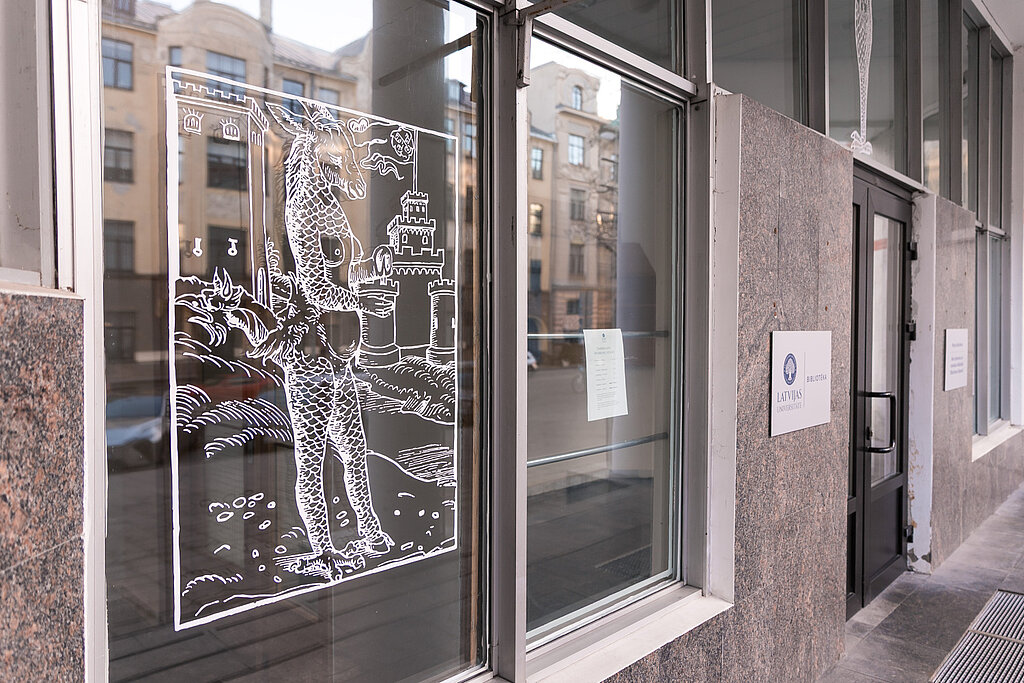
School and youth groups are especially welcome to explore how people’s ideas about unusual natural phenomena have changed over the centuries and how scientific inquiry has gradually challenged traditional myths and beliefs and transformed our understanding of the natural world. A visit to this unique exhibition will be a valuable complement to classroom learning, offering insights into lesser-known aspects of human history. Groups must book their visit in advance by completing the online registration form or contacting the UL Library at elina.sprude-nesenberga@lu.lv or by telephone on +371 2629 5583.
PHOTOS: Highlights from the Exhibition Opening.
The exhibition is part of the University of Latvia’s science communication project “Aurora Nexus: Connecting People, Science and Art” (Grant Agreement No. 101305570), funded by the European Union under the Horizon Europe programme through the Marie Skłodowska-Curie Actions (MSCA) initiative “MSCA and Citizens: European Researchers’ Night and Researchers at Schools 2026–2027”.
The Marie Skłodowska-Curie Actions support research, innovation, researchers’ career development, science communication and public engagement with science.

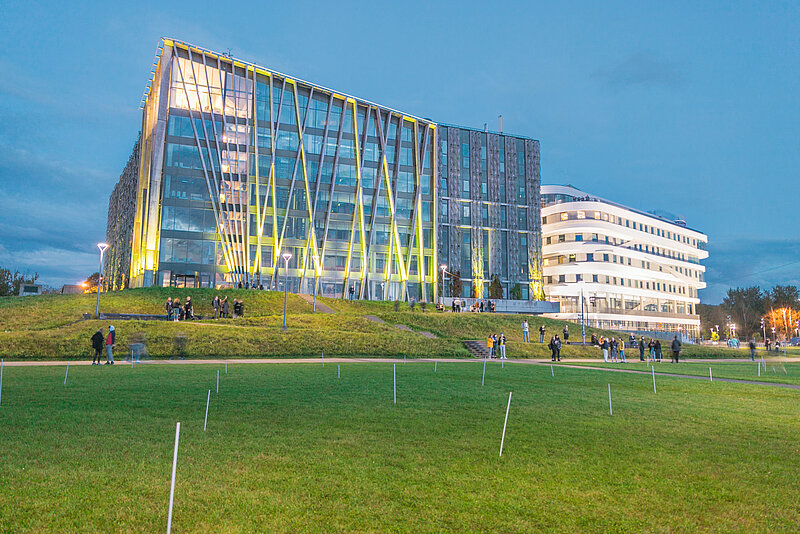
 Library invites visitors to the exhibition “The Day Is Surely Drawing Near: Monsters, Comets and the Apocalypse”. The exhibition explores how perceptions of the extraordinary – monsters, natural wonders, anatomical anomalies and celestial phenomena – have evolved throughout the history of European culture and science.)