
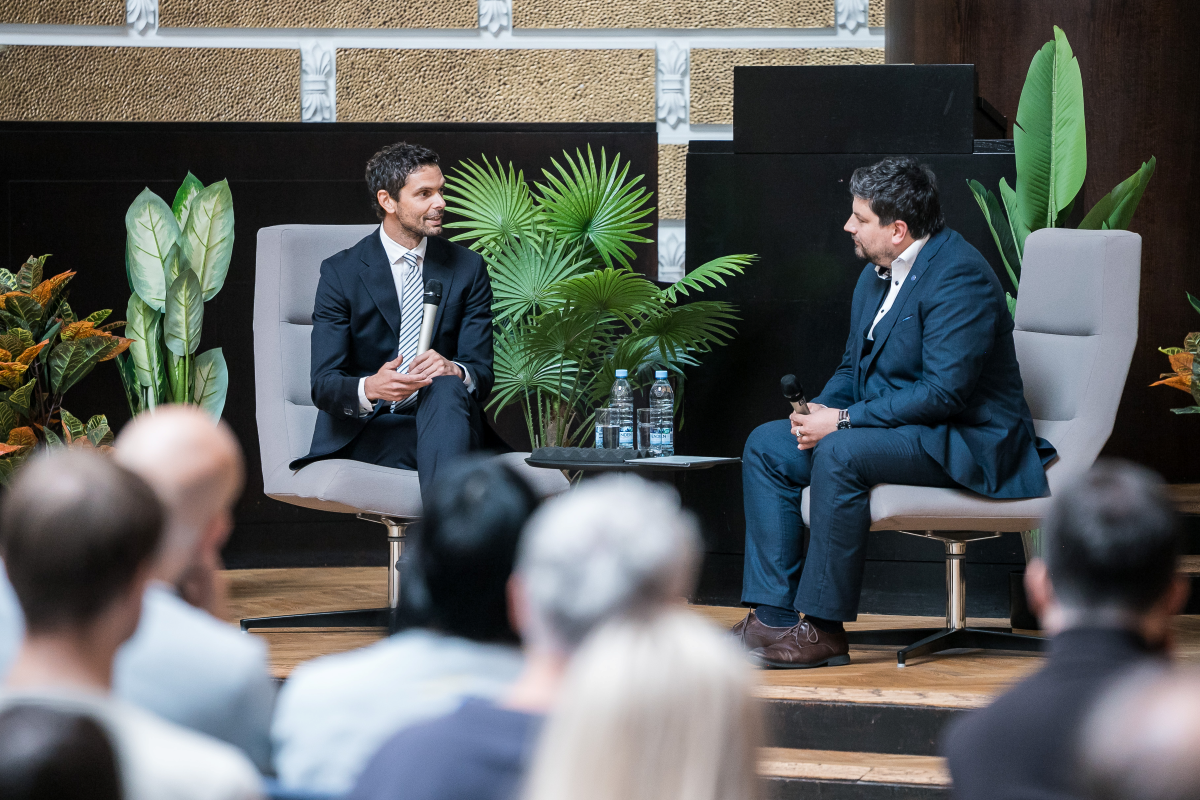
In a conversation with the University of Latvia Foundation, Peter Sarlin explains why Europe needs its own AI capabilities and the role today’s students and researchers will play in building them.
Europe has world-class researchers, supercomputing capacity, and the data it needs. Why, then, does it remain dependent on AI models developed elsewhere?
Europe builds the platforms but not the AI that runs inside them, leaving the intelligence at the heart of its defence dependent on models trained elsewhere and accessible on someone else's terms. That dependency is the core gap in Europe’s Sovereign AI capability. Closing it requires connecting what Europe already has: operational data from deployed systems, European supercomputing capacity, and dedicated defence AI talent. The harder challenge is pace, because the battlefield changes weekly and models must update continuously rather than wait for procurement cycles. Europe has the technology, team, and data. What it needs is the decision to treat the intelligence at the heart of its defence as something it must own and build on its own terms.
Why should young AI talent today choose to stay in Europe rather than head to Silicon Valley?
This generation – the students are the first to build its entire career in the age of AI. The question is not whether AI will reshape their working lives, but whether Europe will be a place that shapes AI or one that only consumes it. Ambitious AI talent in Europe has traditionally looked west, but some of the most meaningful problems to work on are now in Europe itself, particularly in security, defence and quantum. I encourage to see sovereign European AI as a defining challenge for their generation, and one that does not require leaving for Silicon Valley. The most important AI in the world won't be built in Silicon Valley. It will be built by people like you, right here, solving the problem that matters most.
What prompted you to shift your focus from commercial AI to the defence sector?
Security underpins everything else: economic growth, innovation, academic freedom, startup ecosystems. None of it functions if the security environment collapses. This is what drew him from commercial AI into defence, and why Europe's ability to defend itself now depends on building its own AI capability.
Can small countries like Latvia and Finland become pioneers in European defence innovation?
There is a growing number of defence tech startups across Europe, but Europe still needs a fundamental shift from a peacetime mindset to one that faces the current geopolitical reality as it is. Countries on the NATO Eastern Flank, like Latvia and Finland, the New Nordics, already understand this.
Finland and Latvia have structural advantages in AI and defence innovation: faster decision-making and firsthand understanding of the threat. In other words; they carry a disproportionate share of Europe's security burden, yet that proximity to the threat makes them natural proving grounds for defence innovation.
NestAI's earliest deployments and its trilateral agreement with Finland and Estonia reflect this: small nations on the front line are setting the standard that larger ones then adopt.
How can Europe bridge the gap between research and real-world impact?
Europe produces world-class AI research through networks like ELLIS and universities like Aalto and the University of Latvia, but rarely turns it into globally competitive companies.
Silo AI journey is a proof it can be done: bootstrapped without VC until 2022, grown into Europe's largest private AI lab, and acquired by AMD for €665 million, while acknowledging that outcome is still the exception.
Building sovereign AI capability means nothing if the people who can do it leave. Europe trains some of the best AI researchers and engineers in the world, but too many of them end up in Silicon Valley because that is where the most ambitious opportunities have been. Changing that requires giving them a reason to stay: meaningful work, competitive scale, and the sense that what they build here matters.
You founded NestAI to strengthen Europe’s technological independence in defence. What problem is the company seeking to solve, and what does Europe need to become truly independent in this field?
Europe builds the drones and platforms but not the models that fly and command them. The intelligence inside Europe's defences runs on models trained elsewhere, and access to the best models can be cut off overnight.
NestAI was founded to close that dependency. Making this work requires sovereign compute, scientific talent that stays in Europe, and governments willing to move at the speed of technology rather than traditional procurement cycles.
Europe is rebuilding its defence capability at speed, and much of what is being bought is closed and fixed: deployed once, on platforms where capability evolution remains with the vendor. Procurement assumes capability can be defined at deployment and remain sufficient. In defence that does not hold. Conditions change in weeks, and a system that cannot evolve after it is fielded becomes a liability.
That is the problem we set out to address. NestAI builds adaptive intelligence for unmanned and command systems, AI that continues to learn from operational data and evolve after deployment. True sovereignty rests on the same foundation. Buying European matters, but it settles less than people assume: if the platform is closed, control over how the system evolves still sits with whoever built it. That control is a property of the architecture, which is why we build on an open and modular platform.
Does Europe have the potential to become a leader in the next era of computing?
AI challenge does not stop with today's models. Through Qutwo, his second venture, Sarlin is already preparing for the shift to quantum computing, arguing that Europe has a chance to lead the next computing paradigm if it starts building the infrastructure and talent base now rather than waiting.
The guest lecture was organized by the University of Latvia and the University of Latvia Foundation in cooperation with the Investment and Development Agency of Latvia.
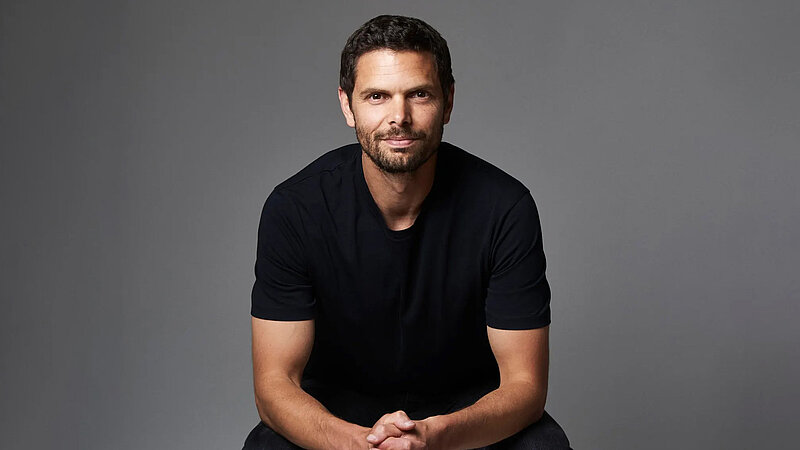
. Sarlin is the co-founder of Silo AI, Europe’s largest private AI lab, and a Professor of Practice at Aalto University and the Founder and Chairman of PostScriptum, the cradle of NestAI and Qutwo.)