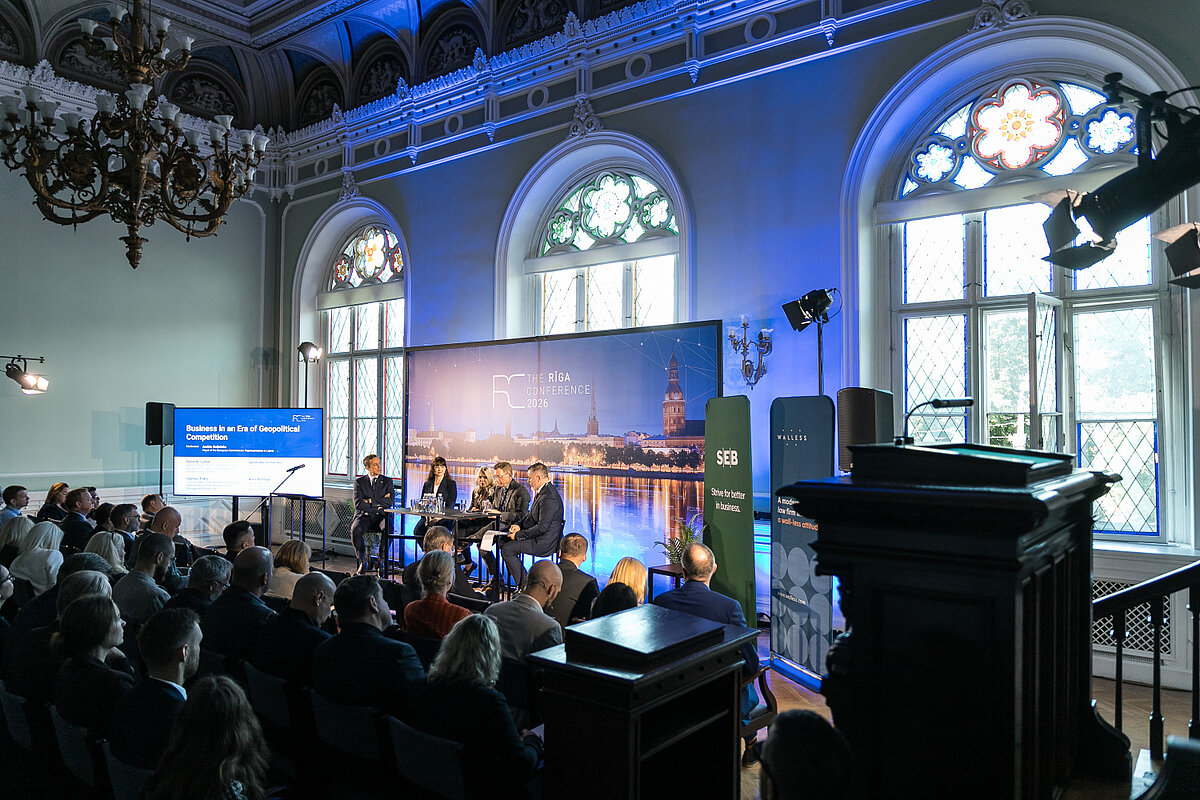
Opening the conference on Thursday, September 10, experts addressed the effectiveness of diplomacy in a changing world, exploring how foreign policy tools can defend democratic interests against escalating hybrid threats and violations of international law. NATO Deputy Secretary General Radmila Shekerinska emphasized: “There was a time when we would gather at conferences like this and talk about all other issues but security. That period is behind us, and it is not coming back. Our key strategic goal is building NATO 3.0, which will be not only a stronger alliance, but also a fairer alliance, in which Europe and Canada will take the lead on conventional deterrence and defence in Europe.”
The conference agenda also addressed cognitive warfare, disinformation, and cybersecurity. In the closing session of the first day, experts examined hybrid threats and the rise in cyberattacks across Europe affecting the physical, digital, and economic domains simultaneously. Given escalating attempts at sabotage and influence operations targeting critical infrastructure, panelists emphasized the need for governments and the private sector to join forces to detect coordinated campaigns early and build societal resilience.
During the September 11 panel on EU competitiveness, US Ambassador to the European Union Andrew Puzder emphasized: "A prosperous Europe is a better trade partner, more capable of defending itself, and better equipped to support the United States. We want Europe to succeed economically. Our industries are deeply integrated, and talk of separating them is simply nonsense. Ultimately, strong growth is what fuels defense capacity. You cannot allocate 5% of your GDP to defense without a thriving economy. Whether in AI or global trade, we don't need to defeat each other, I am confident we will work through these issues." Experts addressed Europe's push to simultaneously reinforce defense, technological capacity, and economic competitiveness while safeguarding fiscal stability and translating new investments into sustainable growth and security.
At the conclusion of The Rīga Conference, Prime Minister of the Republic of Latvia Andris Kulbergs stated: “Together with our NATO allies, we send a loud and clear message of deterrence, but a strong defense can only come through a strong economy. Latvia demonstrates this by allocating 6.4% of our GDP to security and defense, yet sustainable resilience cannot be built on borrowed money alone. To address the geopolitical cost of geographic punishment, Latvia needs 7 billion EUR over 7 years in the next MFF to strengthen the EU's Eastern Flank. By combining robust EU support with local production ecosystems and joint manufacturing with Ukraine, there will be no weak link, allowing us to rely on ourselves to keep both Latvia and Europe secure.”
The conference discussions are available on Latvian Transatlantic Organisation’s (LATO) YouTube channel and media partner platforms. Marking its 21st consecutive year, the event convened over 400 in-person participants from approximately 45 countries.
The Rīga Conference was jointly organized by the Latvian Transatlantic Organisation in cooperation with the Ministry of Foreign Affairs of the Republic of Latvia and the Ministry of Defence of the Republic of Latvia.
The conference is also supported by: KAF, Latvijas Mobilais Telefons, the Embassy of Sweden in Latvia, the International Defense Production Association (SAPRA), Patria Latvia, the International Practitioners Partnership Network (PractNet), Redwire Defense Tech Riga, the University of Latvia, the European Commission Representation in Latvia, Forum Auto, GDELS-Santa Bárbara Sistemas, NATO, Edge Autonomy Riga, KIA, Aged not Aged, law firm WALLESS, the Embassy of Germany in Latvia, the Embassy of Spain in Latvia, the Embassy of Moldova, the Embassy of Israel in Latvia, the Embassy of France in Latvia, Balta, Tilde, MilTech, Deep White, Basavin Winery, Cricova Winery, Hestio, Riga International Airport, the Movastacon Foundation, the Delphi Global Research Center, and the Latvian Institute of International Affairs.
Acknowledgements for content and informational support: LETA News Agency, ReTV, Latvian Public Service Media (LSM), University of Latvia, TVNET Group, Sargs.lv, jauns.lv, DELFI, Labs of Latvia, SIA “Latvijas Mobilais Telefons”, New Eastern Europe, The Baltic Times, The Lithuania Tribune, Visegrad Insight, Delphi Global, In Between Analytical Group, “Ir” magazine, Postimees, NewsRoom IN, Estonian World, LA.lv, Radio Skonto, Andelman Unleashed, Riga Technical University, Finday, 360TV, and Rīga Stradiņš University.