
 CONFERENCE
Doctoral Study Programme “Language and Culture Studies”
Program level: academic doctorate
Language of study: English
Form and duration of studies: full-time attendance - 6 semesters or 3 years
Amount in credit points: 216 ECTS
Degree awarded: Doctoral Degree of Science Doctor of Science (Ph.D.) in Humanities and the Arts
Number of places for admission in the 2026/2027 academic year: follow the information
Tuition fee in the 2026/2027 academic year: 2800 EUR for EU/EEA/Swiss Confederation citizens, permanent residents and their family members; 5800 EUR for citizens of other countries.
Study location: Faculty of Humanities, Riga, 4a Visvalža Street
Accreditation until: 07.12.2029.
The doctoral programme offers interdisciplinary, research-based studies in the field of language, literature, folklore, dramaturgy and theater processes. International students are invited to study in the module “Linguistics”.
The main task of the programme is the preservation and further provision of national culture and science, primarily by preparing scientific workers for the study of the Latvian language, literature, folklore, dramaturgy and theater. In addition to these areas, the programme also provides training for specialists for the study of other languages and cultures and for scientifically focused academic work in universities and elsewhere.
During the programme, doctoral students develop a doctoral thesis – an original scientific study that provides new knowledge in the field of linguistics.
Programme Director
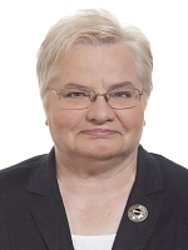
Professor Janīna Kursīte-Pakule
International students are welcome to the module “Linguistics”, leading to the degree of Doctor of Science (PhD) in Humanities and the Arts.
The goal is to enhance the development of doctoral students’ research and academic competence, to prepare highly qualified specialists who can conduct independent and innovative research, work out and defend a PhD thesis, which makes a substantial original contribution to knowledge building in linguistics and literary studies.
The curriculum of the linguistics module brings together faculty with a range of research interests in general linguistics, comparative and contrastive linguistics, applied linguistics, Latvian synchronic linguistics, Latvian diachronic linguistics, Baltic linguistics, Germanic linguistics, Romance linguistics, Slavic linguistics, Finno-Ugric linguistics, Oriental studies, and Classical philology, which allows PhD students to undertake in-depth research of a topic of interest at the same time designing a focused and individualized study plan.
Previous academic education: second cycle higher education (Master's degree) or equivalent higher education in the humanities; or Second cycle higher education (Master's degree) in social sciences or equivalent higher education in another field of science and one year of professional/creative experience in a field related to the humanities.
Additional requirements: doctoral thesis proposal (.doc.x) agreed with a potential scientific supervisor, proof of English language proficiency at least at B2 level, CV, motivation letter, proof of scientific research activities and other documents. More information about the documents to be submitted.
Required English language proficiency (except if previous education is in English), attested by following tests:
LanguageCert International ESOL at least Level Communicator B2 (Written and Spoken exams);
TOEFL IBT – at least score 72
TOEFL Essential – at least 8 points
IELTS – at least score 6.00
PTE General – at least level B2
FCE – at least level B
CPE – Proficiency/C2 Proficiency: any level
CAE – C1 Advanced: any level
Entrance examinations: motivation assessment interview with a representative of the Doctoral School, as well as an oral presentation of the doctoral thesis topic and planned research at the Doctoral Council. The Council evaluates the applicant's knowledge, the quality and relevance of the doctoral thesis proposal, as well as the results of previous scientific research.
Applicants should indicate their branch of science and sub-branch and submit a research proposal, worked out under the guidance of a supervisor. If applicants do not have supervisors, they should contact the relevant academic department at the Faculty of Humanities. The applicant may also be allocated a supervisor corresponding to their research interests.
UL full-time students, regardless of their citizenship, have the opportunity to apply for the ERASMUS + exchange program for studies or/and traineeship.
More information: