
 CONFERENCE
Programme level: Bachelor's Degree Programme
Language of instruction: Latvian
Study form and duration: full-time - 6 semesters
Credits: 180 ECTS
Degree or qualification (sub-programme "French Philology"): Bachelor of Humanities in French Philology
Degree or qualification (sub-programme "Classical Philology"): Bachelor of Humanities in Classical Philology
Degree or qualification (sub-programme "Russian Philology"): Bachelor of Humanities in Russian Philology
Degree or qualification (sub-programme "Finno-Ugric Studies"): Bachelor of Humanities in Finno-Ugric Studies
Degree or qualification (sub-programme "German Philology"): Bachelor of Humanities in German Philology
Number of study places for admission in 2026/2027 (sub-programme "French Philology"): State-funded study places - 12, study places for tuition fee - 50
Number of study places for admission in 2026/2027 (sub-programme "Classical Philology"): State-funded study places - 10, study places for tuition fee - 25
Number of study places for admission in 2026/2027 (sub-programme "Russian Philology"): State-funded study places - 5, study places for tuition fee - 25
Number of study places for admission in 2026/2027 (sub-programme "Finno-Ugric Studies"): State-funded study places - 10, study places for tuition fee - 25
Number of study places for admission in 2026/2027 (sub-programme "German Philology"): State-funded study places - 10, study places for tuition fee - 25
Tuition fee per year (ac. year 2026/27): 2600 EUR for EU/EEA/Swiss citizens, EU Long-term resident permit holders and their family members. 3500 EUR for citizens of other countries
Study location: Riga, city centre
Bachelor's study programme "Philology"
Philology is the field that studies language through its textual manifestations and transformations, as well as its role in literature, culture, and society.
Studying philology offers more than the acquisition of linguistic knowledge: it cultivates a deep understanding of the cultural worlds of different peoples and nations, both in their historical development and contemporary expression. The program also integrates insights from modern linguistics, including the study of spoken languages and methods for working with large linguistic databases. This understanding is further enriched through the study of literary thought — often approached comparatively and supported by practical engagement.
Bachelor's study programme "Philology" (LV) consists of five sub-programmes:
- French Philology
This sub-program combines advanced study of the French language and literature with insights into Francophone culture and the preparation of future teachers of French as a Foreign Language (FLE). Students also study another Romance language (Spanish or Italian) and explore innovative approaches through Artificial Intelligence and Digital Humanities. Taught by native-speaker faculty, the program welcomes both beginners and advanced learners of French.
- Russian Philology
The students acquire basic and specialized knowledge in the field of Russian philology - study the Russian language in the theoretical and applied aspect, the history and theory of Russian literature in a broad cultural-historical context. Students will choice additional modern Slavic language (Czech, Polish) and practically oriented courses, which form professional and practical competencies in translation, editing, improvement of speech and writing styles, in the methodology of teaching Russian as a foreign language.
- German Philology
The sub-program will be attractive to anyone interested in the German language and literature - not only in Germany, but also in other "German" countries and regions of Europe. Students will gain knowledge in German language and literature, as well as knowledge of Latvian cultural history as Germans had great importance in the history and culture of the entire Baltics. During their studies, students learn in depth German as well as a second foreign language. Students are also offered professional orientation courses in translation and German language didactics.
- Classical Philology
This sub-program trains specialists in classical languages (Ancient Greek and Latin), ancient literature, and mythology. Students gain the opportunity to explore the origins and foundations of modern European culture — the cultural environment of Ancient Greece and Rome — to understand its legacy and continuity in the contemporary world, and to apply this knowledge to the interpretation of modern cultural phenomena.
Finno-Ugric Studies
As the only sub-program in Latvia dedicated to the study and understanding of this field, it provides comprehensive academic and professional knowledge and competencies concerning the languages and cultures of Finno-Ugric peoples, as well as the geopolitical context of the territories they inhabit—particularly Estonia and Finland. The program also offers insight into the languages and cultural areas of other Finno-Ugric peoples. Special attention is given to the language and spiritual heritage of Latvia’s indigenous people—the Livonians.
Study Programme Director
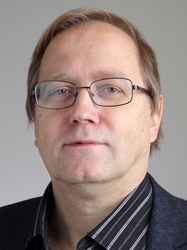
Professor Igors Koškins
Deputy Programme Director
Professor Jeļena Vladimirska
The programme includes courses common to all sub-programmes, and courses specific to each sub-programme and a free elective part.
May continue studies at master's level.
Job opportunities in this field are ample and diverse, catering to a variety of interests and skills: state and local government institutions, foreign ministries, national embassies (cultural and/or public relations/media information specialist), media companies and publishing houses (editor, proofreader, advertising specialist), translation agencies, research institutions (language specialist, consultant), libraries, museums (language/literature materials expert, cultural/educational events organiser), schools, language courses (teaching assistant).
UL full-time students, regardless of their citizenship, have the opportunity to apply for the ERASMUS + exchange program for studies or/and traineeship.
More information:
Programme assistant:
Sandra Tanne
- Phone: +371 67034919
- E-mail: sandra.tanne@lu.lv
- Address: Visvalža iela 4a, Room 329a
Finno-Ugric Studies sub-programme assitant:
Ērika Krautmane
- Phone: +371 67034912
- E-mail: erika.krautmane@lu.lv
- Address: Visvalža iela 4a, Room 316