
Bachelor's study programme "Philology"
Programme level: Bachelor's Degree Programme
Language of instruction: English
Study form and duration: full-time - 6 semesters
Credits: 180 ECTS
Degree or qualification (sub-programme "French Philology"): Bachelor of Humanities in French Philology
Degree or qualification (sub-programme "Russian Philology"): Bachelor of Humanities in Russian Philology
Degree or qualification (sub-programme "German Philology"): Bachelor of Humanities in German Philology
Number of study places for admission in 2026/2027 (sub-programme "French Philology"): State-funded study places - 0, study places for tuition fee - 20
Number of study places for admission in 2026/2027 (sub-programme "Russian Philology"): State-funded study places - 0, study places for tuition fee - 20
Number of study places for admission in 2026/2027 (sub-programme "German Philology"): State-funded study places - 0, study places for tuition fee - 20
Tuition fee per year: 2600 EUR for EU/EEA/Swiss citizens, EU Long-term resident permit holders and their family members. 3500 EUR for citizens of other countries
Study location: Riga, city centre
Philology is the field that studies and researches language and its presence and changes in texts, its role in literature, culture and society.
Philology is worth studying because, alongside knowledge of different languages, it develops a rich understanding of the cultural milieu of a particular people or country - historically and in the present day, especially through the study of literary thought; much is studied comparatively, also through practice.
Bachelor's study programme "Philology" (EN) consists of three sub-programmes:
- French Philology
The sub-programme prepares competent and competitive French language specialists. Special attention is paid to the acquisition of another Romance language (choice: Spanish or Italian), as well as to the acquisition and study of the culture and literature of the region. The program is taught by native speaker academic staff members. Students with and without prior knowledge of French are accepted in the sub-programme.
- Russian Philology
The students acquire basic and specialized knowledge in the field of Russian philology - study the Russian language in the theoretical and applied aspect, the history and theory of Russian literature in a broad cultural-historical context. Students will choice additional modern Slavic language (Czech, Polish) and practically oriented courses, which form professional and practical competencies in translation, editing, improvement of speech and writing styles, in the methodology of teaching Russian as a foreign language.
- German Philology
The sub-programme will be attractive to anyone interested in the German language and literature - not only in Germany, but also in other "German" countries and regions of Europe. Students will gain knowledge in German language and literature, as well as knowledge of Latvian cultural history as Germans had great importance in the history and culture of the entire Baltics. During their studies, students learn in depth German as well as a second foreign language. Students are also offered professional orientation courses in translation and German language didactics.
Study Programme Director
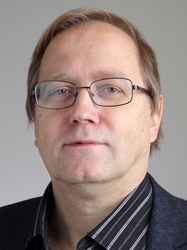
Professor Igors Koškins
Deputy Programme Director
Professor Jeļena Vladimirska
The programme includes courses common to all sub-programmes, and courses specific to each sub-programme and a free elective part.
May continue studies at master's level.
Job opportunities in this field are ample and diverse, catering to a variety of interests and skills: state and municipal institutions, foreign affairs departments, national embassies (cultural and / or public relations / media information specialist), media companies and publishing houses (editor, proofreader, advertising specialist), translation agencies, research institutions (language specialist, consultant ), libraries, museums (knowledge of language / literature materials, organizer of cultural / educational events), schools, language courses (teacher).
Admission Requirements for Foreign Nationals with Secondary Education Completed Outside Latvia:
EU/EEA/Swiss citizens and EU long-term residents:
- General secondary school diploma;
- English language proficiency;
- SAT (Scholastic Assessment Test) overall score no lower than 1200 (for applicants who completed secondary education outside the EU, EEA, or Swiss Confederation)
- Additional requirements depending on sub-programme:
- French philology: French language knowledge will be considered as advantage
- German Philology: German language proficiency
- Russian Philology: Russian language proficiency
Non-EU/EEA/Swiss citizens and Non-EU long-term residents:
- General secondary school diploma;
- English language proficiency;
- The average grade on the secondary education certificate across all subjects must be at least 6 on a 10-point grading scale;
- All grades must be passing (at least 4 on a 10-point grading scale);
- SAT (Scholastic Assessment Test) overall score no lower than 1200 (for applicants who completed secondary education outside the EU, EEA, or Swiss Confederation).
- Additional requirements depending on sub-programme:
- French philology: French language knowledge will be considered as advantage
- German Philology: German language proficiency
- Russian Philology: Russian language proficiency
*Information on 10 points grading scale
As part of the admission process, applicants will be required to participate in an online interview.
Admissions Open: 1 December 2025
Admission Requirements for Latvian Citizens/Non-Citizens and Foreign Nationals with Secondary Education completed in Latvia:
French philology:
Admission criteria for individuals who obtained their secondary education from 2004 onwards:
- CE in Mathematics*;
- CE in English language at least Level B2;
- CE in Latvian language;
- Average score of all CEs completed by the individual;
* For individuals who have completed secondary education before 2008, the centralised examination in mathematics may be replaced by the average mark in mathematics indicated in the secondary education document (or the average mark in algebra and geometry)
Admission criteria for individuals who completed secondary education up to and including 2003, as well as for individuals who completed secondary education abroad and those who are exempt from centralized examinations:
- final grade in English language no less than 6 on a 10-point grading scale (can be substituted with an internationally recognised English-language test result at a minimum of level B2.);
- final average grade in mandatory subjects
German Philology:
Admission criteria for individuals who obtained their secondary education from 2004 onwards:
- CE in Mathematics*;
- CE in English language at least Level B2;
- CE in Latvian language;
- final grade in German language;
- Average score of all CEs completed by the individual;
* For individuals who have completed secondary education before 2008, the centralised examination in mathematics may be replaced by the average mark in mathematics indicated in the secondary education document (or the average mark in algebra and geometry)
Admission criteria for individuals who completed secondary education up to and including 2003, as well as for individuals who completed secondary education abroad and those who are exempt from centralized examinations:
- final grade in English language no less than 6 on a 10-point grading scale (can be substituted with an internationally recognised English-language test result at a minimum of level B2.);
- final grade in German language (6 on a 10-point grading scale (can be substituted with an internationally recognised German-language test result at a minimum of level B2)
- final average grade in mandatory subjects
Russian philology:
Admission criteria for individuals who obtained their secondary education from 2004 onwards:
- CE in Mathematics*;
- CE in English language at least Level B2;
- CE in Latvian language;
- average score of all CEs completed by the individual;
- final grade in Russian language and literature or Russian language as as a foreign language
* For individuals who have completed secondary education before 2008, the centralised examination in mathematics may be replaced by the average mark in mathematics indicated in the secondary education document (or the average mark in algebra and geometry)
Admission criteria for individuals who completed secondary education up to and including 2003, as well as for individuals who completed secondary education abroad and those who are exempt from centralized examinations:
- final grade in English no less than 6 on a 10-point grading scale (can be substituted with an internationally recognised English-language test result at a minimum of level B2.);
- final grade in Russian language and literature or Russian language as as a foreign language no less than 6 on a 10-point grading scale (an be substituted with an internationally recognised Russian-language test result at a minimum of level B2.
- final average grade in mandatory subjects
UL full-time students, regardless of their citizenship, have the opportunity to apply for the ERASMUS + exchange program for studies or/and traineeship.
More information:
The full – time degree programme covers three academic years. Classes are mainly from 8.30 till 18:00 in the working days.
More information about French Philology study programme and Study plan
More information about German Philology study programme and Study plan
More information about Russian Philology study programme and Study plan
Information about admission:
Email: studies@lu.lv
Programme assistant:
Sandra Tanne
- Phone: +371 67034919
- E-mail: sandra.tanne@lu.lv
- Address: Visvalža iela 4a, Room 329a
Finno-Ugric Studies sub-programme assitant:
Ērika Krautmane
- Phone: +371 67034912
- E-mail: erika.krautmane@lu.lv
- Address: Visvalža iela 4a, Room 316
Russian Philology sub-programme assitant:
Jeļena Sevastjanova
- Phone: +371 67034924,
- E-mail: jelena.sevastjanova@lu.lv
- Address: Visvalža iela 4a, Room 423