
Master's in Clinical Optometry
Level of study: |
Duration: |
Form of study: |
Language: |
Credits: |
Location: |
Degree: |
Tuition fee: |
Student places: |









Are you ready to make a real, positive impact on people’s lives by helping them overcome vision challenges? You’re in the right place.
Optometrists, vision scientists, entrepreneurs, and other professionals come together here with one shared goal: advancing excellence in eye care.
You have two paths to choose from:
- If you’ve already studied the fundamentals of optometry with us, you can continue your journey in the 2-year professional Master’s programme in Clinical Optometry.
- If your background is in another field and you’re bringing different knowledge and skills with you, the 3-year professional Master’s programme in Clinical Optometry is designed especially for you.
Discover your path.
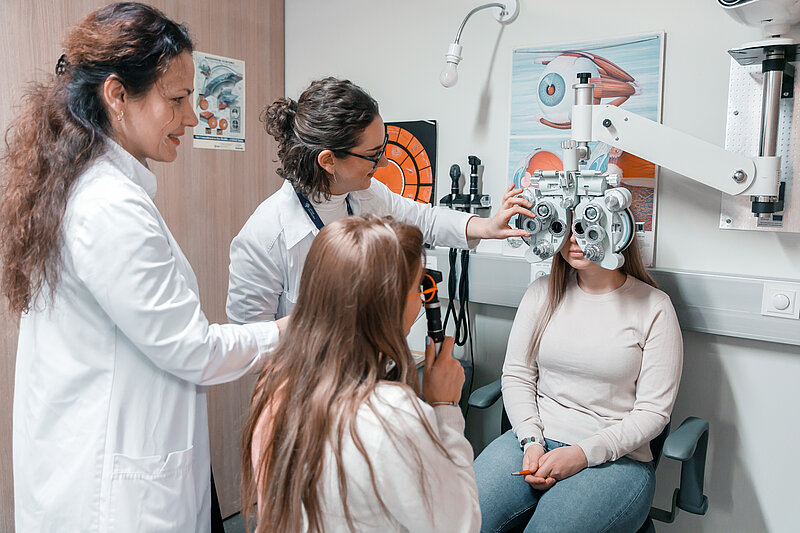
The study program is designed to ensure the growth of the young optometrist as a specialist, acquiring knowledge, skills and competences that meet not only the standard requirements of the optometrist profession, employer requirements and the specifics of the labour market, but also the requirements of the optometrist profession defined in Europe and Category 3 (without the use of medication) requirements defined by the World Optometrists Council in the Global competency-based model of scope of practice in optometry, which provides that the optometrist offers not only optical services (management and dispensing of ophthalmic lenses, ophthalmic frames and other ophthalmic devices that correct defects of the visual system), but also provides primary vision care (evaluation and management of defects of the visual system), including evaluation, differentiation, and management of the health status of the eye structures and related general diseases (including referral to other specialists for diagnosis and treatment).
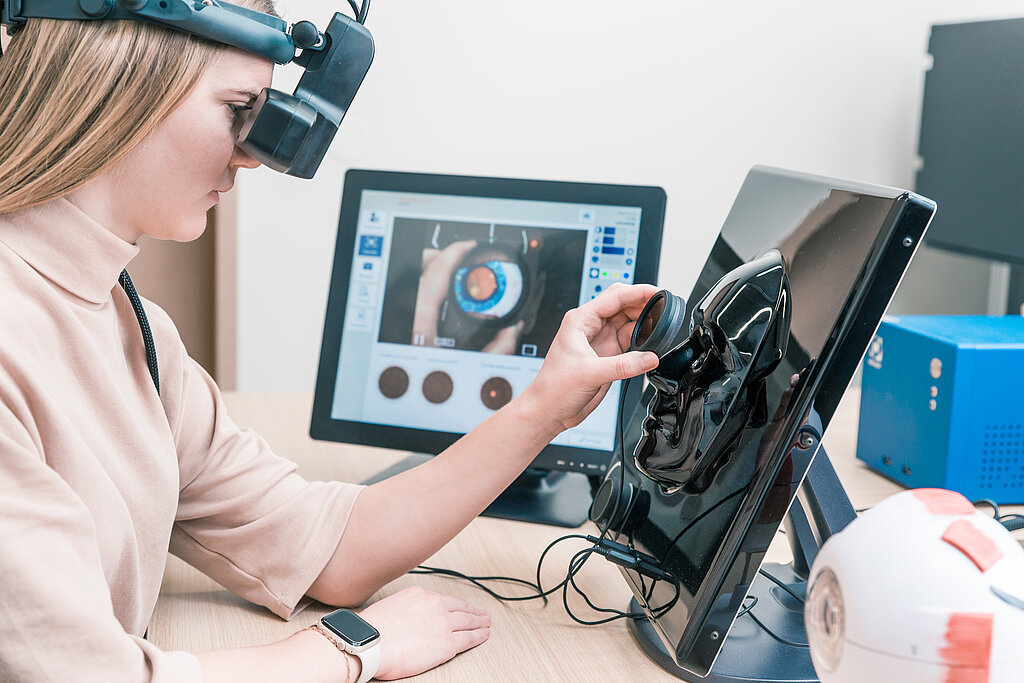
The study programme (120 ECTS) contains compulsory (part A), optional (part B), and practical courses. The practical training (internship) accounts for 39 ECTS. Part A includes specialisation courses: eye diseases and pharmacotherapy, low vision, contact correction, visual perception, as well as the Qualification examination and Master’s thesis. Part B contains clinical and experimental courses in optometry. The Qualification examination consists of a theoretical knowledge test in optometry and a practical examination in the evaluation of the patient's visual function and vision correction. Defence of the Master’s thesis and Qualification examination are the final stages of the Professional Master’s study programme aiming to evaluate students’ research skills, as well as theoretical and practical knowledge, and their correspondence to the requirements of qualification in optometry.
Part C of the free choice (3 ECTS) allows the student to acquire additional knowledge in courses of other fields at the University of Latvia, other universities in Latvia or abroad.
There is an additional opportunity to gain international study experience and new knowledge in one of the many partner universities during the semester of ERASMUS+ studies.
By fulfilling the requirements of the program, a graduate acquires extensive professional skills and abilities in the field of primary vision care – optometry, as well as academic knowledge, skills and competences in vision science, in order to be able to independently develop research at optometrist's workplace or to continue studies in the doctoral programme in Latvia or abroad.
Previous education:
- Bachelor degree in Optometry, that complies with the requirements of the Latvian Standard for the Profession of OptometristLanguage proficiency:
- English language proficiency (for foreigners);
*Latvian nationals are required to demonstrate English language proficiency. This may be confirmed through internationally recognised English language test results, other evidence of English proficiency at a minimum of B2 level, or a grade in English on a previous educational certificate (the grade must be no lower than 6 on a 10-point scale), except where previous education was obtained in English.
*Foreign applicants whose previous education was completed outside the European Union (EU), European Economic Area (EEA), or the Swiss Confederation must submit one of the following recognised standardised test results issued within the past five years:
- SAT: minimum score of 1200
- GMAT: minimum score of 595
- GRE: minimum score of 320
If candidates submit SAT and GMAT or GRE results with equivalent scores and the number of study places is limited, preference will be given to applicants with GMAT or GRE scores.
*Additional admission requirements for non-EU/EEA/Swiss citizens and non-EU long-term residents
The average grade in study courses must be 60% of the maximum;
All grades must be passing (at least 4 in a 10 point grading system);
All non-EU/EEA/Swiss applicants, except University of Latvia graduates, will be required to take part in an online interview as part of the admissions process.
*Information on 10 points grading scale
Admissions open: 1 December 2025 (Foreign applicants)
During a single cycle of studies, students have the opportunity to spend up to 4 months abroad for internships.
Short-term mobility options are also available through the FORTHEM Alliance, offering students the chance to gain new knowledge and skills in international environment.
Admission information:
Email: studies@lu.lv
opto.metodike@lu.lv
OPTOMETRY = LU
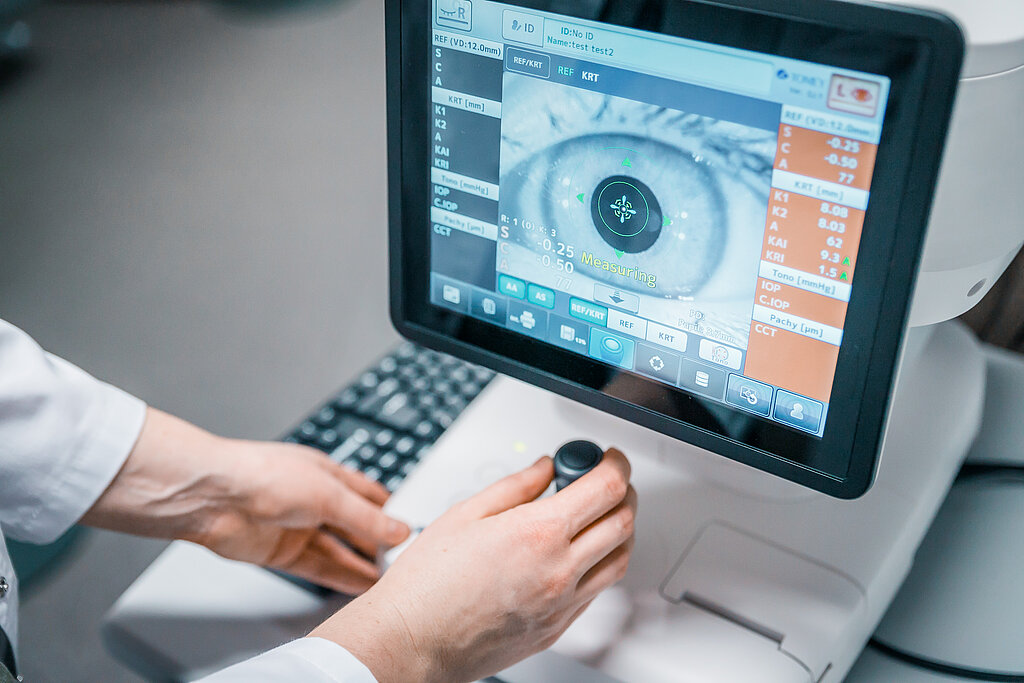
REFRACTION
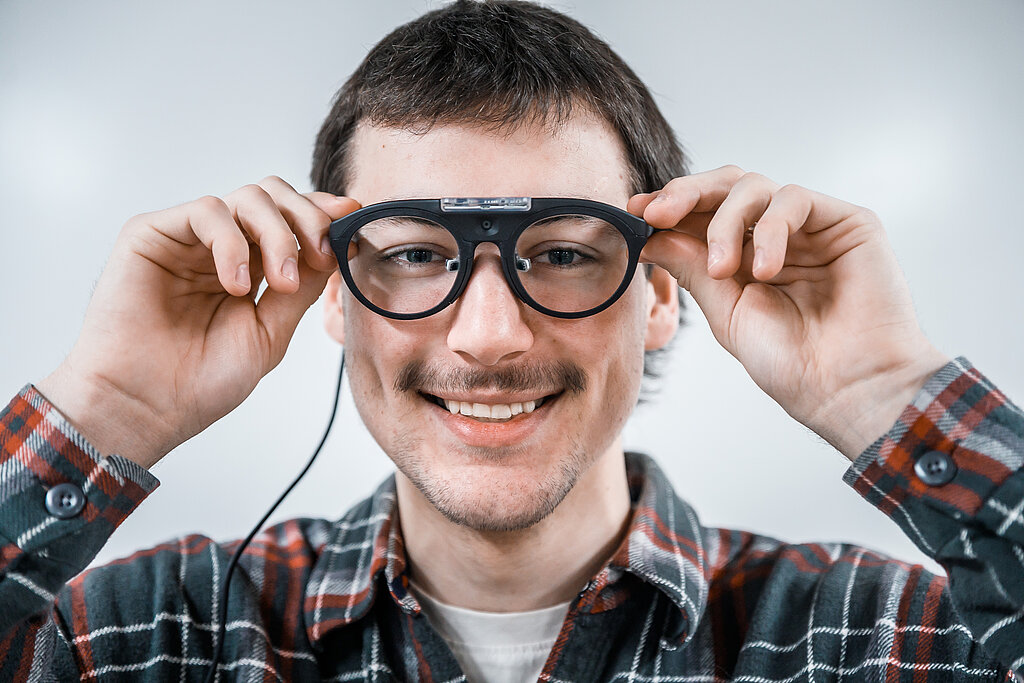
EYE MOVEMENTS
COLOUR VISION
CONTACTCORRECTION
PEDIATRIC VISION

Alumni review
A Master’s degree is truly valuable in the optometry profession. My postgraduate studies in optometry gave me a major leap forward in both knowledge and practical skills. They also strengthened my logical thinking, so I was no longer just repeating procedures, but genuinely understanding what I was doing and why. If you’re considering studying optometry, the most important thing is genuine interest — that feeling that you’re learning and doing something you truly enjoy. When that’s there, even attending lectures becomes rewarding, because you can feel yourself growing with every new thing you master.
