
Communication Science - Master's Degree Programme
Programme level: Master's programme
Language of instruction: Latvian
Study form and duration: full-time - 4 semesters
Credits: 120 ECTS
Obtainable degree or qualification: Master's Degree of Social Sciences in Journalism and Communication
Number of study places for admission in 2026/2027: State-funded study places - 11, study places for tuition fee - 20
Tuition fee per year (ac. year 2026/2027): 2800 EUR for EU/EEA/Swiss citizens, EU Long-term resident permit holders and their family members. 4700 EUR for citizens of other countries
Study location: Riga, Latgale suburb
The study programme provides an opportunity to acquire comprehensive knowledge of communication theories and methodology, to develop skills and competences required for communication research and application of methods, to advance analytical and critical thinking skills and creativity. The study process is designed to train highly qualified specialists in communication science and spheres of its practical application – journalism, public relations, advertising, communication management, research of communication processes.

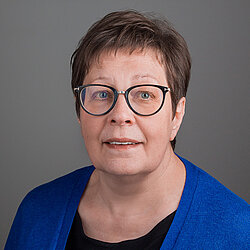
Director of Study Programme
Within 2 years students acquire the following study courses:
Obligatory part (part A) study courses – “Communication Theories in the Context of Social Sciences”, “Communication Theory, Models and Practice”, “Digital Humanities and Social Sciences”, “Quantitative Methods in Communication Research”, “Communication and Culture”, “Qualitative Methods in Communication Research”, “Network Theories”, “Research Work and Academic Writing”, “Critical Thinking in Higher Education Institution and Further Education”, “Linguistics and Communication”, “Master's Thesis”.
Restricted elective part (part B) is organised in study modules “Business Communication” and “Media Studies”. They encompass theoretical and applied study courses, as well as research work (excellence study courses).
Study courses of the module “Business Communication”: “Business Communication”, “Organizational Culture and Communication”, “Development of Advertising: Analysis of Achievements and Products”, “Strategic Communication and Leadership”.
Study courses of the module “Media Studies”: “Media Ecosystem”, “Journalism Culture”, “Computer Analysis of Text and Data Visualization”, “Multimedia Practicum”.
Theoretical and applied study courses: “Information Environment Risks and Media Literacy”, “Gender Equality Communication and Practice”, “Genealogy of Cinematic Images”, “Information Search and Retrieval Theories”, “Strategic Business Communication on Social Media”, “Cultural Management and Communication”, “Collective Memory and Communication”, “Bibliophilia and Manuscript Collections”, “Interdisciplinary Aspects of Theatre Criticism”, “Semiotics”.
Research work or excellence study courses: “Individual Research Project in the Chosen Specialisation”, “Research Project: Academic Work Practicum”, “Scientific Article: Academic Work Practicum”, “Scientific Report: Academic Work Practicum”.
HOW ARE THE STUDIES LINKED WITH PRACTICE?
Media, business and organizational communication professionals and experts are involved in the study process. They give lectures, consult and participate in discussions. It is also possible for master's students to get involved in scientific projects implemented by the Advanced Social and Political Research Institute at the Faculty of Social Sciences, as well as to advance their knowledge at the partner universities of the University of Latvia within the framework of the ERASMUS programme.
Employment and career building in the media, companies, state and municipal institutions, cultural institutions, universities and research institutes, as well as doctoral studies.
You can find out about the admission requirements for the study program by switching to the Latvian version of the website.
During a single cycle of studies, students have the opportunity to spend up to 12 months abroad for studies or internships. Currently, the Faculty of Economics and Social Sciences has over 320 Erasmus+ cooperation agreements with universities across Europe and beyond. Students can participate in exchange studies in countries such as Austria, Germany, Spain, Italy, Finland, Sweden, Turkey, Portugal, Slovakia, Malta, and many others.
In addition, students may take part in exchange programmes based on bilateral agreements, which allow for study opportunities in 53 countries worldwide — including Japan, South Korea, Taiwan, and more.
Short-term mobility options are also available through the FORTHEM Alliance, offering students the chance to gain new knowledge and skills in Germany, Poland, Norway, Romania, Italy, France, Finland, and Spain.
Contact the UL Faculty of Economics and Social Sciences: eszf@lu.lv