
 CONFERENCE
Program level: academic doctorate
Language of study: English
Form and duration of studies: full-time attendance - 6 semesters or 3 years
Amount in credit points: 216 ECTS
Degree awarded: Doctoral Degree of Science Doctor of Science (Ph.D.) in Social Sciences
Number of places for admission in the 2026/2027 academic year: follow the information
Tuition fee in the 2026/2027 academic year: 2 950 EUR for EU/EEA/Swiss Confederation citizens, permanent residents and their family members; 5 400 EUR for citizens of other countries.
Study location: Faculty of Economics and Social Sciences, Riga, 4 Lauvas Street
Accreditation until: 16.11.2029.
The aim of the programme is to educate and train highly qualified professionals in the social sciences for employment in higher education, research as well as the public and private sectors; and to consolidate research fields of Communication Science, Political Science and Sociology into a unified, interdisciplinary approach to training young professionals, passing on general skills, promoting cooperation between different fields of research and using available resources more effectively.
Director of the Study Programme
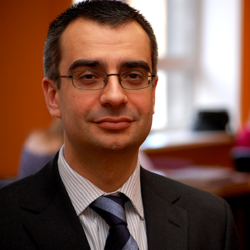
Professor Daunis Auers
The doctoral study programme "Social Sciences" encompasses three fields: “Sociology and Social Work”, “Political Science”, “Media and Communication” – the doctoral programme "Social Sciences" consists of three sub-programmes:
“Political Science” provides in-depth knowledge of the fundamental theories and current issues in political science. Students prepare for and pass doctoral examinations in political science, the chosen specialty and a foreign language, as well as prove their ability to teach political science at the bachelor's level and (optionally) also in professional fields related to political science.
“Sociology and Social Work” yields comprehensive knowledge of the most important theories and current problems of sociology and social work. Students prepare for and pass doctoral examinations in sociology and social work, in the chosen specialty and in a foreign language, as well as prove their ability to teach sociology and social work at the bachelor's level and (optionally) in professional fields related to sociology.
“Mass Media and Communication” offers to acquire in-depth knowledge of the paramount theories and contemporary problems of communication science and library science. Students prepare for and pass doctoral examinations in communication science and library science, the chosen specialty and a foreign language, as well as prove their ability to teach communication science and library science at the bachelor's level and (optionally) also in the professional fields related to media and communication.
The programme offers rigorous research training and transversal competencies through structured coursework, field-specific doctoral examinations (in the discipline, subdiscipline, and a foreign language), and continuous engagement in scientific research. Throughout the studies, doctoral candidates carry out original research in their chosen topic, disseminate results in peer-reviewed publications, participate in international conferences, undertake mobility visits, and contribute to academic activities. The programme concludes with the completion and public defence of the doctoral thesis, demonstrating readiness for independent research work.
After graduating from the doctoral study programme and obtaining a doctoral degree, alumni of the programme have the opportunity to develop their research capacity and career under the auspices of the postdoctoral programme, as well as independently augment their knowledge and improve research skills in professional development activities of higher education institutions, research institutions and as a part of lifelong learning.
Previous academic education: second cycle higher education (master`s degree) or equivalent higher education in social sciences or humanities; or second cycle higher education (master`s degree) or equivalent higher education in other educational thematic groups, and work experience (at least 1 year) in the fields of socio-economic processes and market analysis, communication, information management, diplomatic duties, policy planning, policy implementation or administration.
Additional requirements: doctoral thesis proposal (.doc.x) agreed with a potential scientific supervisor, proof of English language proficiency at least at B2 level, CV, motivation letter, proof of scientific research activities and other documents. More information about the documents to be submitted.
Required English language proficiency (except if previous education is in English), attested by following tests:
LanguageCert International ESOL at least Level Communicator B2 (Written and Spoken exams);
TOEFL IBT – at least score 72
TOEFL Essential – at least 8 points
IELTS – at least score 6.00
PTE General – at least level B2
FCE – at least level B
CPE – Proficiency/C2 Proficiency: any level
CAE – C1 Advanced: any level
Entrance examinations: motivation assessment interview with a representative of the Doctoral School, as well as an oral presentation of the doctoral thesis topic and planned research at the Doctoral Council. The Council evaluates the applicant's knowledge, the quality and relevance of the doctoral thesis proposal, as well as the results of previous scientific research.