
Information Management - Bachelor's Degree Programme
Programme level: Bachelor's Degree Programme
Language of instruction: Latvian
Study form and duration: full-time - 6 semesters
Credits: 180 ECTS
Obtainable degree or qualification: Bachelor's Degree of Social Sciences in Library, Information and Archive Studies
Number of study places for admission in 2026/2027: Full time state-funded study places - 15, study places for tuition fee - 20 (co-financed study places - 9).
Tuition fee per year (ac. year 2026/2027): full-time - 2800 EUR for EU/EEA/Swiss citizens, EU Long-term resident permit holders and their family members. Part-time - 2200 EUR for EU/EEA/Swiss citizens, EU Long-term resident permit holders and their family members.
Study location: Riga, Latgale suburb
The study programme is intended for specialists with knowledge and skills relevant to the full information cycle: information collection, processing and organization, storage, information finding and retrieval, as well as dissemination.
The studies provide knowledge about information institutions and information resources in contemporary society, enable to master information management (e.g., creating databases and digital libraries, structuring websites), to apprehend information systems and services in the context of information user needs, as well as gain expertise in management, economics, communication psychology, cultural history and much more.

Study programme director
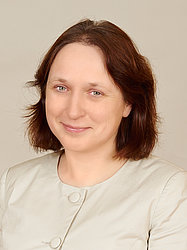
Associate professor Baiba Holma
Year 1 is intended for the student to understand what information institutions are, what is their role in society, to master information resources and their development history (for example, the history of book publishing in Latvia and worldwide), the basics of their organization and search, as well as connection of library and information science with other social sciences (communication science, economics, law, political science, sociology, semiotics).
Year 2 provides a deeper insight into the field, and students acquire courses on information society, databases and websites, research methods, information systems, inventory management, information science, information literacy, document management and storage, studies of local history and services to be provided to various user groups. This year also involves preparation of a research paper on a topic pertaining to the field. The student can consolidate knowledge and develop skills during academic internships.
Year 3 is the period for furthering the knowledge about the issues of the field – this includes the courses on digital libraries, repositories of research publications and data, administrative, structural and descriptive metadata, research in the field, management of information institutions, development and management of information services, publicity of information institutions, as well as architecture and usability of information resources. During this year, the final thesis is being developed, requiring the research of a problem both theoretically and practically.
Part-time correspondence studies (distance learning) ensure acquisition of the same knowledge and skills in the same logical sequence, only over a longer period of time – four years (eight semesters).
HOW ARE THE STUDIES LINKED WITH PRACTICE?
The study programme includes three academic internships, during which theoretical knowledge can be applied in performing practical tasks in potential workplaces (libraries, archives, as well as various institutions practising management of information systems, etc.). During the acquisition of several courses, the lecturers organize practical classes in the respective institutions.
Employment in all public and private companies which require selecting, searching, organization and dissemination of information, as well as in libraries and information centres serving customers and creating and maintaining information systems of organizations.
You can find out about the admission requirements for the study program by switching to the Latvian version of the website.
During a single cycle of studies, students have the opportunity to spend up to 12 months abroad for studies or internships. Currently, the Faculty of Economics and Social Sciences has over 320 Erasmus+ cooperation agreements with universities across Europe and beyond. Students can participate in exchange studies in countries such as Austria, Germany, Spain, Italy, Finland, Sweden, Turkey, Portugal, Slovakia, Malta, and many others.
In addition, students may take part in exchange programmes based on bilateral agreements, which allow for study opportunities in 53 countries worldwide — including Japan, South Korea, Taiwan, and more.
Short-term mobility options are also available through the FORTHEM Alliance, offering students the chance to gain new knowledge and skills in Germany, Poland, Norway, Romania, Italy, France, Finland, and Spain.
Contact the UL Faculty of Economics and Social Sciences: eszf@lu.lv
Graduate reviews
"Education in library science and information enables a person to become an excellent professional in almost any field related to the turnover of information. Furthermore, the acquired skills help to continuously improve oneself and master new knowledge quickly and efficiently."

“The aura of this faculty is something special. And so is the mindset of the lecturers – we are always listened to. We can express our thoughts out loud without thinking about how this will affect our grade – we are not silent. I wish the new FSS students the strength and endurance for the entire three years ahead of them.”

“This programme has enabled me to be knowledgeable and creative in the field of information management – given me capacity to quickly and efficiently find, organize and apply information in a wide variety of fields. In the information society, this is a significant advantage in private and professional life. Acquired skills have a reciprocal application – to be able to find and collect information, to filter and receive only what is needed in the ever-growing avalanche of information.”
