




On 24 February, a discussion titled “Baltic Sea Region Resilience Research 2025–2028” took place at the University of Latvia’s House of Science. Concluding the research project “Urban Preparedness for New Risks in the Baltic Sea Region,” scholars, diplomats, and security professionals examined the empirical findings and discussed policy implications for enhancing societal resilience across the region.
The Rector of the University of Latvia, Professor Gundars Bērziņš, and the Ambassador of the United Kingdom to Latvia, Kathy Leach, emphasized that public readiness to act in times of crisis constitutes a critical component of national security. Four years after the outbreak of Russia’s war against Ukraine, the issue of societal resilience has gained heightened significance throughout the region.
As noted by Rector Gundars Bērziņš, strengthening risk awareness, analysing societal vulnerabilities, and developing evidence-based policy recommendations represent key strategic research priorities of the University of Latvia. The University continues to consolidate its role in advancing research on security and resilience in the Baltic Sea region.
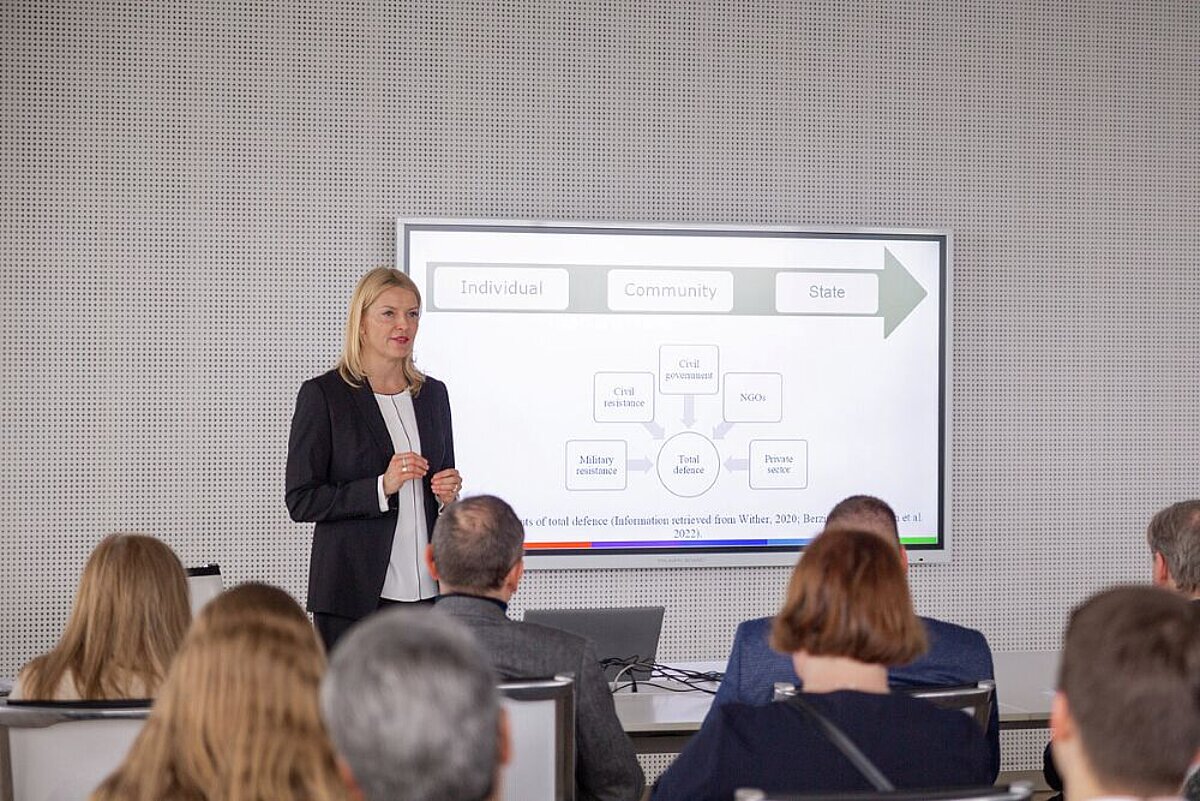
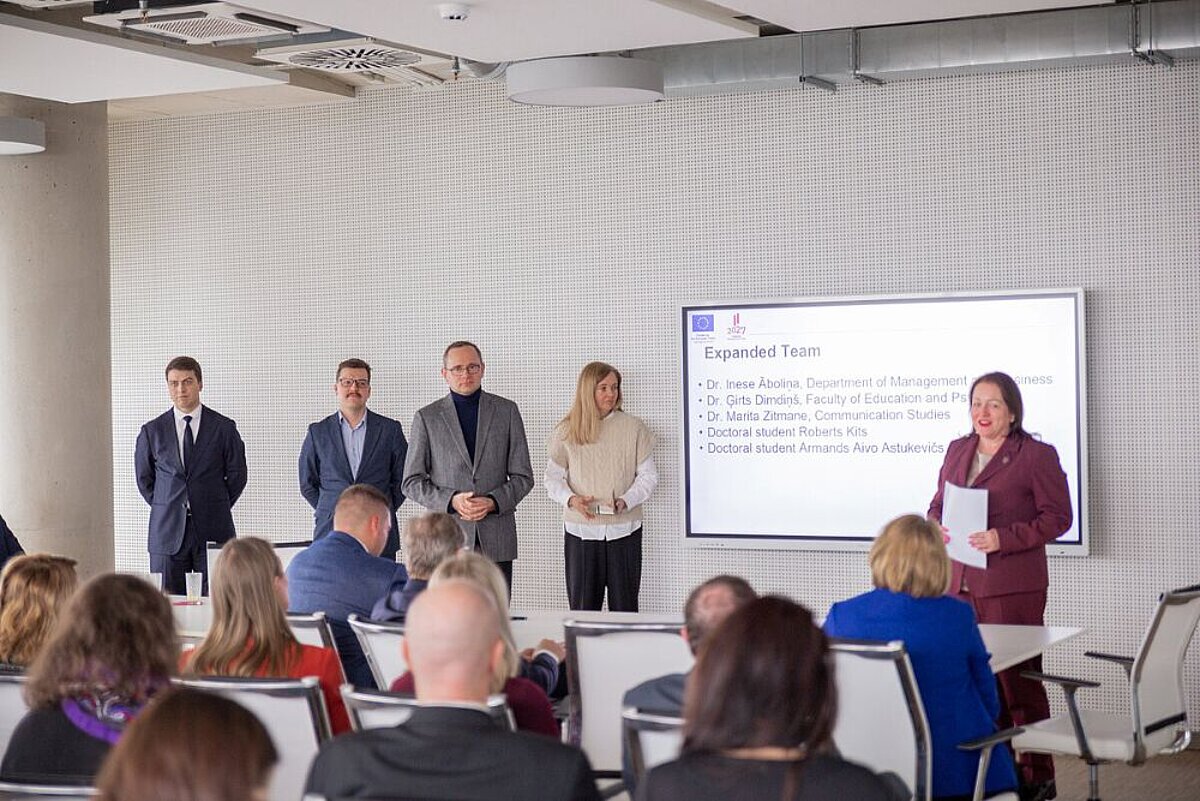
The project leader, leading researcher Ieva Birka, together with leading researcher Didzis Kļaviņš, presented findings that illuminate public perceptions of threats in several Baltic Sea region cities (Helsinki, Tallinn, Riga, Vilnius, and multiple cities in Germany), levels of awareness and practical preparedness for crises, as well as significant gender and ethnic differences in threat perception and capacity for action. The study highlights a gap between policymakers’ expectations and the actual level of public preparedness. Although residents in the surveyed cities generally report feeling safe and acknowledge existing risks, only 16% of Riga’s residents, for example, consider themselves sufficiently prepared for crisis situations.
The findings underscore the urgent need to improve public communication, enhance infrastructure, and ensure that every household possesses practical knowledge on how to act in emergency situations. Based on survey data from 3,000 residents of Baltic capitals and 12 expert interviews, the research team has developed concrete policy guidelines aimed at strengthening crisis preparedness among the population.
Upon completion of the project, the full research database has been made publicly available, granting open access to other researchers and policy planners.
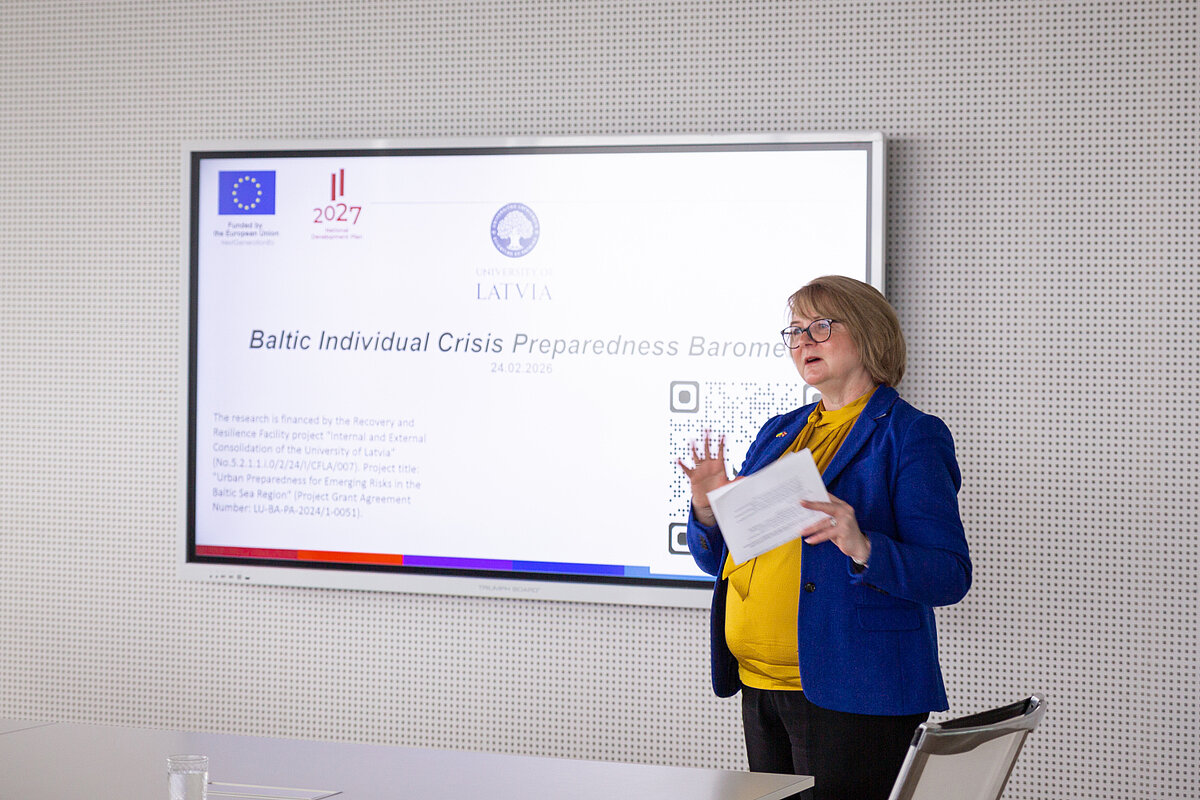
The outcomes of the study provide a strong foundation for further research in this critical field. Under the University of Latvia’s Development Programme for High-Impact Research, a grant has been awarded for the implementation of a new project. From 2026 to 2028, the Faculty of Economics and Social Sciences research team will carry out the project “Baltic Individual Crisis Preparedness Barometer.”
The new grant will significantly expand the scope of the research, analysing individual preparedness for emergencies in eight Baltic Sea region cities: Helsinki, Tallinn, Riga, Vilnius, Warsaw, cities in Germany, Copenhagen, and Stockholm.
Project leaders emphasize that civil preparedness and societal resilience constitute a shared regional security challenge rather than the sole responsibility of individual states.
Participants in the discussion highlighted the importance of interdisciplinary cooperation and the role of continuous data analysis in fostering a safer and more resilient Baltic Sea region.
The research project “Urban Preparedness for New Risks in the Baltic Sea Region” (Grant Agreement No. LU-BA-PA-2024/1-0051) is one of the activities implemented within the Recovery and Resilience Facility–supported project “Internal and External Consolidation of the University of Latvia” (No. 5.2.1.1.i.0/2/24/I/CFLA/007).

, which reveals that fewer than one-fifth of residents demonstrate practical preparedness for emergency situations, strengthening societal resilience has emerged as an urgent national security priority.)