
 CONFERENCE
Programme level: Master's Degree Programme
Language of instruction: Germanic Studies: Latvian –German; Romance Studies: Latvian –French / Italian / Spanish; Russian and Slavic Studies: Latvian–Russian; Classical Studies: Latvian
Study form and duration: full-time - 4 semesters
Credits: 12 ECTS
Obtainable degree or qualification: Master of Humanities
Number of study places for admission in 2026/2027 “Classical studies”: State-funded study places - 10, study places for tuition fee - 20
Number of study places for admission in 2026/2027 “German studies”: State-funded study places - 10, study places for tuition fee - 20
Number of study places for admission in 2026/2027 “Romance studies”: State-funded study places - 10, study places for tuition fee - 30
Number of study places for admission in 2026/2027 “Russian and Slavic studies”: State-funded study places - 10, study places for tuition fee - 20
Tuition fee per year: 2600 EUR for EU/EEA/Swiss citizens, EU Long-term resident permit holders and their family members. 3900 EUR for citizens of other countries
Study location: Riga, city centre
This interdisciplinary, multilingual study program provides advanced academic training in the languages and cultural environments of Europe’s key regions, explored both from historical and contemporary perspectives. It enables students to develop a comprehensive understanding of the interplay between language, literature, and culture; to deepen their expertise in a specific linguistic and cultural field (Classical languages and ancient heritage, Germanic, Romance – French, Spanish, and Italian, Slavic – Russian, Czech, Polish, and Ukrainian or the Baltic Sea region); and to acquire up-to-date research methods relevant to these areas of study.
TThe Master’s study programme “Linguistics, Literary Studies and Regional Cultural Studies” consists of four subprogrammes (see detailed description below). The compulsory component amounts to 12 ECTS per semester, of which 6 ECTS (lectures) are offered jointly to all subprogrammes in two streams – Latvian and English – while 6 ECTS (seminars) are delivered within the respective subprogrammes.
Germanic Studies
This sub-program prepares academically qualified specialists in German Studies and provides education that allows students to engage in scholarly research on the cultural-historical heritage of the Baltic region and on current issues in contemporary German Studies. It highlights various aspects of German Studies within the broader context of the humanities, while – from an intercultural perspective (Baltics–Germany–Scandinavia), special attention is paid to exploring historically and currently significant links for the Baltic region.
Classical Studies
Unique in Latvia, the Classical Studies sub-program provides philological and cultural-historical knowledge of the most important cultural phenomena of Europe’s classical antiquity. It offers insights into ancient languages (Latin and Ancient Greek), ancient literature and culture, mythology, rhetoric, and textual studies, while also exploring their influence on the development of ideas and values in later European cultural history, with particular attention to the Baltic region.
Romance Studies
This unique sub-program offers advanced master’s-level study in Romance languages and prepares highly qualified specialists in either French, Spanish, or Italian, with the option of combining two Romance languages. Most courses are taught in the target language, enabling students to immerse themselves fully in academic and cultural contexts. The program combines expertise in linguistics, literature, and culture with training in cultural studies, language teaching, and translation, while also engaging with current approaches in Digital Humanities and the use of AI in research. With its interdisciplinary perspective the program prepares graduates with strong international and multilingual profiles for careers in education, research, cultural mediation, and beyond.
Russian and Slavic Studies
This sub-program prepares highly qualified and competitive specialists in Russian and Slavic linguistics and literary studies. It is oriented toward regional and intercultural studies, with particular emphasis on the functioning of the Russian language and literature in a broad sociocultural context, the theoretical characterization of Slavic languages and literatures, and the interactions of Slavic languages and literatures with the Latvian language, literature, and culture. Students can apply their existing knowledge of Slavic languages (Russian, Czech, Polish, Ukrainian) by analyzing media, political, and ethnolinguistic texts, thus deepening their understanding of the interrelations between language, culture, and society.
Study Programme Director
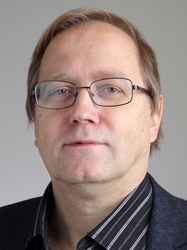
Professor Igors Koškins
Deputy Programme Director
Professor Jeļena Vladimirska
The programme includes a set of common study courses, as well as specialization courses offered by the sub-programmes in literature and culture, linguistics, and interdisciplinary studies. It also contains an elective part, which allows students to individualize their studies and take courses that correspond to their specific interests.
All students in the programme take courses such as Comparative Literary Studies; Cultural Heritage and New Identities; Language Theories and Linguistic Diversity; Contacts between Regional Languages and Cultures; Research and Communication; and Project Development in the Humanities.
Sub-programme “Germanic Studies”:
Regional and transnational aspects of German-speaking cultural environments; Cultural studies paradigms in Germanic studies; Media, communication, and cultural mediation processes in Germanic studies; Development trends in contemporary literary theory; The word in diachrony and the history of lexicography; Language and regionality; Linguistic pragmatics; Contacts and contrasts of Nordic languages and cultures; Intercultural communication in economics and translation aspects of applied texts; Literary text translation, etc.
Language of instruction – German and Latvian.
Sub-programme “Classical Studies”
Study of the Cultural Heritage of Antiquity: Interdisciplinary Perspectives; Classical Mythology in Literature and Art; Genres of European Poetry and Drama: Greek and Roman Foundations; Genres of European Prose: Greek and Roman Foundations; History of the Classical Languages; Rhetoric and Public Speaking: The Classical Heritage;
Reception of Classical Heritage in the Baltic Region; Humanist Texts in the Baltic Region; Practicum in Translation and Poetic Rendering of Greek/Latin Texts; Digital Environment for Classical Studies, etc.
Language of instruction: Latvian.
Sub-programme “Romance Studies”:
Intercultural communication; National specificity and current trends in the literature of the Romance-language area; Spoken language in Romance languages: theoretical approaches and linguistic analysis; Translation studies in the context of Romance languages; Romance language acquisition: approaches and innovations; Analysis of contemporary French literary texts; Semiotics of French culture: cinema and theatre; French lexicology and contemporary terminology; Language and diplomacy; Modernism in Spanish and Latin American art and literature; Contemporary Spanish culture and society; Spanish lexicology and contemporary terminology; Language contact and language policy in Spain; Society and discursive diversity in contemporary Italy; Italian lexicology and contemporary terminology; Linguistic diversity and variation in contemporary Italy; Language contact and language policy in Italy, etc.
Language of instruction: French, Spanish or Italian (depending on the student’s choice), and Latvian.
Sub-programme “Russian and Slavic Studies”
Contemporary Russian literature and culture; Current issues in the theory and history of 20th–21st century Russian literature; Problems of contemporary Slavic folklore; Literature in Slavic countries and postcolonial studies; Russian language in theoretical and applied aspects; History and theory of Russian–Latvian language contact; Theoretical grammar of contemporary Slavic languages; Ethnopsycholinguistics and political linguistics of Russian and Slavic languages; Russian and Slavic literature in the Baltic region; Slavic literature in translation; Russian culture in the Baltic region at the beginning of the 20th–21st centuries; Ethnocultural stereotypes in Slavic languages, literature, and folklore, etc.
Language of instruction: Russian and Latvian.
Graduates of the master’s programme “Linguistics, Literary Studies and Regional Cultural Studies”
can work in a wide range of public, non-governmental, and private institutions – in the diplomatic missions of Latvia and other countries, in various Latvian and European institutions (including translation services), in universities and schools, in research institutes, in mass media and advertising agencies, in editorial offices and publishing houses, in libraries, in language learning centers, in tourism agencies, as well as in companies of different profiles in Latvia and worldwide, etc.
After completing the master’s programme, graduates may continue their studies at the doctoral level.
1. General Conditions
1.1. For higher-level study programs – second-cycle higher education programs and first-cycle short-cycle higher education programs conducted after the completion of the first-cycle higher education – the admission requirement is the corresponding previous education in accordance with the program conditions, as evidenced by a diploma of previous education.
1.2. If the previous education record includes information about the study workload in credit points, the following notations are used:
1.2.1. LV credits – credits earned before 1 September 2024, according to the Higher Education Law provisions in effect until 10 October 2022 (1 LV credit = 1.5 ECTS credits);
1.2.2. ECTS credits – credits earned after 1 September 2024 or converted to the European Credit Transfer and Accumulation System (ECTS).
1.3. Applicants are ranked based on a 1000-point scale competition score, which can be calculated using the following criteria:
1.3.1. Entrance examination, indicating: exam name (coefficient × maximum points = maximum attainable points);
1.3.2. Grade from the previous education diploma, indicating: grade name (coefficient × maximum points = maximum attainable points);
1.3.3. Experience evaluation, indicating: type of experience (coefficient × maximum points = maximum attainable points).
1.4. If the previous education diploma does not indicate the competition criterion required for admission – grade in final examinations – this criterion is replaced with the weighted average grade.
1.5. If the previous education diploma does not indicate the required competition criterion – total grade in final examinations – the average grade of final examinations is taken into account (if final examinations consist of a final thesis and/or final exam(s)) or the grade of the final thesis or exam (if the final examination consists only of a thesis or exam).
1.6. If the previous education diploma does not indicate the required competition criterion – weighted average grade – it is calculated according to the LU procedure (established by LU Order No. 1/66 of 29 May 2002 “On the Preparation and Implementation of a Unified Diploma Supplement at LU”). If the diploma does not indicate the study course workload in credits, the calculation of the weighted average grade takes into account the course workload in hours. If the diploma indicates neither credits nor hours, the average grade is calculated based on course grades.
1.7. If grades in the previous education diploma are given on a 5-point scale, they are converted to the 10-point scale. Grade 5 (excellent) is converted to 9 (excellent), grade 4 (good) to 7 (good), grade 3 (satisfactory) to 5 (satisfactory).
1.8. Grades in courses in foreign-obtained education documents are converted to the Latvian 10-point scale in accordance with the Student Service Director’s instructions on equivalency scales.
1.9. Graduates of LU in the 2025/2026 academic year have the right to apply for out-of-competition registration according to the program conditions.
1.10. For persons eligible for out-of-competition registration, budget-funded study places are provided for 50% of the number of budget study places established in the program within the LU-approved study places. If the number of budget places is odd, the majority goes to persons eligible for out-of-competition registration.
1.11. If the number of applicants exceeds the number of budget study places allocated for out-of-competition registration, a competition is held considering 60% weighted average grade and 40% total grade in final examinations in previous studies.
1.12. Applicants who do not gain the right to out-of-competition registration may apply for study places in the general admission procedure.
1.13. Foreigners applying for programs with Latvian as the language of instruction must demonstrate at least B2 proficiency in Latvian (unless otherwise specified in the program admission conditions), except if previous education was completed in Latvian. Latvian language proficiency is demonstrated by any official document indicating the language level according to the Common European Framework of Reference for Languages (CEFR). If unavailable, the applicant may submit a personally certified self-assessment form demonstrating B2-level proficiency.
1.14. Foreigners applying for programs in English, German, French, Spanish, Italian, or Russian must demonstrate language proficiency through the international language test results listed in point 1.15, provided in the last five years. Language proficiency is not required if previous education was in the respective language (English – only if obtained in the UK, USA, Australia, the Bahamas, Canada, Ireland, New Zealand, Saint Vincent and the Grenadines). For EU, EEA, or Swiss citizens, language proficiency may also be demonstrated via the language grade included in previous secondary or higher education, equivalent to at least B2 (for the master’s program “English Studies” – at least C1).
1.15. Language proficiency is demonstrated by the following international language test results:
1.15.1. English:
- TOEFL iBT: minimum 80 points (master’s “English Studies” – 90 points);
- TOEFL Essentials: minimum 9 points (master’s “English Studies” – 10 points);
- IELTS: minimum 6 overall (master’s “English Studies” – 7);
- Cambridge English: Proficiency (CPE)/C2 Proficiency: any level;
- Cambridge English: Advanced (CAE)/C1 Advanced: any level;
- Cambridge English: First (FCE)/B2 First – B (not applicable to master’s “English Studies”);
- Pearson Test of English (PTE) General: at least B2 (master’s “English Studies” – C1);
- PTE Academic: at least 55 points (master’s “English Studies” – 67 points);
- LanguageCert International ESOL: Communicator B2 (written and oral) (master’s “English Studies” – C1).
1.15.2. German:
- DSD II;
- DSH at least level 2;
- TestDaF at least level 4 in all parts;
- Goethe-Zertifikat at least B2.
1.15.3. French:
- DELF B2;
- DALF at least C1;
- TCF at least 400 points;
- TEF at least 541 points.
1.15.4. Spanish:
- DELE at least B2.
1.15.5. Italian:
- CILS at least B2;
- CELI at least B2;
- PLIDA at least B2.
1.15.6. Russian:
- TORFL (ТРКИ) at least B2.
1.16. Foreigners whose previous education was not obtained in the EU, EEA, or Switzerland must provide a SAT score of at least 1200, GMAT at least 595, or GRE at least 320 within the last five years. If SAT and GMAT/GRE results are equal and places are limited, preference is given to candidates with GMAT or GRE.
1.17. Foreigners who are not citizens of the EU, EEA, or Switzerland (except LU graduates) must participate in an online interview to verify their motivation and the authenticity of their intent to study at LU.
Sub-programme “Germanic Studies”
Admission Requirements for Summer Intake for the 2026/2027 Academic Year
General Requirements
Language of instruction: English and German
Previous education:
Option 1:
First-cycle higher education* or equivalent higher education in linguistics, literary studies, or cultural studies.
Formula for calculating the competitive score: weighted average grade (60 × 10 = 600) + total (or average) grade of final examinations (40 × 10 = 400).
Option 2:
First-cycle higher education* or equivalent higher education in other humanities or teacher education (language, literature and/or cultural studies programs).
Formula for calculating the competitive score: weighted average grade (30 × 10 = 300) + total (or average) grade of final examinations (35 × 10 = 350) + entrance examination (1 × 350 = 350).
Minimum score required in the entrance examination for admission: 100.
Additional requirement for the entrance examination: submission of a motivation letter in German on the topic “German language, literature and culture: motivation for the choice and research interests in German Studies” (2000–3000 characters without spaces).
Option 3:
First-cycle higher education or equivalent higher education in another field and one year of professional/creative experience in a humanities-related domain.
Formula for calculating the competitive score: weighted average grade (30 × 10 = 300) + total (or average) grade of final examinations (35 × 10 = 350) + entrance examination (1 × 350 = 350).
Minimum score required in the entrance examination for admission: 100.
Additional requirement: submission of a motivation letter in German on the topic “German language, literature and culture: motivation for the choice and research interests in German Studies” (2000–3000 characters without spaces).
The entrance examination consists of two parts:
– motivation letter
– interview on topics related to linguistics, literary studies, and cultural studies.
Note: Curriculum vitae (CV) must be submitted as proof of professional/creative experience.
Additional Requirements for Program Tracks with English as a Compulsory Language of Study
- For Latvian citizens:
- For all foreign applicants:
- For foreign applicants who are not citizens of the EU, EEA, or Switzerland:
The average grade in higher education must be at least 60% of the maximum possible; all grades in the previous education document must be no lower than 4 on a 10-point scale.
Applicants whose previous education was not obtained in German must demonstrate German language proficiency, certified by the German language tests listed in section 1.15 of the General Requirements or by other documents proving German language skills at least at level B2, or by a grade in German in the previous education document (not lower than 6 on a 10-point scale).
Applicants must also demonstrate English language proficiency, certified by the English language tests listed in section 1.15 of the General Requirements or by other documents proving English language skills at least at level B2, or by a grade in English in the previous education document (not lower than 6 on a 10-point scale), except when previous education was obtained in English.
German and English language proficiency is required in accordance with section 1.14 of the General Requirements.
*Bachelor’s degree or second-level professional higher education.
Sub-programme “Romance Studies”:
Admission Requirements for Summer Intake for the 2026/2027 Academic Year
General Requirements
Language of instruction: English and French or Italian or Spanish.
Previous education:
Option 1:
First-cycle higher education* or equivalent higher education in linguistics, literary studies, or cultural studies.
Formula for calculating the competition score:
weighted average grade (60 × 10 = 600) + final examination overall (or average) grade (40 × 10 = 400).
Option 2:
First-cycle higher education* or equivalent higher education in other humanities or in teacher education (language, literature, and/or culture teacher education).
Formula for calculating the competition score:
weighted average grade (30 × 10 = 300) + final examination overall (or average) grade (35 × 10 = 350) + entrance examination (1 × 350 = 350).
Minimum score for the entrance examination: 100.
Additional requirement for the entrance examination:
submission of a motivation letter in French/Spanish/Italian (chosen by the applicant) on the topic “Studies in Romance Languages and Cultures: Motivation and Research Interests” (2000–3000 characters without spaces).
Option 3:
First-cycle higher education or equivalent higher education in another field, and one year of professional/creative experience in a field related to the humanities.
Formula for calculating the competition score:
weighted average grade (30 × 10 = 300) + final examination overall (or average) grade (35 × 10 = 350) + entrance examination (1 × 350 = 350).
Minimum score for the entrance examination: 100.
Additional requirement:
submission of a motivation letter in French/Spanish/Italian on the topic “Studies in Romance Languages and Cultures: Motivation and Research Interests” (2000–3000 characters without spaces).
The entrance examination consists of two parts:
- motivation letter,
- interview on questions related to linguistics, literary studies, and cultural studies.
Note: A curriculum vitae (CV) is required to confirm professional/creative experience.
Additional Requirements for Studies with a Mandatory Component in English
- For Latvian citizens:
Applicants whose previous education was not obtained in French, Spanish, or Italian must provide proof of proficiency in one of these languages (French, Spanish, or Italian).
Accepted proofs: international language test results listed in General Requirement 1.15, or other certificates confirming at least B2 level, or a grade in French/Spanish/Italian in the previous education document (minimum grade 6/10).
Language proficiency may also be assessed through an interview conducted by specialists from the LU Faculty of Humanities (Departments of Italian, Iberian, or French Studies).
Additionally, applicants must demonstrate English language proficiency (minimum B2 level), certified by international English test results listed in Requirement 1.15, or a grade of at least 6/10 in English in the previous education document, unless previous studies were completed in English.
- For all international applicants:
Proficiency in French, Spanish, or Italian and in English is required, in accordance with General Requirement 1.14. - For international applicants who are not citizens of the EU, EEA, or Switzerland:
The average grade in courses at the previous education level must be at least 60% of the maximum.
All grades in the education document must be no lower than 4 (on a 10-point scale).
*Bachelor’s degree or second-level professional higher education.
Sub-programme “Russian and Slavic Studies”
Admission Requirements for Summer Intake for the 2026/2027 Academic Year
General Conditions
Language of instruction: English and Russian
Previous Education
Option 1:
A first-cycle higher education degree* or an equivalent qualification in linguistics, literary studies, or cultural studies.
Calculation of the competition score:
- Weighted average grade (60 × 10 = 600)
- Final examination grade (total or average) (40 × 10 = 400)
Option 2:
A first-cycle higher education degree* or an equivalent qualification in other humanities or in teacher education (language, literature and/or culture teaching).
Calculation of the competition score:
- Weighted average grade (30 × 10 = 300)
- Final examination grade (total or average) (35 × 10 = 350)
- Entrance examination (1 × 350 = 350)
Minimum score in the entrance examination: 100.
Additional requirement:
A motivation letter in Russian (2000–2500 characters without spaces), including the reasons for choosing the programme, a description of professional experience, and an explanation of how the acquired knowledge will be used in the future.
Option 3:
A first-cycle higher education degree* or an equivalent qualification in another field, plus at least one year of professional or creative experience in the humanities.
Calculation of the competition score:
- Weighted average grade (30 × 10 = 300)
- Final examination grade (total or average) (35 × 10 = 350)
- Entrance examination (1 × 350 = 350)
Minimum score in the entrance examination: 100.
Additional requirement:
A motivation letter in Russian (2000–2500 characters without spaces), including the same aspects as in Option 2.
Entrance Examination
The entrance examination consists of two parts:
- A motivation letter
- An interview on topics related to linguistics, literary studies, and cultural studies
Note: A CV is required to verify professional/creative experience.
Additional Requirements for Programmes with English as a Mandatory Language of Instruction
1) For Latvian nationals:
- Applicants whose previous education was not obtained in Russian must demonstrate Russian language proficiency (a grade of at least 6 on a 10-point scale) or provide a positive assessment from specialists of the LU Faculty of Humanities, Department of European Languages, Centre for Slavic Studies (via interview).
- English language proficiency at B2 level (proved by an international test or a grade of at least 6), except when previous education was completed in English.
2) For foreign applicants:
Russian and English language proficiency must comply with Section 1.14 of the General Conditions.
3) For foreign applicants who are not citizens of the EU/EEA or Switzerland:
- The weighted average grade in previous education documents must be at least 60% of the maximum.
- All grades must be no lower than 4 on a 10-point scale.
Additional Information on the Motivation Letter
The motivation letter must include:
- The rationale for choosing the selected Master’s subprogramme
- A description of professional preparation or work experience related to the field
- The knowledge or skills that need to be acquired in the programme
- The intended future use of the acquired knowledge and skills
Students have the opportunity to participate in the international student exchange programmes Campus Europae and Erasmus+, and to study or carry out internships throughout Europe.
Erasmus+ traineeship mobility
Erasmus+ traineeship mobility offers students the opportunity to undertake an internship in companies or institutions abroad in one of the Erasmus+ programme countries.
The objectives of the Erasmus+ traineeship are to:
- help students adapt to the requirements of the European labour market;
- provide opportunities to develop students’ skills, including language skills, and to deepen their understanding of the economic and social culture of the host country in the context of gaining work experience;
- foster the development of well-qualified, open-minded, and internationally experienced young professionals.
All students at every level (Bachelor’s, Master’s, Doctoral) who are enrolled at the University of Latvia and are not on academic leave are eligible to participate in Erasmus+ traineeship mobility. Priority is given to students whose study programme at the University of Latvia includes a compulsory internship.
Doctoral students may participate in Erasmus+ traineeship mobility if the purpose is the preparation of their doctoral thesis and the related research.
Erasmus+ traineeships can be carried out in:
- foreign companies;
- training or research centres and other organisations (except EU institutions and bodies);
- organisations administering EU programmes;
- the diplomatic representation (embassy) of the student’s country of origin.
The minimum duration of the traineeship mobility period is 2 months, and the maximum is 12 months. Within one cycle of studies (Bachelor’s / Master’s / Doctoral), a student may spend up to 12 months in total in Erasmus+ study and/or traineeship mobility.
Recent graduates may also carry out an Erasmus+ traineeship: it must be started and completed within 12 months after graduation, and the application must be submitted during the final study year, at least 2 months before graduation. The University of Latvia guarantees Erasmus+ funding for 3 months of traineeship. For information on additional funding, students should contact the Mobility Department.
Forthem exchange programmes
Promoting European regional cooperation, transnational higher education and mobility
The nine partner universities of the FORTHEM Alliance aim to transform and shape the future of the European Higher Education and Research Area. To this end, the universities have created an interconnected, student-centred and inclusive European University for research, education, innovation and knowledge transfer, grounded in strong regional ties.
FORTHEM is an alliance with a balanced geographical distribution across Europe. All universities are firmly embedded in the social and economic fabric of their respective European regions; some are connected through political structures such as town twinning and regional partnerships. The alliance represents a community of 225,000 students and 30,000 staff members, engaging with more than two million citizens. FORTHEM is driven by a strong commitment to inclusion: working for THEM means working for every student and every staff member, across all nine regions.
FORTHEM is dedicated to establishing a “knowledge ecosystem” within its regions, enhancing innovative, student-oriented pedagogy across all nine universities, and ensuring that multidisciplinarity, multiculturalism and multilingualism remain essential features of education, research and innovation. FORTHEM brings together the unique strengths of each partner university to provide outstanding international opportunities for all students and staff. At the core of FORTHEM lies co-creation with students, staff, and public and private sector partners in the field of education.
FORTHEM partner universities:
- Johannes Gutenberg University Mainz (Germany)
- University of Jyväskylä (Finland)
- University of Palermo (Italy)
- University of Valencia (Spain)
- University of Agder (Norway)
- Université Bourgogne Europe (France)
- University of Opole (Poland)
- “Lucian Blaga” University of Sibiu (Romania)
- University of Latvia (Latvia)
Info email :
Study Program Coordinator:
Jeļena Sevastjanova
- Phone: +371 67034924
- Email: jelena.sevastjanova@lu.lv