
 CONFERENCE
Programme level: Master's Degree Programme
Language of instruction: Latvian
Study form and duration: The short module (50CP): full-time – 1,3 years, part-time - 1,8 yers. The long module (80CP): full time – 4 semesters; part time – 5 semesters years.
Credits: 50 ECTS or 80 ECTS
Obtainable degree or qualification: Master's degree in educational sciences
Number of study places for admission in 2025/2026: State-funded study places - 25, study places for tuition fee - ?
Tuition fee per year: Full-time: 2400 EUR for EU/EEA/Swiss citizens, EU Long-term resident permit holders and their family members; 4000 EUR for citizens of other countries. Part-time: 1800 EUR for EU/EEA/Swiss citizens, EU Long-term resident permit holders and their family members. 3800 EUR for citizens of other countries
Study location: Full-time: Riga; Part-time: Riga and branches
Director of the study program:
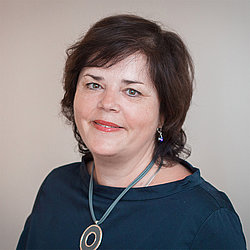
prof. Dita Nīmante
In the short module in 4 specializations:
Teaching and Learning for Competence,
Diversity and Inclusion in Education,
Education Management,
Human Behaviour and Education.
The specialization ‘Human Behaviour and Education’ will address the behavioural aspects of learners who have become relevant in education in the last decade. Educators need both knowledge and skills and competencies to understand this phenomenon and to know possible pedagogical techniques for solving behavioural issues. In the specialization, students will study various factors that affect human behaviour, as well as learn practical pedagogical solutions for the promotion of positive behaviour in the educational environment.
In the specialization ‘Education Management’ students' understanding will be developed and theoretical and practical knowledge about education management, about education policy in the state and local governments, management of organizations, leadership in education, education economics, educational work management will be supplemented.
In the specialization ‘Teaching and Learning for Competence’, students will solve the diverse problems of modern education, which are related to new challenges and changes in education policy and practice, implementation of the project “School 2030” in Latvian schools, introduction of new educational standards.
In the specialization ‘Diversity and Inclusion in Education’ will promote understanding of human diversity as an enriching factor in education. In the age of globalization and digitalisation, diversity is an integral part of daily lives. The term ‘diversity’ includes differences and similarities such as gender, age, experience, beliefs, patterns of behaviour, language, ethnicity and religion, special needs and sexual orientation.
In the long module ‘Pedagogy’ there is an opportunity to acquire pedagogical, pedagogical leadership and research competence for students with or without previous pedagogical education.
By entering the programme, the candidate must make a choice of which module and in which specialization the studies will be chosen.
Within all the specializations and both modules, it will be possible to choose Part B courses that are not directly related to the specialization. The following courses are offered:
Development of ‘Methodological Materials’, ‘Mentoring in Education’, ‘Organization of Technology Enriched Learning Process’, ‘Management Psychology’, ‘Critical Thinking Approach in Learning Process’, ‘Social Emotional Teaching’, ‘System Approach in Educational Management’, ‘Sociology of Education’, ‘Values and Human Self-Image in the Cultural Context’, ‘Intercultural Dialogue in Education’, ‘Violence in School’, ‘Assessment and Evaluation in Modern Pedagogy’.
Description of the entrance examination
Entrance examinations will consist of two parts:
Written part. Essay on current issues and problems in education in the chosen specialization or problems in education (300-500 words);
Oral part. Interviews during which the candidate's communication, leadership and foreign language skills are evaluated.
The right to study for a Doctoral programme.
The opportunities for further studies: in European Union programmes for mobility and cooperation in higher education, for instance, Erasmus; European Union programmes for professional development and the provision of global education, such as Erasmus +; in further education, self-study.
Job opportunities
The employment opportunities at the level of the main third, second and first group, in correspondence with the classification of professions of the Republic of Latvia.
Leaders: legislators, officials, and managers; officials of associations and foundations; administrative managers and commercial directors; Research and Development managers; production and specialized services managers; managers of children's social care and social rehabilitation services; education leaders.
Specialists: business and administration specialists, conference and event organizers.
Senior specialists: senior specialists in the field of education, academic staff of universities and other higher education institutions, vocational education teachers, secondary education teachers, primary education teachers, pre-school teachers, other senior education specialists, educational methodology specialists, special education teachers, others: music teachers, Information Technology, communications and vehicle instructors and trainers, senior education specialists, training and staff development senior specialists.
You can find out about the admission requirements for the study program by switching to the Latvian version of the website.