
 CONFERENCE
Program level: academic doctorate
Language of study: Latvian
Form and duration of studies: full-time attendance - 6 semesters or 3 years; part-time attendance - 8 semesters or 4 years
Amount in credit points: 216 ECTS
Degree awarded: Doctoral Degree of Science Doctor of Science (Ph.D.) in Natural Sciences
Number of places for admission in the 2026/2027 academic year: follow the information
Tuition fee in the 2026/2027 academic year: 3 300 EUR for EU/EEA/Swiss Confederation citizens, permanent residents and their family members; 7500 EUR for citizens of other countries.
Study location: Academic Centre of the University of Latvia, Riga, 1 Jelgava Street
Accreditation until: 20.12.2029.
The doctoral study programme “Natural Sciences: Chemistry” ensures the training of highly qualified specialists in various sub-disciplines of chemistry, providing doctoral students with in-depth theoretical knowledge and practical skills necessary for independent academic and scientific research work.
The implementation of the doctoral study programme, in close cooperation with the Faculty of Medicine and Life Sciences, also involves the University of Latvia and other Latvian scientific institutes. The programme supports the opportunity for doctoral students to study in parallel in a joint doctoral programme in cooperation with foreign universities.
Acting study programme director
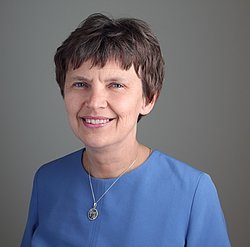
Prof. Zaiga Krišjāne
The Doctor of Chemistry study program offers studies in the following sub-fields of chemistry:
- Analytical chemistry,
- Physical chemistry,
- Inorganic chemistry,
- Organic chemistry.
The programme offers rigorous research training and transversal competencies through structured coursework, field-specific doctoral examinations (in the discipline, subdiscipline, and a foreign language), and continuous engagement in scientific research. Throughout the studies, doctoral candidates carry out original research in their chosen topic, disseminate results in peer-reviewed publications, participate in international conferences, undertake mobility visits, and contribute to academic activities. The programme concludes with the completion and public defence of the doctoral thesis, demonstrating readiness for independent research work.
Graduates of the programme are qualified for employment in universities, scientific research institutes, and research, quality control, and testing laboratories within both the public and private sectors. In addition, graduates are well prepared to establish their own private enterprises or specialised laboratories, as well as to pursue postdoctoral research projects at international institutions.
Previous academic education: second cycle higher education (master's degree) in biology, physics, chemistry, chemical technology, materials science, pharmacy or equivalent higher education.
Additional requirements: doctoral thesis proposal(.docx) agreed with a potential scientific supervisor, CV, motivation letter, proof of scientific research activities and other documents. More information about the documents to be submitted.
Entrance examination: oral presentation of the doctoral thesis proposal and planned research at the Doctoral Council. The Council evaluates the applicant's academic knowledge, the quality and relevance of the research proposal, as well as the applicant's previous research activities.