
Bachelor`s degree Programme "Psychology"
Programme level: Bachelor's Degree Programme
Language of instruction: Latvian
Study form and duration: full-time - 6 semesters, part-time - 7 Semesters
Credits: 180 ECTS
Obtainable degree or qualification: Bachelor of Social Sciences degree in Psychology
Number of study places for admission in 2026/2027: full-time studies - state-funded study places -17, study places for tuition fee - 80; part-time studies - state-funded study places - 0, study places for tuition fee - 90
Tuition fee per year (ac. year 2026/27): Full-time studies - 2600 EUR for EU/EEA/Swiss citizens, EU Long-term resident permit holders and their family members. 3700 EUR for citizens of other countries. Part-time attendance - 2300 EUR, for citizens of other countries - 3500 EUR.
Study location: Riga
The study programme was accredited until 21 June 2025.
The Bachelor's of Psychology programme provides basic education in psychology and is the first step in getting a psychologist’s qualification!
LU offers a new educational model for psychologists that complies with the Psychologist Law, which stipulates that the qualifications of a psychologist can be obtained after studying in a 3-year psychology bachelor of psychology and 2-year professional master of psychology programmes.
The Bachelor of Psychology Study Programme enables students to acquire basic academic education in psychology, provides an opportunity to acquire and theoretical knowledge and research skills of the psychological science and its various cross-disciplinary aspects, promotes analytical and critical thinking skills, social communication skills, enhances the skills to address problems independently, and to take decisions.
NB! For psychology students, training starts at the end of August, when we invite first-year students to social skills training!
Programme director
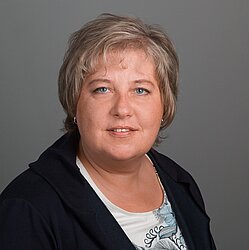
Docent Anda Upmane
In the Bachelor of Psychology Program, students have the opportunity to learn:
• basic psychology studies (introduction to the science of psychology, psychological biological basics, developmental psychology, personal psychology, social psychology, cognitive psychology, methodology, research methods, patho-psychology, neuropsychology, experimental psychology, etc.),
• courses in sub-sectors of psychology where students mainly deepen their knowledge in various practical fields of psychology (psychological counselling and ethics, family psychology, health psychology, organizational psychology, legal psychology, pedagogical psychology, stress management, etc.), as well as research work – coursework and bachelor's thesis.
• general education courses where students extend their academic focus to other fields of science (critical thinking, foundations of genetics, sociology, English, mathematical statistics),
• counselling, basic skills for group management and improving communication and communication skills.
During studies, the following teaching methods shall be used:
• lectures and seminars involving discussions, group work, etc. active forms of training;
• social-communicative skills and personal development training;
• own-initiative activities (papers, essays, observation and analysis, interviewing and analysis, preparing presentation);
• development and presentation of research projects, experiments;
• development and defence of research activities.
As part of the international ERASMUS + programme, students have the opportunity to study in more than 16 European universities - in the Netherlands, Germany, Sweden, Lithuania, Poland, Portugal, Slovakia, etc.
Graduates have the opportunity to continue their studies in a master's or professional master's degree programmes in psychology, or in higher-level study programmes in a broad spectrum of social, humanities and educational sciences (e.g. community leadership, filology, pedagogies, librarians, diplomacy, communications sciences, policy science, sociology, theology, philosophy, history, etc.) in Latvia and abroad. Graduates can enroll in studies at different research institutions and work in professions where good communication skills are required. However, working as a psychologist requires a professional master's education in psychology.
You can find out about the admission requirements for the study program by switching to the Latvian version of the website.
zane.krezevska@lu.lv