
 CONFERENCE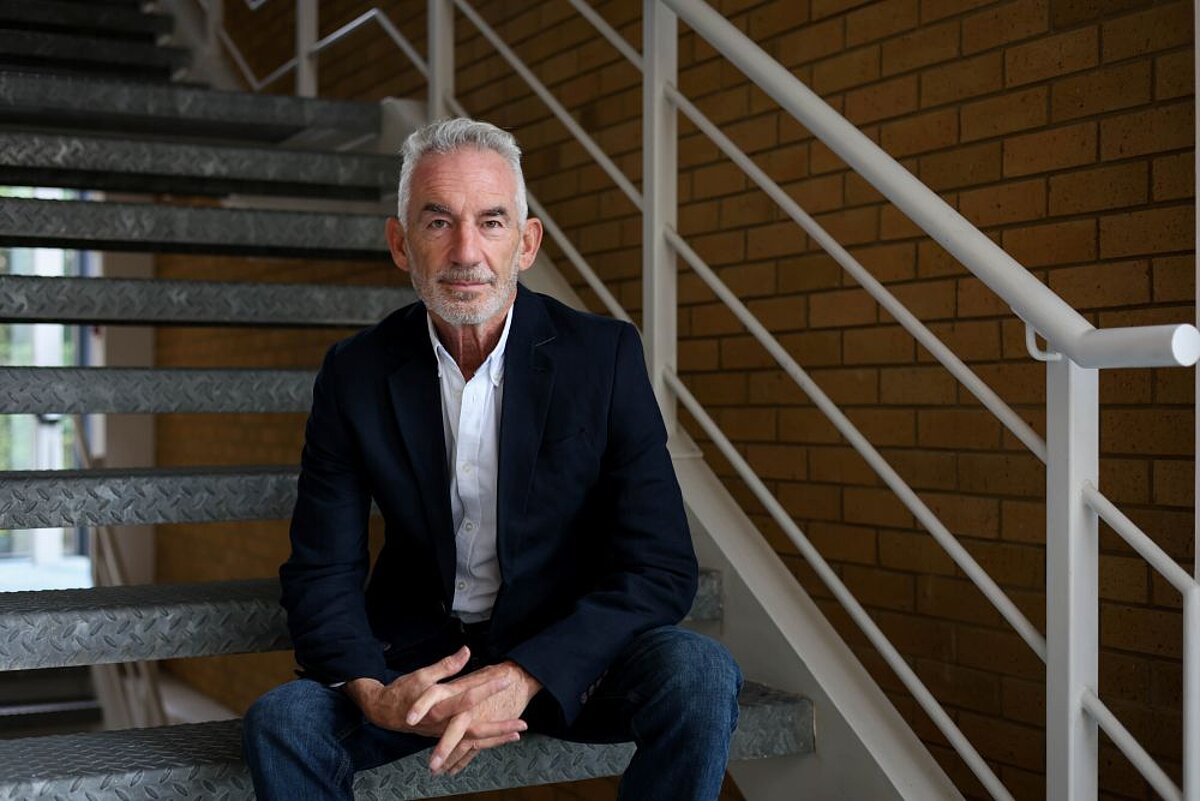
The lecture will take place on Friday, 6 March, 13:00 – to be attended in person at the Great Hall of the University of Latvia (Riga, Raiņa bulvāris 19). The initiator of the professor's visit to Riga is Latvijas Banka and the lecture is being held in cooperation with the University of Latvia, the University of Latvia Foundation and the Stockholm School of Economics in Riga.
The lecture is held as part of the lecture series “Academic Readings”, organised by UL Foundation. Attendance at the lecture is free of charge, subject to registration on the website of UL Foundation.
Tim Jackson is one of the most prominent representatives of the post-growth economic thought and the director of the Centre for the Understanding of Sustainable Prosperity (CUSP). His work is internationally recognised for its interdisciplinary, bold and often provocative perspective on seemingly self-evident concepts such as prosperity, productivity and economic growth.
In his publications and speeches, the professor consistently returns to a fundamental question: “What does well-being mean on a planet with finite resources?” In contrast to the traditional approach that reduces well-being to the accumulation of wealth, Jackson defines it as a balance between scarcity and abundance – as caring for human needs, relationships, and the ecosystems on which we depend. Like health, well-being is a state, not an accumulative resource, and this view contrasts sharply with the dominant logic of consumption and striving for “always more”.
The professor also offers an alternative view of productivity, emphasizing the importance of redistribution of work and creativity. He reminds us: “Work is not only a source of livelihood, but also a primary way to participate in the life of society.” Similarly, Jackson criticizes the speculative understanding of investment, emphasizing that “investment is a tool with which we create, protect and maintain the assets on which tomorrow’s prosperity depends.”
In his analysis, the economist calls for a rethinking of the policy instruments used, and, moreover – for a review of the economic goals themselves. He emphasizes the high price of economic growth as an end in itself – the risks of financial, social and environmental instability – and also analyses the hidden costs and social burdens created by certain sectors, such as the modern food industry.
In 2009, during the global financial crisis, when G20 leaders were meeting in London to find solutions to restore economic growth, Jackson – then Economics Commissioner on the UK Sustainable Development Commission (SDC) – had prepared a report on the transition to a sustainable economy. Although the government, upon reviewing the report’s key findings, decided that the time was not right for its dissemination, the ideas proposed therein gained widespread traction and were later offered the internationally acclaimed book Prosperity Without Growth (2017).
Jackson's latest work, The Care Economy, was published in 2025. In a personal story, the author calls for the first definition of the meaning and content of care when assessing the possibilities of economic development – as opposed to the carelessness that, in his opinion, is embodied in the current pursuit of growth in individual sectors or growth in gross domestic product for its own sake.
The guest lecture by Professor Tim Jackson is a unique opportunity to get acquainted with one of the world’s leading thinkers in the field of economics, sustainability, and economic development, whose perspective benefits society and the individual. The lecture will be introduced by the President of Latvijas Banka, Mārtiņš Kazāks, the University of Latvia Vice-Rector for Research, Prof. Guntars Kitenbergs, and the Head of the University of Latvia Foundation, Zaiga Pūce.
 on 6 March with a lecture “Prosperity as health – why we need an economy of care for a liveable future”. )