The European Commission summarized information shows that the University of Latvia (UL) and the UL Institute of Solid State Physics receive 53% of the Future and Emerging Technologies program funding. Involved in five relevant projects, they have gained the leading position among the Baltic research institutions. The results demonstrate remarkably high potential of the UL long-term research in the field of Information and Communication Technologies (ICT).

The program results are available here Future and Emerging Technologies (FET) is an EU research program. It focuses on new ideas that can radically change the field of ICT, and covers a wide range of research topics from quantum technologies to computational methods based on biology, artificial intelligence and robotics studies. The program promotes ideas that might impact the future development and funds high-risk research projects that would enable possible ICT breakthroughs. The UL is the Baltic leader within the program: it is involved in four projects that receive 46% of the FET program funding for the Baltic States. Altogether there are twelve projects conducted in the region, six of them are led by the UL together with the UL Institute for Solid State Physics and receive 53% of the overall program funding. FET program covers a wide range of research topics:
  • quantum computing technologies implementing quantum effects;
  • computational paradigms based on human brain structure;
  • understanding human creativity and developing computers able to generate creative output;
  • low-energy information processing devices.
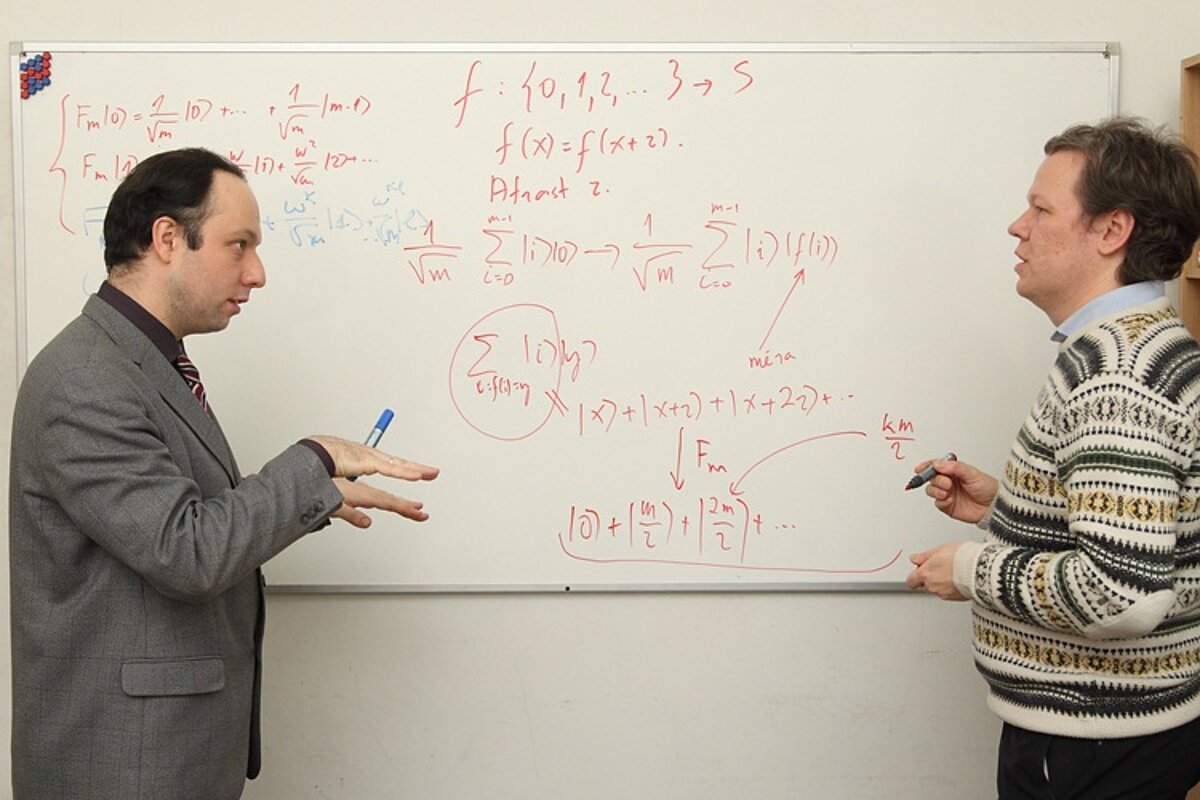
The UL scientists have demonstrated the best results in the field of quantum technologies. Two projects, Quantum Computer Science (QCS) and Quantum Algorithmics (QALGO), are led by Professor Andris Ambainis at the Faculty of Computing. The projects deal with quantum computers, a principally new type of computer implementing quantum effects, and other quantum information processing devices, such as data encryption quantum devices that provide a security level significantly higher than standard. The projects aim at finding new areas of use for the completed devices. Within the QCS and QALGO projects the UL scientists lead international teams of researchers from seven countries. The projects involve Europe’s leading experts in quantum computing and world’s top research universities, such as CU. Among the participants there are European leading experts in the field of quantum computers and world-known universities, such as Cambridge University. A group of scientists led by Professor Vjačeslavs Kaščejevs at the UL Faculty of Physics and Mathematics participates in the FET Proactive project Silicon on Atomic and Molecular Scale (SiAM). The project researches quantum and atomic nature of dopants used in microelectronics. The UL team is responsible for making viable prototypes based on manipulation of individual electron spins. The project is run side by side with industrial nanoelectronics represented by one of the biggest research institutes for electronics and information technologies, CEA-Leti in Grenoble, and IBM Zurich Research Laboratory. The UL Institute for Solid State Physics took part in the FET program with the FP-7 Proactive project CATHERINE (2008-2010). The research on possible use of carbon nanotubes for integrated circuits was conducted at the Laboratory of Computer Modelling of Electronic Structure of Solids, headed by Dr. Jurijs Žukovskis.

Share