
 CONFERENCE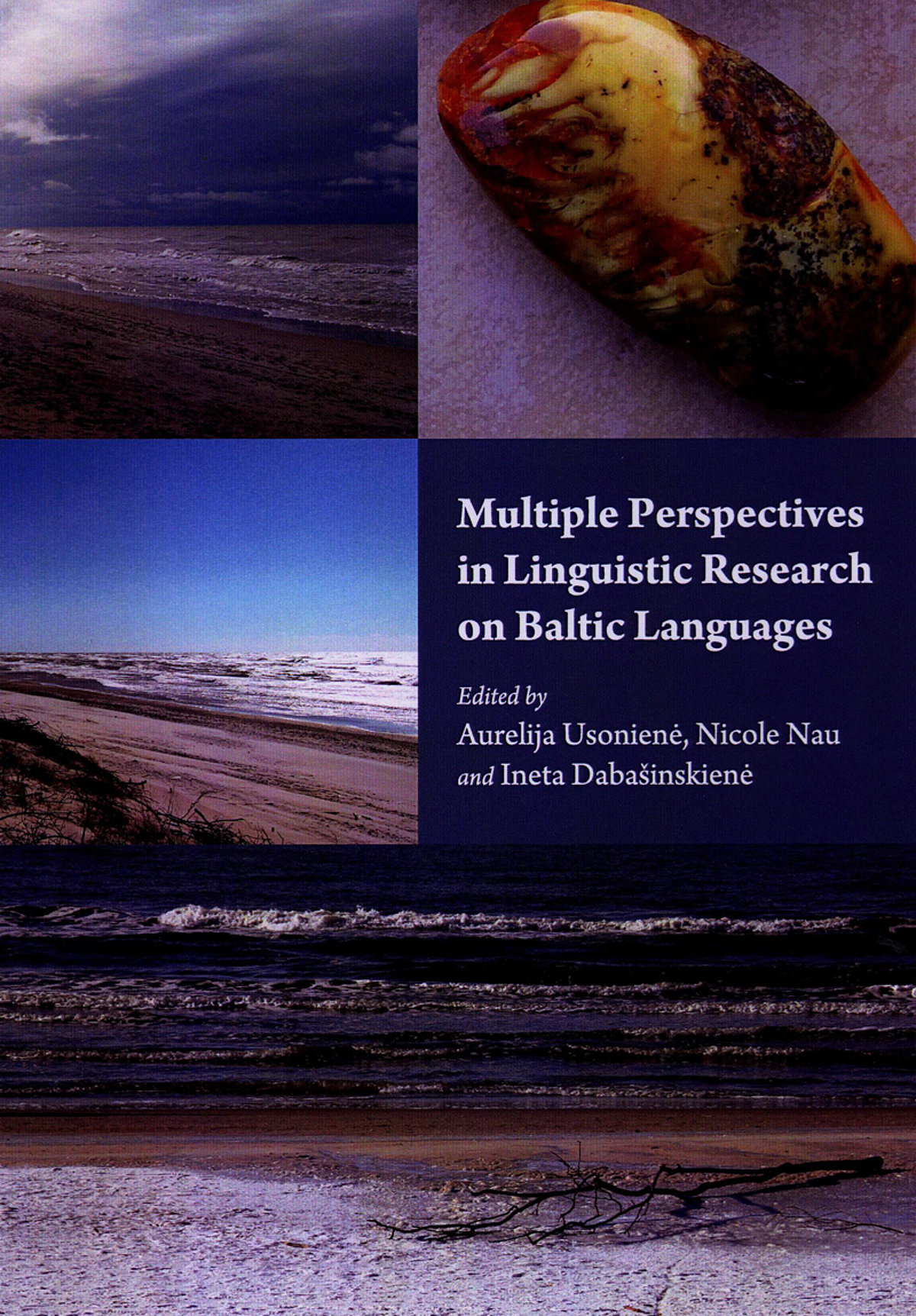
The collection of articles aims at familiarizing the international readership of linguists and others interested with current Baltic language studies using state-of-the-art linguistic and data selection methodologies. As pointed out by the compilers of the volume, the Baltic languages with their approximately 150-year long history of scientific research are still viewed mainly as a diachronic study subject, however, Latvian and Lithuanian languages nowadays are also a perfect source of typological, contrastive, sociolinguistic and other methodological studies. Due to an interesting entwinement of its older and innovative features, in the last few decades Latvian and Lithuanian language material has become increasingly sought-after in various researches of many foreign linguists who have none of the Baltic languages as their mother tongue. Therefore, as the reviewers of the collected works – University of Antwerp professor Johan van der Auwera and Johannes Gutenberg University Mainz professors Anneli Sarhimaa and Björn Wiemer – point out, it is especially important that the Latvian and Lithuanian language facts and their interpretation are available to the international audience.
The contribution of DLGL associated professors Ilze Lokmane and Andra Kalnača is research The Semantics and Distribution of Latvian Reflexive Verbs offering for the international assessment a new aspect in the description of Latvian reflexive verbs based on the semantic role theory. The research appeared as a result of the authors’ work from 2008 to 2011 under the project “Mūsdienu latviešu gramatika” (Contemporary Latvian Grammar) aimed at developing the new Latvian academic grammar.
The contents, introduction and other information pertaining to Multiple Perspectives in Linguistic Research on Baltic Languages are available online at the Cambridge Scholars Publishing web site.
Translated by students of the professional study programme Translator of the University of Latvia.
.)