
 CONFERENCE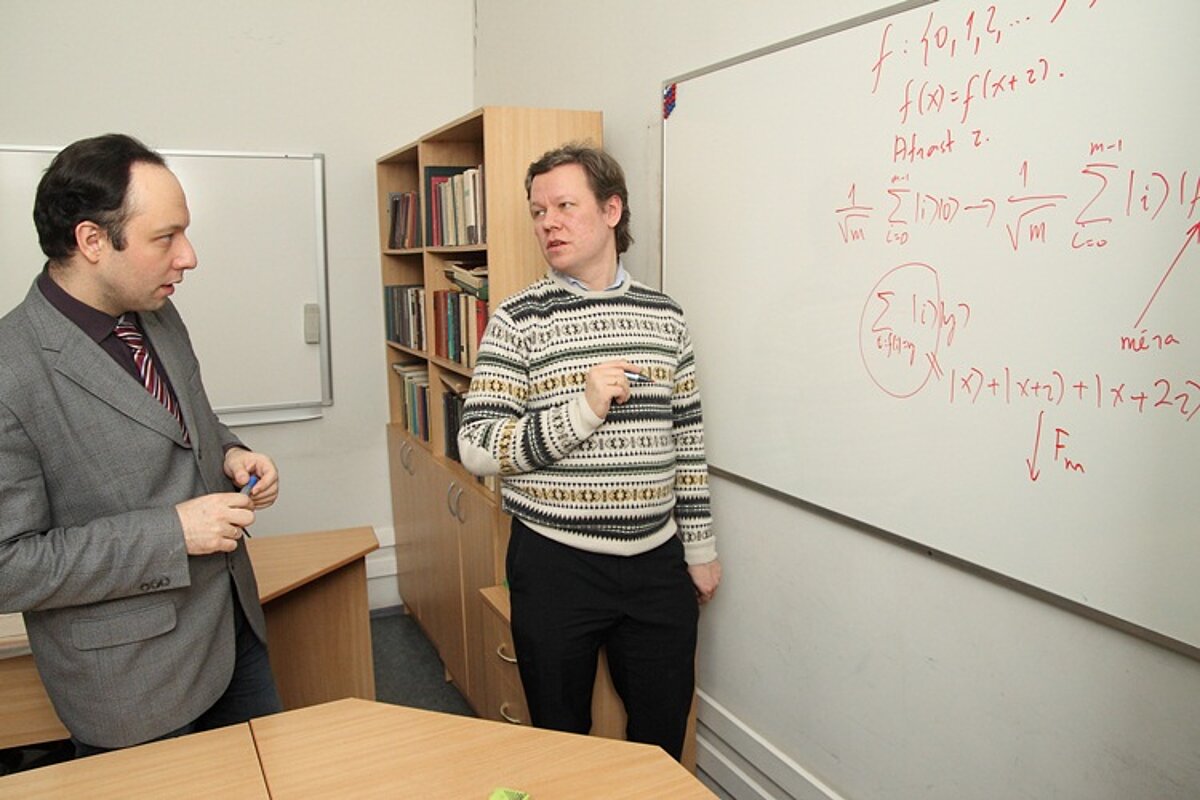
Automated thinking
The principal difference between a regular and a quantum computer lies in the specific manner of processing and storing information, which in the case of a quantum computer is based on quantum mechanics. Quantum theory describes the laws of physics on the level of separate atoms and particles, and these laws are fundamentally different from those of classical physics.
The basic unit of information in quantum computing is a qubit. The qubit, in contrast to the conventional bit, allows quantum computers to process a much larger number of values than ‘regular’ computers. Creating a quantum computer is one of the biggest challenges of modern science.
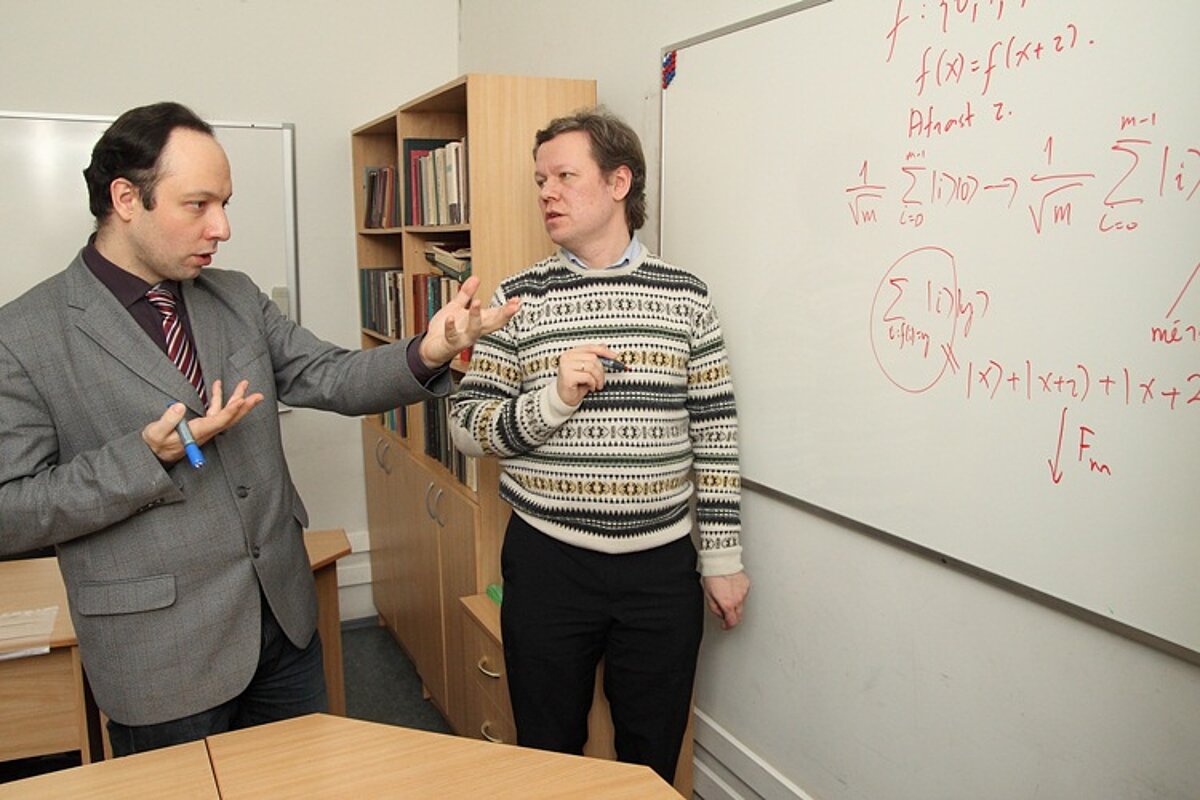
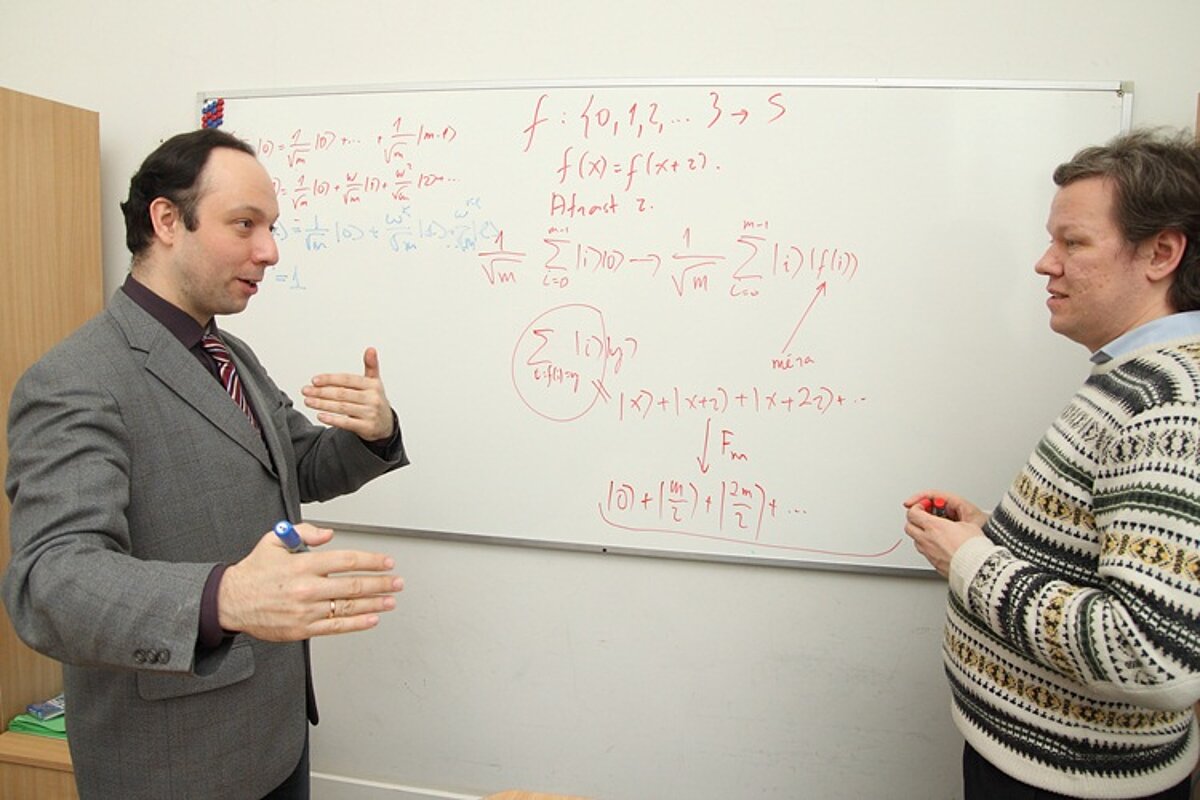
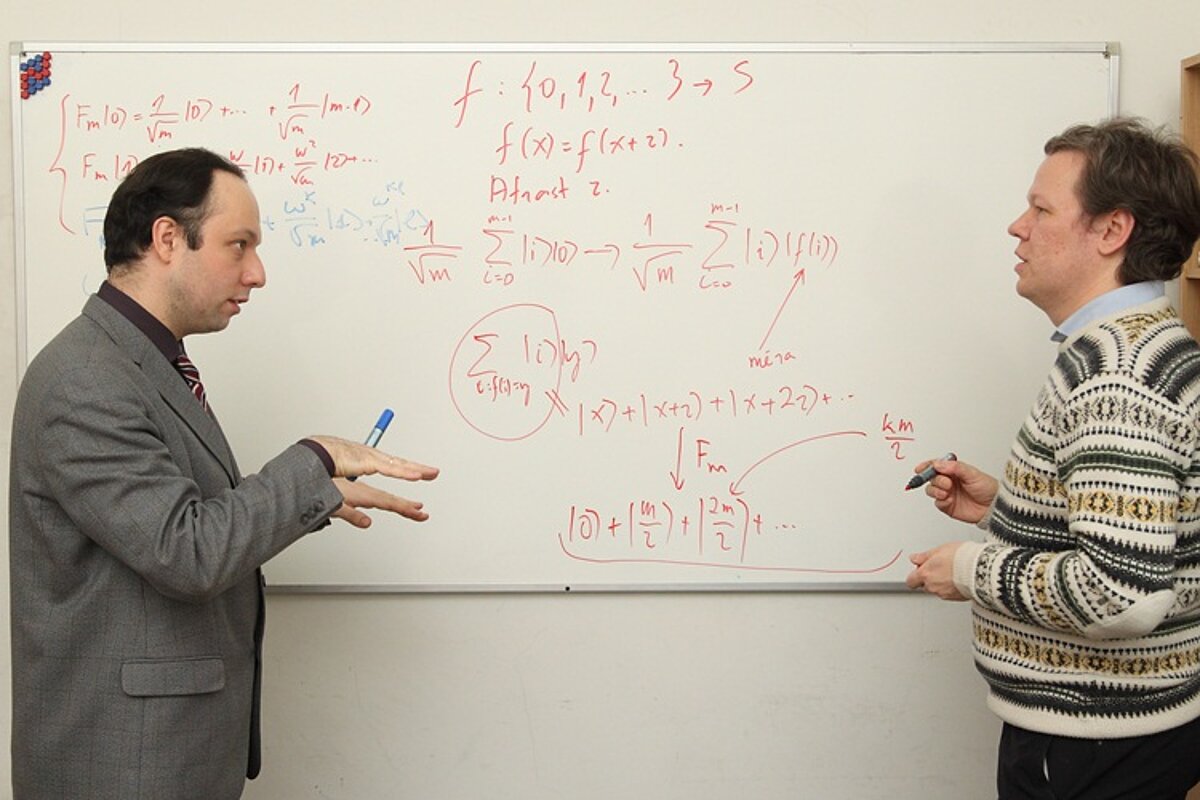
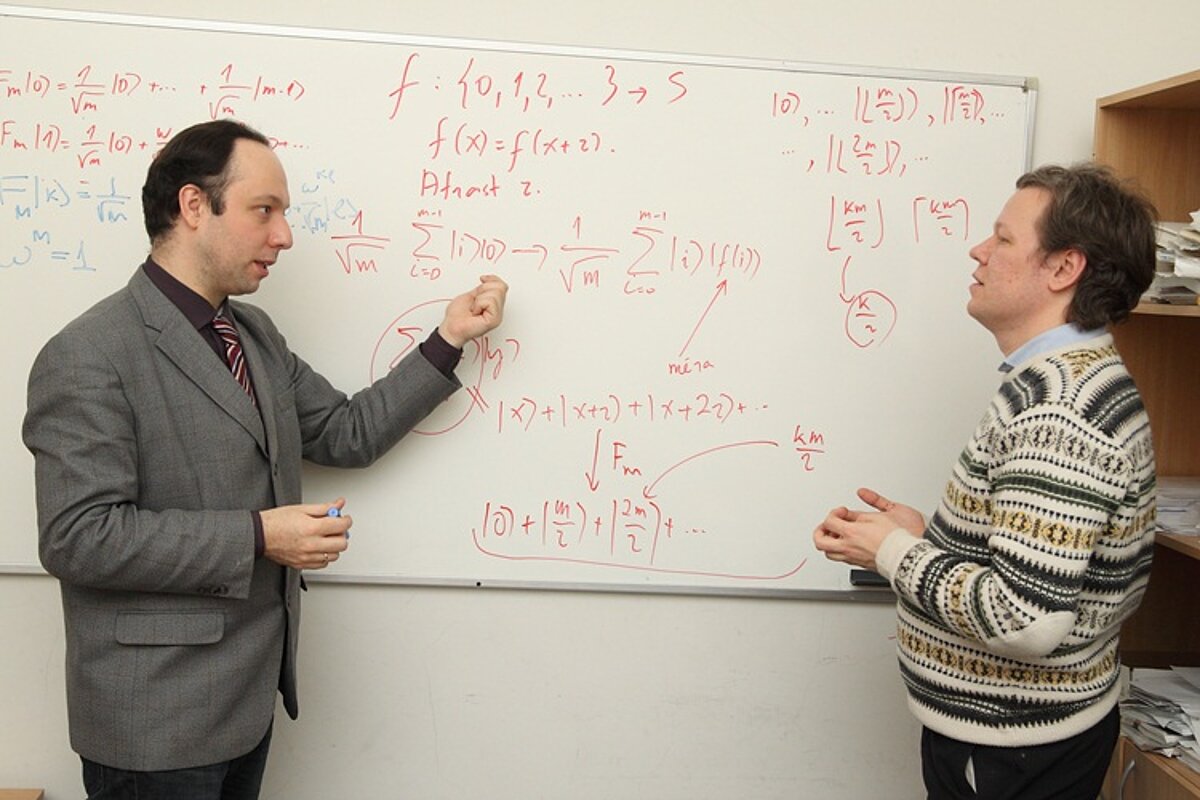
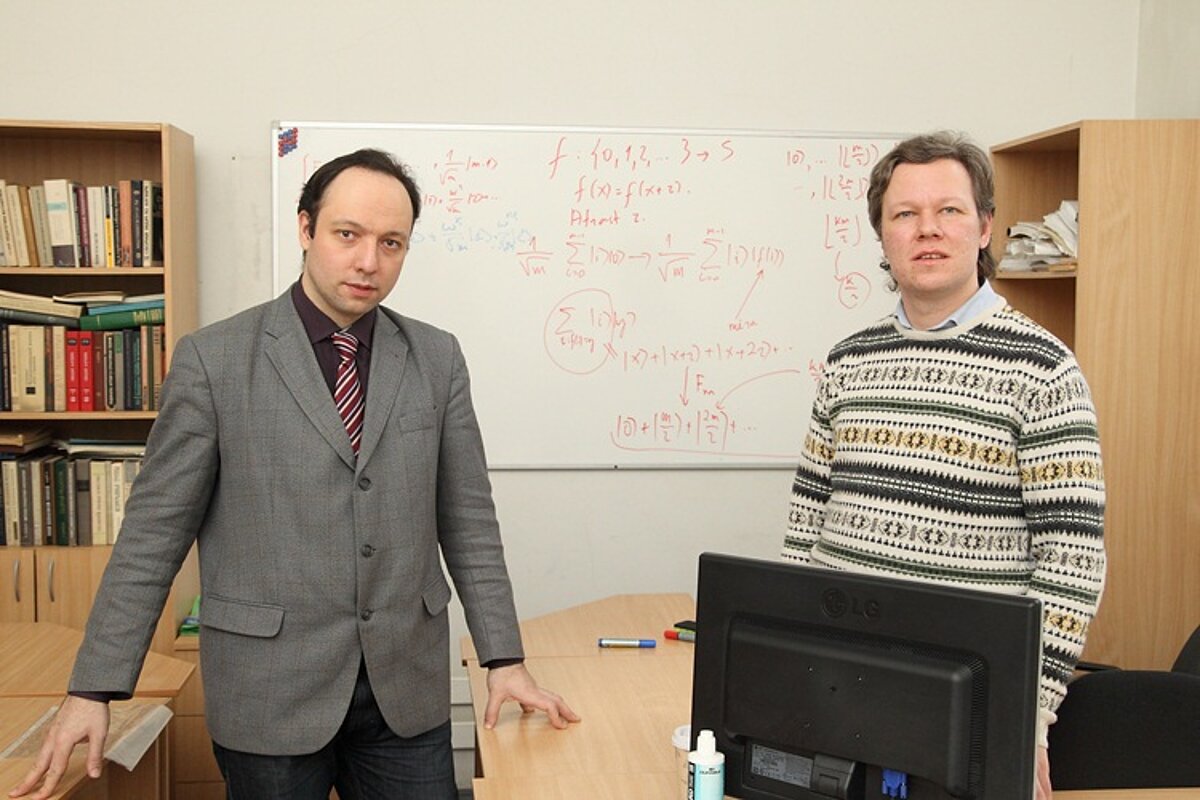
Currently, Professor Ambainis seeks to clarify what can be calculated using a quantum computer. ‘There are several aspects concerning this topic. During the recent years, we have been working on an algorithm for solving linear equations. We have also focused on solving logical formulas using a quantum computer, as well as attempted to define the limits of quantum computing, i.e. to clarify the problems which cannot be solved using quantum computers, and to determine the acceleration provided by a quantum computer in comparison to regular computers.’
The research conducted until now has led to meaningful discoveries which can be used to evolve further searches. However, new approaches are being created in order to gain a deeper understanding of the features of quantum devices. ‘We have created a highly meaningful method for the developing of quantum computers, which is based on learning graphs. Essentially, this approach is the achievement of our doctoral student Aleksandrs Belovs. The learning graph is a structure used to describe information, and it can be applied when developing a quantum algorithm. Moreover, if compared to other approaches of creating quantum algorithms, this method is quite intuitive. One of the main problems regarding quantum algorithms is the vast difference between quantum computing and traditional computing. As a result, creating a quantum algorithm is very difficult. However, a number of technical steps in this process are automated by learning graphs. As a result, it is not necessary to pay attention to them every time,’ explains Andris Ambainis.
The quantum computer tears down boundaries between sciences
Cooperation between different branches (both in the sciences and the humanities) has become very important in today’s world of research. Scientists of the UL are working hard to create a symbiotic relationship between different areas of science. ‘Aspects relating to the ties between quantum processing and other branches of science are gaining importance in my research (this trend is going to continue). There is an emergence of interesting ways of applying quantum computing ideas for solving problems in entirely different spheres. While the problems and their solutions fall within traditional computing and do not require a quantum computer, the mathematical ideas are generated by quantum computing. I believe that the influence of quantum processing is becoming ever more prominent, and it could be deemed a new trend of development,’ says Andris Ambainis.
Merging computer science, mathematics and physics will allow researchers to discover new horizons in the potential of quantum computers. It will also help determine the possible data security hazards. One of the practical gains provided by the development of quantum computers is the possibility of using quantum effects for the creation of more secure encryption systems. For instance, there is an active group of scientists in Latvia’s northern neighbour Estonia focusing on cryptography, or the science of encryption. However, one of the biggest hopes regarding quantum computers is to be able to solve complex mathematical problems in algebra and number theory much faster. Latvian scientists form one of the leading groups of researchers in quantum computing theory: many researchers in the world use and perfect methods developed in Latvia. Scientists from Cambridge, Paris, Singapore, and the Laboratories of the IT service and product provider NEC in Princeton, New Jersey (USA), collaborate with their Latvian colleagues in performing the important scientific work, and conduct parallel researches. ‘A research group in Austria has arrived at a quantum computer with a 14 qubit memory. Attempts to push the limits ever further are in progress,’ says Andris Ambainis.
Controlling the current and charge on the fundamental particle level
Vjačeslavs Kaščejevs, a scientist whose recognition in Latvia and the world matches that of Andris Ambainis, collaborates with him in researching the possibilities of quantum devices. In particular, Kaščejevs investigates nano-electronics. ‘From the practical point of view, my research deals with the underlying principles of the quantum computer operation, namely, quantum coherence and the quantum entanglement effect,’ explains Kaščejevs.
With the support of his colleagues from the UL, Kaščejevs has recently developed a new application for quantum interference in nanotechnology. It should be noted that nano-electronics is one of the EU and world science priorities. Currently, the scientist is working on a new project. ‘I have succeeded in proving that, to a certain extent, dynamic quantum dots guarantee control of two electrons in a quantum connection. The so-called quantum correlation on demand is one of the more fascinating steps towards an electronic realisation of quantum computing, whose possibilities have thus far been limited. In opposition to the traditional approach, which uses superconductivity, we have found a way of achieving the quantum correlation in a semiconductor nano-transistor,’ says Kaščejevs.
This discovery proves that quantum computing will soon take place in practice and on a greater scale. ‘The next step (and the present goal for this branch of science) is to achieve sufficient control over the current and charge on the fundamental particle level. This involves an electrostatic manipulation of fundamental particles, using their charge and spin. During the recent years, dynamic quantum dots have contributed to a significant breakthrough in this respect,’ adds Kaščejevs.
The nearest practical aim of Kaščejevs’s research is a limited counting of the electrons with fundamental quantum limits. ‘A sufficiently fast and extremely precise counting of electrons would make it possible to generate an electrical current based on fundamental values, thus replacing the present electricity benchmarks. It could be termed redefining the electric current through the frequency of the electron charge,’ explains the researcher.
Rest assured: a quantum computer will be created!
The mentioned quantum computer research is carried out in close cooperation with researchers in Latvia, as well as scientific laboratories in Germany and Great Britain, and a group of theoreticians in Sweden. Moreover, a major new project has been prepared. Its theoretical base will have to be developed by the Latvian scientists, while the experimental base is going to be provided by French researcher-experimenters.
The qubit’s ability to be situated in a superposition (i.e. to meet several values simultaneously), indicates that in the future, quantum computers will perform calculations significantly faster than contemporary computers. As a comparison, operations requiring years for a regular computer will be performed in seconds by the quantum computer. This means a remarkably fast development of information security and cryptanalysis.
Even though it is difficult to predict when a sufficiently powerful quantum computer is going to be created, it is clear that this could happen within the nearest decades. The research carried out by the UL scientists is hastening that day. It should be noted that the first quantum computers have already been developed, although their qubit numbers are rather low. There is no doubt that even the smallest steps contribute to the development and gaining an understanding of the world, and it has to be acknowledged that the UL researchers are making confident strides toward new achievements.
About the publication series ‘Research’
The University of Latvia is the largest higher education establishment in Latvia, and home to the leading state research and study potential in the natural, humanitarian and social sciences. Moreover, each discovery, achievement and accomplishment made by a UL scientist directs the Alma Mater toward its aim of gaining international recognition and becoming a science university of European and global significance. In order to form an idea of the work performed by the researchers at the faculties and departments of the UL, a series of publications named ‘Research’ has been launched in late 2012.
The scientific potential of the University of Latvia contributes to the Latvian economy and a sustainable development of its society!
Translated by students of the professional study programme Translator of the University of Latvia.
Translated by students of the professional study programme Translator of the University of Latvia.
 Faculty of Computing and the youngest academician in the history of the Latvian Academy of Sciences, was recently awarded with a European Research Council grant. For the first time, the prestigious financing was awarded to a representative from Latvia. At the moment, Ambainis is globally recognised as one of the leading researchers in the industry. In collaboration with both specialists from Latvia and international scientific communities, Ambainis is planning to conduct a globally significant research in the field of quantum computing. The aim of the research is to determine the limits and advantages of quantum devices. )