
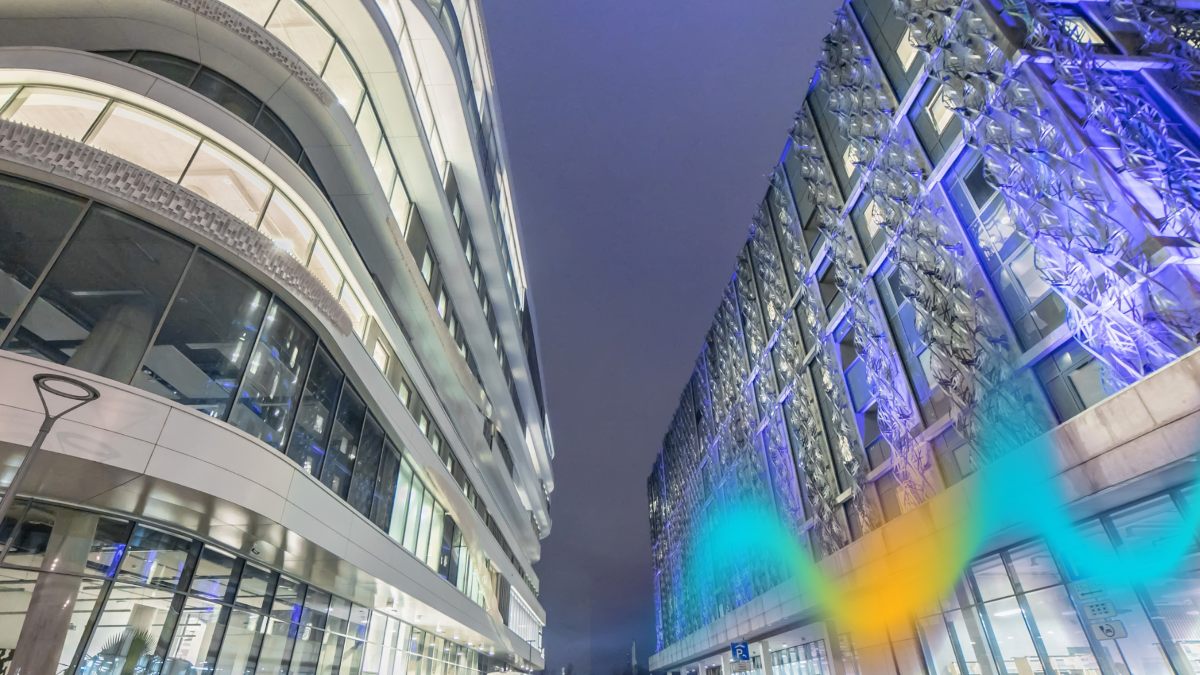
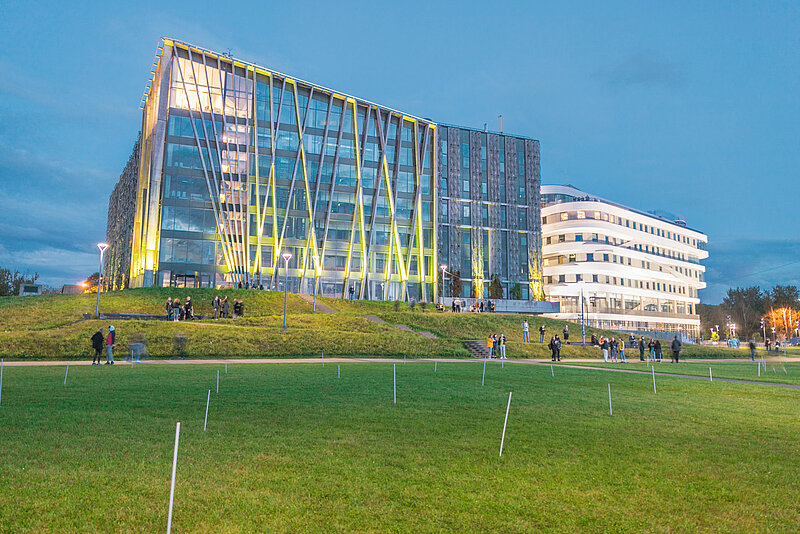
On the Main and Small Science Stages at the UL Academic Centre in Torņakalns, research ideas will come to life through improvisation, music and dance. The Main Science Stage in the House of Science will feature UL researchers: the brightest science rock STARS, whose “hits” are changing the world and whose instruments in laboratories and lecture halls are lasers, microscopes, data and ideas. Together with actors from the improvisation group IB draugi, the researchers will reveal both the finer points of their work and their personalities, showing just how witty, surprising and moving science can be.
The stage programme will also feature The Third Sound Phenomenon, a performance bringing together the UL Wind Orchestra and a humanities researcher. At the end of the evening, a special folk song experiment organised in cooperation with the UL Culture Centre will invite visitors to change a song’s rhythm and genre together with an ensemble, discovering the power of singing together and taking part in a shared transformation of sound.
The Small Science Stage in the House of Nature will put young researchers and talented school pupils in the spotlight. Authors of some of Latvia’s best student research projects will present their work, while UL doctoral researchers will use science improvisation to explore computing, theoretical chemistry, sport, brain function, mental health and other topics of current research. Quizzes, conversations, musical performances and short talks will complete the programme.
The Breathing Choir will perform on both stages, turning insights from neurobiology into a performance that invites everyone to experience the connection between breathing and the brain’s stress centres. In Microcosm in Motion, dance will reveal patterns from physics, meteorology and biology, from the hexagonal crystal structure of a snowflake to the DNA helix.
This year, the University of Latvia’s ERN has a stronger European dimension for the first time. It is organised as part of Aurora Nexus: Connecting People, Science & Arts, a project supported by the European Commission’s MSCA and Citizens initiative. The programme draws on the New European Bauhaus approach, creating new connections between science, art, technology and society. Short talks on Europe’s contribution to science and a live broadcast linking the Baltic countries will highlight European cooperation and show visitors how researchers share science with the public in Lithuania and Estonia.
The meeting of science and art will continue beyond the stages of the UL Academic Centre at other ERN venues. The sound art performance SKANOTNE will take place in the atrium of the House of Nature. In the Palm House Orangery at the UL Botanical Garden, sound artist Meisterjaan will turn data on radiation recorded in space into sound using a Jew’s harp, his voice and live electronics. At Friedrich Zander’s childhood home in Šampēteris, data art activities will bring together artificial intelligence, data, algorithms and digital culture. Visitors will be able to take part in digital art workshops, explore data visualisations and discover virtual worlds.
At the institutes of the UL Faculty of Humanities at 4 Kalpaka Boulevard, visitors can explore the interaction between ethnography and art. At the Institute of Solid State Physics, University of Latvia, in Ķengarags, the programme will feature colourful flames, burning foam, liquid nitrogen experiments, and demonstrations involving light and ultraviolet radiation. At the premises of the national science platform FOTONIKA-LV in Riga’s Old Town, visitors will be able to observe how photons interact with beams of atoms and molecules.
Outside Riga, the planetarium at the UL Baldone Observatory will take visitors on a journey through the Solar System and the night sky, introducing planets, constellations and other celestial objects. At the UL Ornithological Research Centre in Pape, visitors can experience science in nature, learn about the migration of birds, bats and insects, and try out bird-ringing equipment, spotlights and an ultrasonic detector.
On 25 September, Latvia’s largest science stage will be open to everyone. The full programme is available on the University of Latvia website.
The University encourages visitors to travel to ERN in an environmentally friendly way. Public transport, the train and bicycles are convenient options for reaching the UL Academic Centre. Parking at the venue is limited.
About MSCA and the UL project Aurora Nexus
The University of Latvia’s ERN is organised as part of Aurora Nexus: Connecting People, Science & Arts, a UL project supported by the European Commission under MSCA and Citizens: European Researchers’ Night and Researchers at Schools 2026–2027.
The project aims to strengthen science communication, encourage public interest in and engagement with research, particularly among children and young people, and bring science and art closer together. ERN is one of the project’s main activities.
The Marie Skłodowska-Curie Actions (MSCA) are a European Union initiative supporting research, innovation, researchers’ career development and science communication.

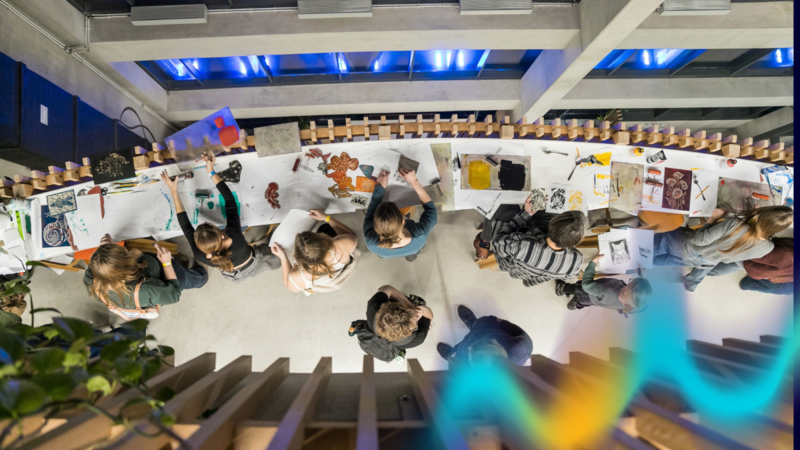
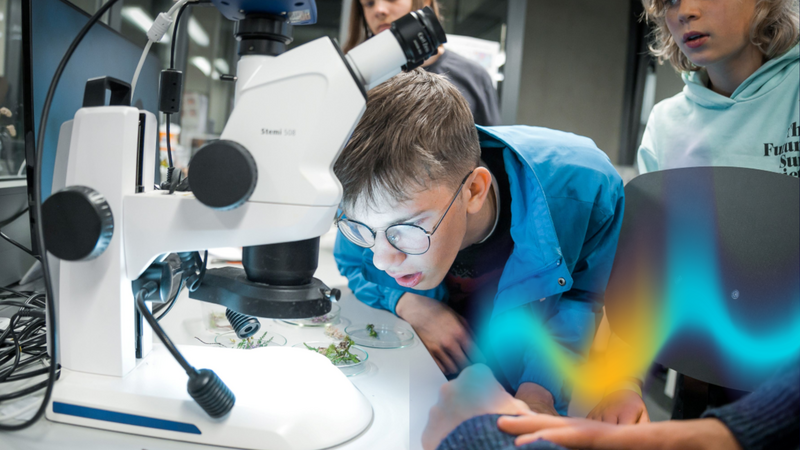
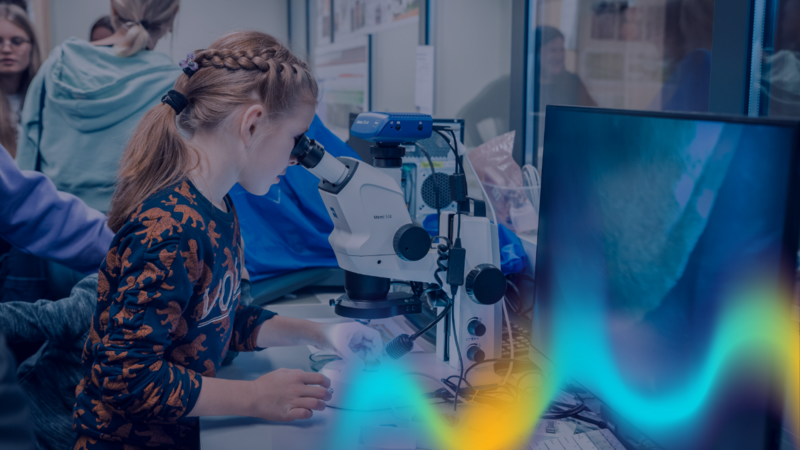
 invites visitors to European Researchers’ Night (ERN). Across nine venues in Riga, Baldone and Pape, more than 100 activities will explore science through five themes: “Light and Matter”, “Voices of Atoms”, “The Art of Data”, “Living in the Future” and “Science Stage”. Throughout the evening, visitors will encounter science through sound, movement, images, conversation, experiments and shared artistic experiences. Admission to all events is free.)