

“Researchers’ Night at the University of Latvia has for several years been one of our largest science communication events, attracting thousands of visitors. This year, for the first time, we can also place it in a broader European context – learning from the experience of other countries while sharing our own. The Researchers’ Night programme itself will also offer a glimpse into what is happening in our neighbouring countries, with live broadcasts from events in Lithuania and Estonia. It will be a unique opportunity to meet hundreds of researchers in one place – for one evening, the University of Latvia will become the largest stage for science in Latvia,” says Professor Gundars Bērziņš, Rector of the University of Latvia.
In both 2026 and 2027, ERN at the University of Latvia will gain a new European dimension. For the first time, it will be organised as part of the European Commission’s MSCA and Citizens initiative, with UL joining the network of ERN projects that attracts more than 1.5 million visitors across Europe every year.
This year, the central theme of the ERN at the UL will be the stage of science and its stars – UL researchers. Just as musicians and artists have their stage, researchers at the University of Latvia will have a stage where ideas, questions, experiments and discoveries come together.
Science and art will meet in specially created performances. At the UL House of Nature, sound artist SKANOTNE, together with a fungi researcher, will use sensors and technology to transform plant activity and other environmental processes into a real-time soundscape. At the Palm House of the UL Botanical Garden, Estonian musician, producer and multidisciplinary artist Jaan Tätte will perform, bringing together elements of the ancient and the contemporary in his work.
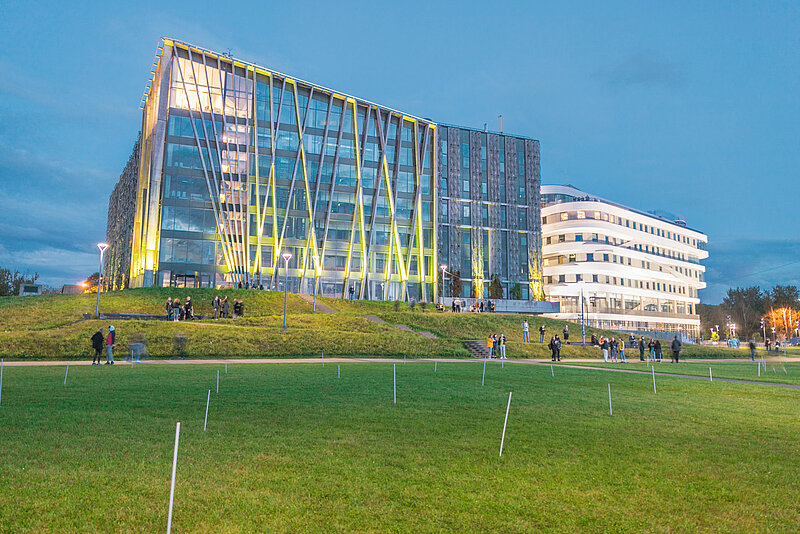
The ERN at the UL will take place at locations across Riga and elsewhere in Latvia, with the largest programme hosted at the University of Latvia Academic Centre in Torņakalns – the House of Nature and the House of Science.
Visitors will be welcomed at:
- University of Latvia Academic Centre, Jelgavas iela 1 and 3, Riga
- the institutes of the UL Faculty of Humanities – the Institute of the Latvian Language, Institute of Latvian History, and Institute of Philosophy and Sociology, Kalpaka bulvāris 4, Riga
- Friedrich Zander’s Childhood Home, F. Candera iela 1, Riga
- Institute of Solid State Physics, UL, Ķengaraga iela 8, Riga
- UL Botanical Garden, J. Šteinhauera iela 2, Riga, featuring researchers from the Institute of Literature, Folklore and Art, UL, as well as the UL Young Biologists’ School
- UL Baldone Observatory, Riekstukalns
- UL Ornithological Research Centre in Pape
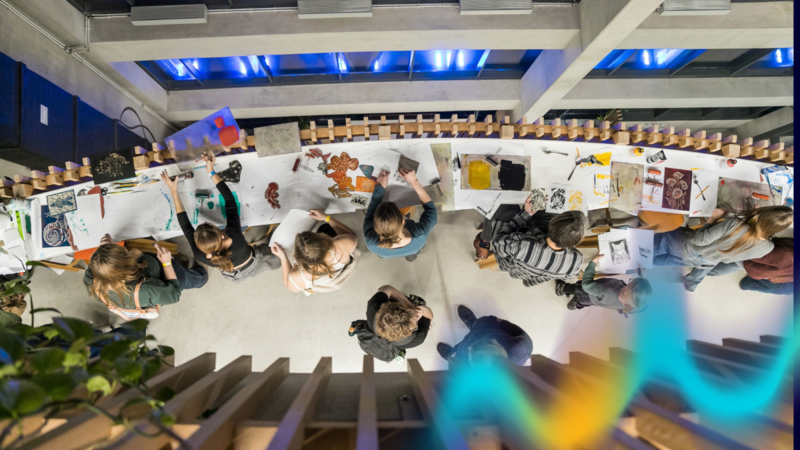
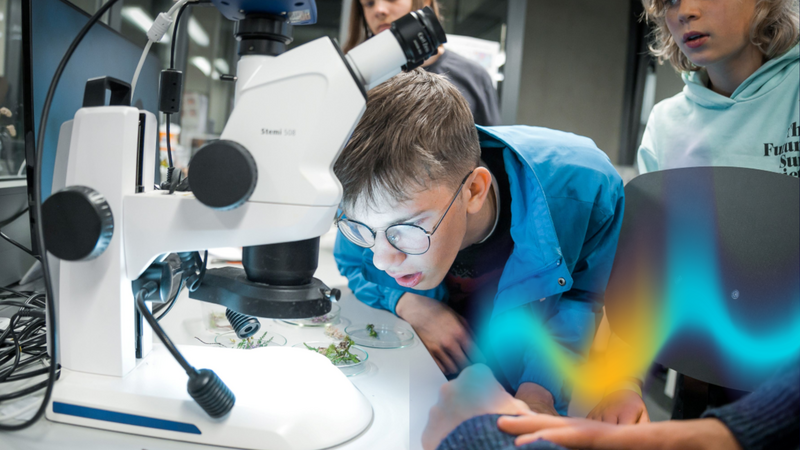
Throughout the evening, visitors will have an opportunity to discover what researchers do in their everyday work and explore research across a wide range of fields – from natural sciences, medicine and technology to the humanities and social sciences. Special activities will be available for younger visitors and families, offering opportunities to explore, experiment and discover.
The detailed programme will be announced gradually as the event approaches.
The project is inspired by the New European Bauhaus approach and the idea that science is all around us – helping us understand the world we live in and find solutions for the future. The ERN at the UL offers an opportunity to experience this first-hand: to meet the people who create new knowledge, ask questions and take part in the process of discovery.
More information and events: www.lu.lv/en/researchers-night-2026
About MSCA and the UL project “Aurora Nexus: Connecting People, Science & Arts”
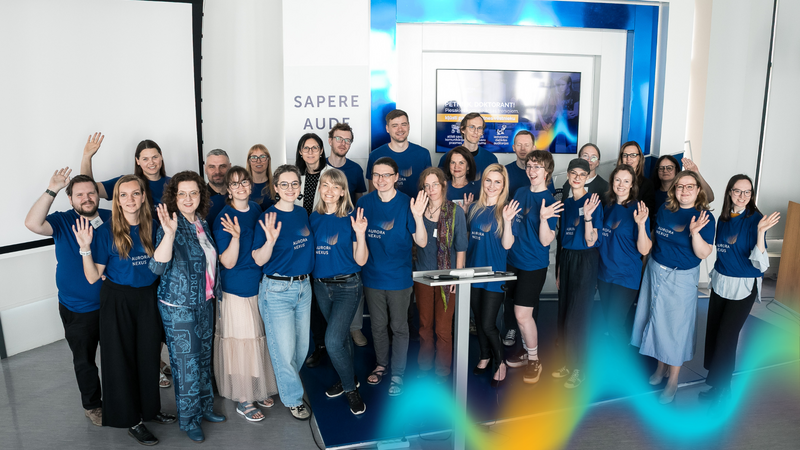
The University of Latvia project “Aurora Nexus: Connecting People, Science & Arts” is supported by the European Commission under MSCA and Citizens: European Researchers’ Night and Researchers at Schools 2026–2027.
The project aims to strengthen science communication, encourage public interest and engagement in research – particularly among children and young people – and foster interaction between science and art. The European Researchers’ Night is one of the central activities of the UL project.
The Marie Skłodowska-Curie Actions (MSCA) are a European Union initiative supporting research and innovation, researchers’ professional development and science communication.

 at the University of Latvia (UL). On 25 September, from 5 pm to 10 pm, science will meet art and culture at seven UL locations in Riga and elsewhere in Latvia, inviting visitors to experiment, explore, discover and create. The programme will feature science improvisation, demonstrations, short talks, workshops and many other activities for different ages and interests. Admission is free.)