
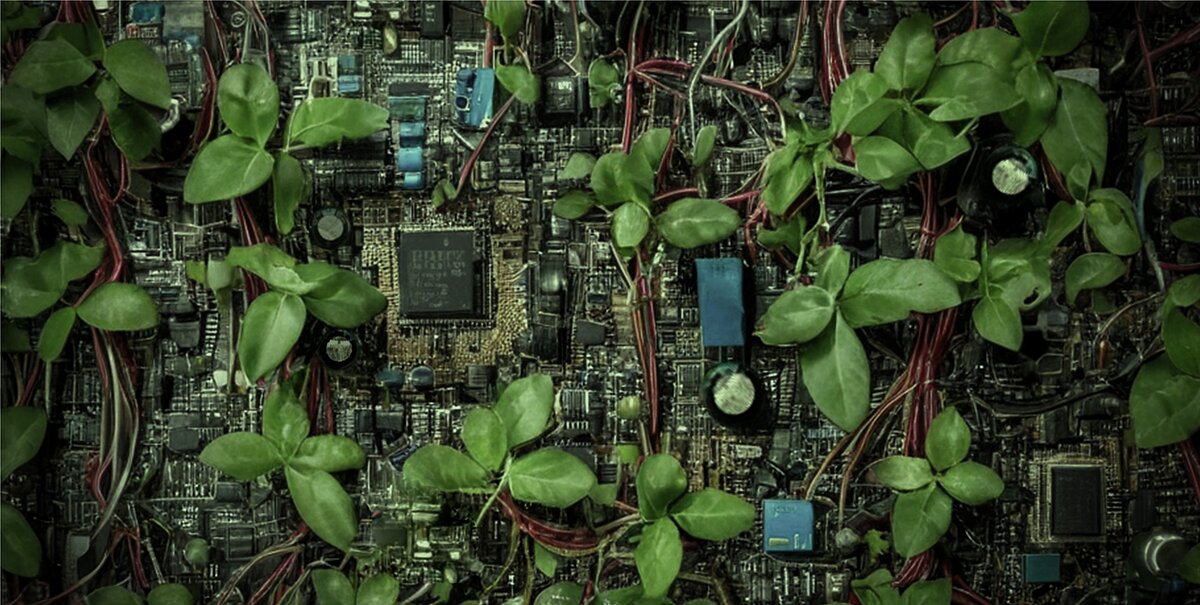
“Videography: Space Textures” is an annual contemporary music and audiovisual art event in which not only sound and image, but also the specific venue itself play an essential role. Over the years, its programmes have taken place in various cultural spaces across Riga, bringing together experimental electronic music, video art, light, architecture, academic environments and spatial experience.
This year, “Videography” will take place for the twenty-first time and return to the UL Botanical Garden. The architecture of the renovated Palm House and its living, plant-filled environment will become part of the artistic experience. Throughout the evening, electronic and acoustic sound structures, field recordings, experimental compositions, light and audiovisual performances will create an evolving soundscape, inviting visitors not only to watch the performances but also to listen closely to their surroundings and experience the space in a different way.
This year’s programme features @c and Diana Combo from Portugal, Matilde Meireles from the United Kingdom, SOFI from Latvia/Belgium, as well as Maksims Šenteļevs, Paula Vītola, Ojārs Apinis and EIII from Latvia.

The opening part of the evening will also focus on the intersections between people, sound, nature and technology. At 7:00 p.m., sound artist and architect Maksims Šenteļevs, followed at 7:15 p.m. by interdisciplinary artist Paula Vītola, will give short talks exploring themes that also run through their artistic practices and the evening’s programme as a whole.
The talks will introduce questions about how people perceive and interpret the sounds of their surroundings, how technology can make otherwise imperceptible processes accessible to our senses, and how art can create new relationships with the environment.
Listening, environmental sound, field recordings and the exploration of the acoustic properties of space play a central role in Maksims Šenteļevs’ practice. In his work, sound becomes a tool for drawing attention to the environment, its rhythms and the human presence within it.
Paula Vītola’s artistic practice, meanwhile, brings together sound, light, technology and the exploration of physical processes. She experiments with ways of transforming signals, energy and natural phenomena that are difficult to perceive in everyday life into sound and visual experiences, raising questions about the limits of human perception and the role of technology in understanding the world around us.
The evening will continue with SOFI, also known as Sofia Zaiceva, a Latvian sound artist currently living and working in Brussels, Belgium. Her practice combines experimental electronic music, electroacoustic composition, creative coding, improvisation and spatial sound.
She will be followed by the Latvian experimental electronic music project EIII. The international strand of the programme will continue with Portuguese sound artist Diana Combo, whose practice encompasses experimental work with vinyl records, appropriation, sound design, improvisation, installation and video.
At 10:00 p.m., Portuguese sound artist and researcher Matilde Meireles will perform. Her work is rooted in field recording and site-specific sound practices. Meireles’ artistic and research activities are connected with both Portugal and the United Kingdom, with particular attention devoted to listening, ecosystems and the sonic layers of different environments.
At 11:00 p.m., Portuguese artists Pedro Tudela and Miguel Carvalhais will present their project @c. The duo works across experimental computer sound, electronics, audiovisual art and performance. Both artists are also founders of the experimental music and sound art label Crónica, which is connected with part of this year’s international programme.
At midnight, Ojārs Apinis will close the “Videography XXI: Space Textures” programme. His creative practice has long been associated with Latvia’s experimental music and sound art scene.
Within the “Videography” format, a concert traditionally develops into a broader audiovisual experience in which sound encounters video, light, architecture and the atmosphere of the specific location. On this evening, the Palm House of the UL Botanical Garden will be more than just a venue – it will become an integral part of the event, a space where nature, technology and human-made sound meet.
Programme
7:00 p.m. – Maksims Šenteļevs (Latvia) – short talk on the intersections between people, sound, nature and technology
7:15 p.m. – Paula Vītola (Latvia) – short talk on the intersections between people, sound, nature and technology
7:45 p.m. – SOFI (Latvia / Belgium)
8:15 p.m. – EIII (Latvia)
9:00 p.m. – Diana Combo (Portugal)
10:00 p.m. – Matilde Meireles (Portugal / United Kingdom)
11:00 p.m. – @c (Portugal)
12:00 midnight – Ojārs Apinis (Latvia)
The event is part of the White Night 2026 contemporary culture forum. It is supported by the Riga City Council, the University of Latvia project “Aurora Nexus: Connecting People, Science & Art”, and Latvian Public Media.
Date and time: 5 September 2026, 7:00 p.m.–1:00 a.m.
Venue: Palm House, UL Botanical Garden, Jāņa Šteinhauera iela 2, Riga.
About MSCA and the University of Latvia project “Aurora Nexus: Connecting People, Science and Art”
The University of Latvia project “Aurora Nexus: Connecting People, Science & Art” is implemented with the support of the European Commission programme “MSCA and Citizens: European Researchers’ Night and Researchers at Schools 2026–2027”.
The project aims to strengthen science communication, encourage public interest and participation in research, particularly among children and young people, and foster interaction between science and art. One of the project’s activities is participation in the contemporary culture forum White Night, providing an opportunity to discover science through the perspective of art and creative practices, as well as through conversations with researchers.
The Marie Skłodowska-Curie Actions (MSCA) are a European Union initiative supporting research and innovation, researchers’ professional development, and science communication.
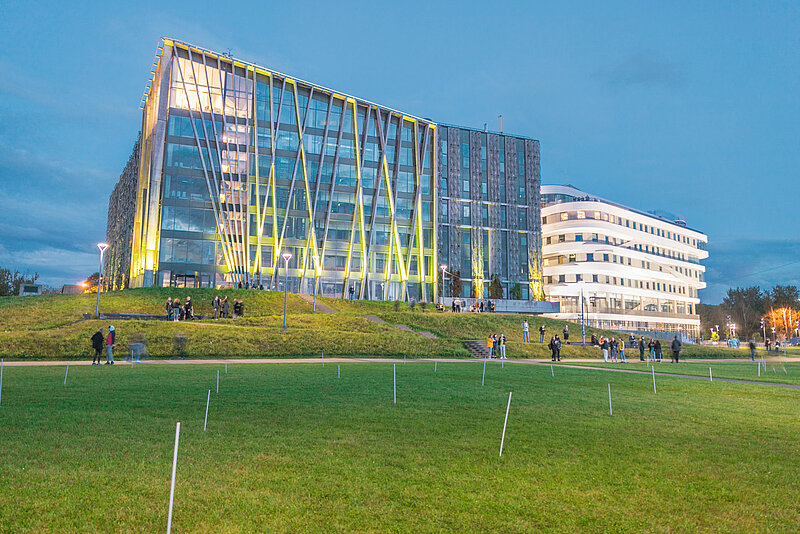
 Botanical Garden will be transformed into an audiovisual space where experimental music, sound art, light, imagery and live performance come together. As part of the contemporary culture forum White Night 2026, the Botanical Garden will host the international audiovisual art event “Videography XXI: Space Textures”, bringing together artists from Latvia, Portugal, the United Kingdom and Belgium.)