
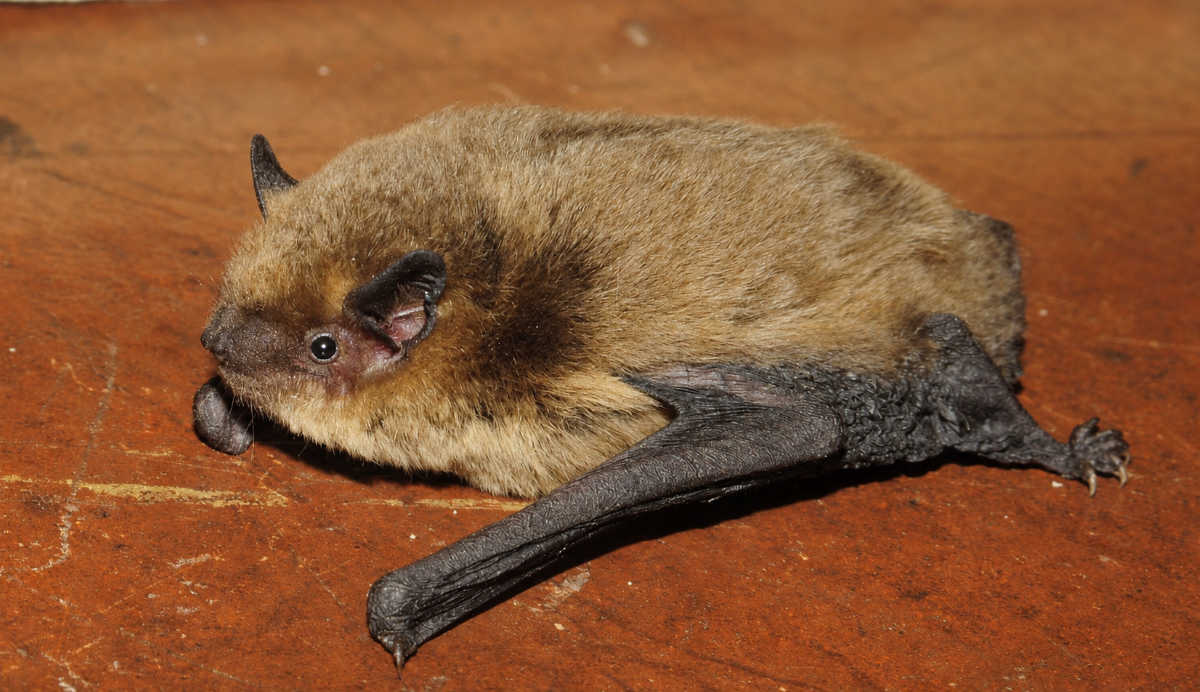
The study was conducted in collaboration with Bangor University in the United Kingdom and the University of Oldenburg in Germany, with researchers from the University of Latvia also contributing. Experiments took place at the Pape Ornithological Research Centre of the Institute of Biology, Faculty of Medicine and Life Sciences, University of Latvia, where researchers studied soprano pipistrelles (Pipistrellus pygmaeus).
The bats were exposed to weak radiofrequency waves for approximately 30 minutes, after which the researchers observed their flight directions. While the exposed bats flew in various directions, those in the control group oriented themselves towards the expected direction of migration. Further experiments showed that disruption could also occur when exposure did not take place at sunset.
Of particular significance was the finding that the disruption to the bats’ orientation persisted for several hours after radiofrequency exposure had ended. Such a prolonged effect had not previously been documented in studies examining the impact of electromagnetic pollution on animals’ magnetic sensing abilities. The precise mechanism underlying this effect remains unclear.
“Publication in Science demonstrates the international expertise of our researchers and highlights the importance of the UL Pape Ornithological Research Centre in the study of bat migration. The findings suggest that greater attention should be paid to the possibility that wildlife species may be more sensitive to electromagnetic exposure than humans,” emphasises Associate Professor Vita Rovīte, Vice-Dean for Research at the UL Faculty of Medicine and Life Sciences.
The study advances our understanding of bat navigation and highlights the need for further research into the potential effects of human-generated electromagnetic pollution on wildlife. International collaboration will also continue: one of the publication’s authors, Dr William Schneider, will undertake postdoctoral research at the Institute of Biology, UL Faculty of Medicine and Life Sciences, next year, conducting experiments at the Pape Ornithological Research Centre.
Dr Oskars Keišs, Leading Researcher at the Institute of Biology, UL Faculty of Medicine and Life Sciences, who has led research at Pape since 2007, comments:
“Our international collaboration in bat research began in 2011, when, together with Gunārs Pētersons and Professor Dr Christian Voigt from the Leibniz Institute for Zoo and Wildlife Research (Leibniz-Institut für Zoo- und Wildtierforschung), we investigated how bats obtain the energy required for their migratory flights.
Pape is a unique location for studying bat migration. In a single season, we have captured as many as 14,000 of these small mammals. Such a concentration of migrating bats has not been recorded anywhere else in Europe. This provides exceptional opportunities to study the physiology and navigation of migrating bats while migration is actually taking place.”
Publication:
Lindecke, O. et al. (2026). “Disruptive effects of brief radiofrequency noise exposure on migratory bat navigation.” Science, 392(6801), 977–979.
https://doi.org/10.1126/science.adq4418
This text was translated using AI.
 and an international research team, published in the journal Science, has found that even brief exposure to radiofrequency waves can disrupt bats’ orientation during migration, with effects persisting for several hours.)