
The programme focused on one of the most significant challenges facing contemporary democratic societies: disinformation in the digital environment. During the week, students analysed how disinformation, propaganda, and misleading information affect democratic processes, public trust in institutions, and individual decision-making. Particular attention was paid to cybersecurity, strategic communication, media literacy, and the security context of the Baltic region.
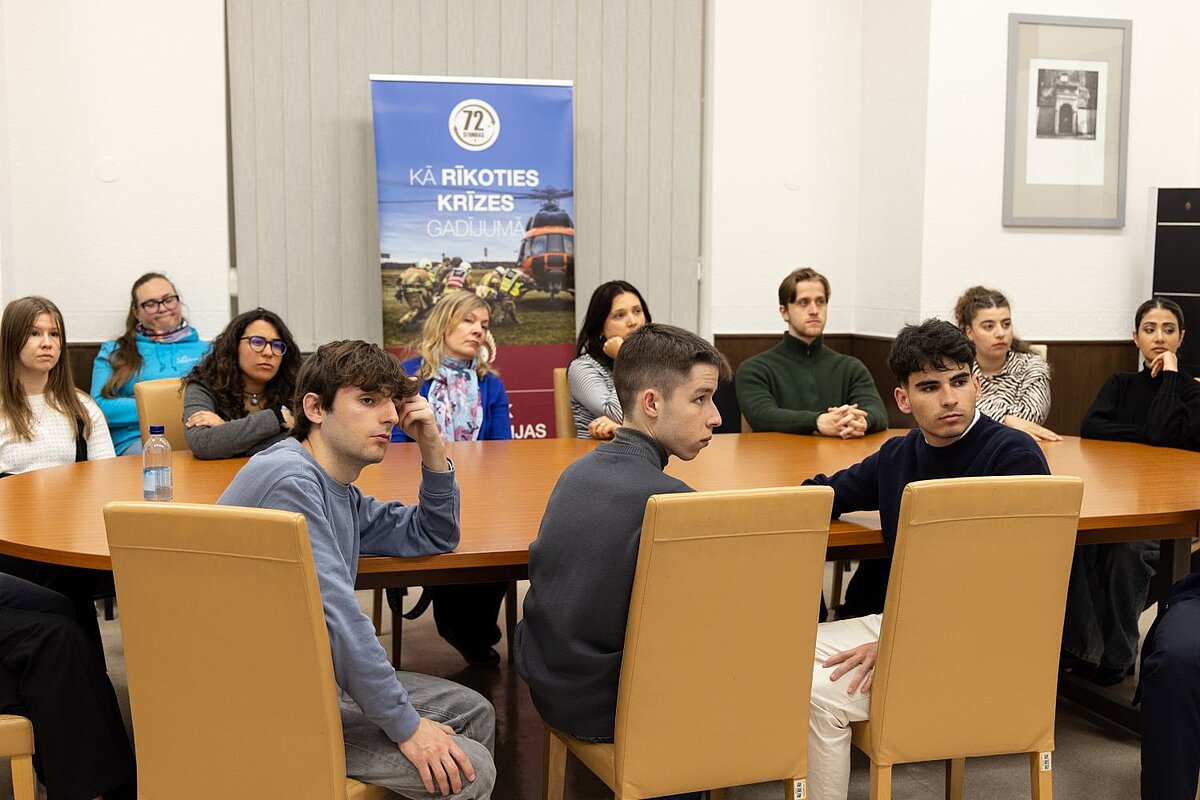
The academic programme incuded a lecture on the role of disinformation and its impact on democracy, society, and individual decision-making. Students were introduced to key cybersecurity concepts and current trends in a lecture by Dana Ludviga, representative of CERT.lv. These sessions provided participants with a theoretical foundation for analysing information security not only as a technological issue, but also as a social, political, and communication-related challenge.
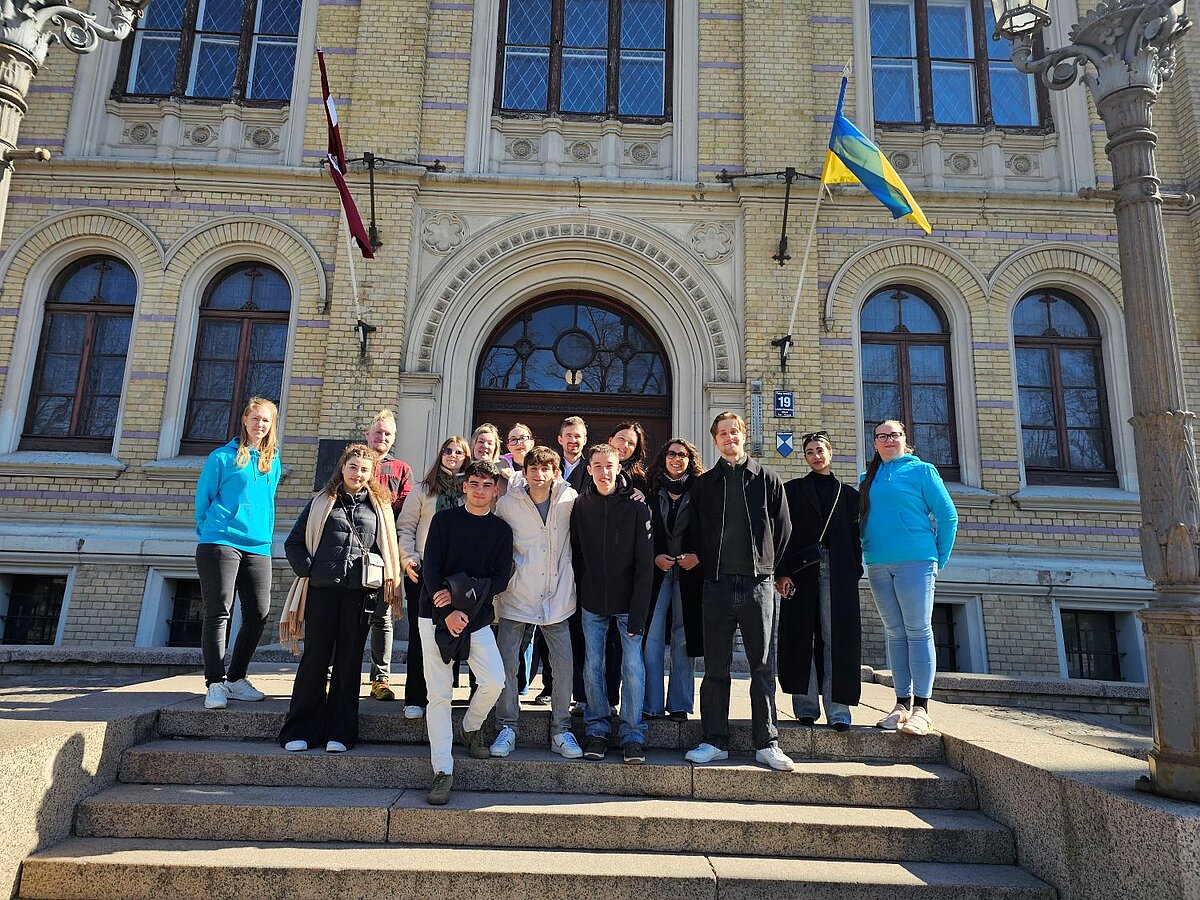
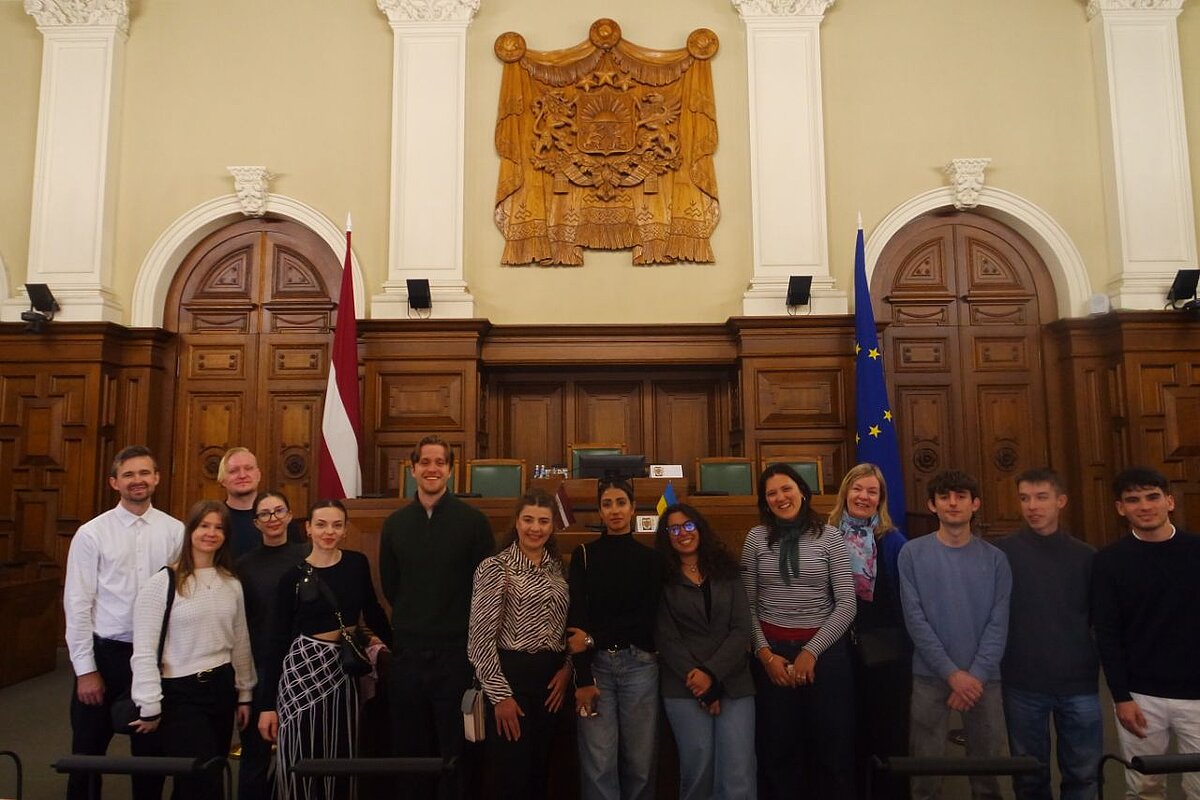
An important part of the programme was dedicated to familiarising students with Latvia’s institutional and security policy environment. Students visited the historic main building of the UL and took part in study visits to the Saeima, the Parliament of the Republic of Latvia, and the Ministry of Defence of the Republic of Latvia, where they met with Liene Gātere, Parliamentary Secretary of the Ministry of Defence. These visits helped students better understand how disinformation and security-related issues are addressed at the level of public administration and policy-making.
Later on, participants explored security issues in the Baltic region in greater depth. Associate Professor Toms Rostoks delivered lectures on deterring Russia in the Baltic region, while later students took part in a session on strategic communication tools, propaganda, disinformation, and misinformation in the exercise of information power. The day concluded with a workshop on media literacy as a tool from the soft security perspective, led by lecturer Sigita Struberga, where students discussed practical ways to recognise manipulative content and strengthen societal resilience against information influence operations.
On the final day of the programme, students took part in a workshop on the fake news phenomenon, learning to distinguish between misinformation, disinformation, and malinformation. This was followed by group work and presentations, where participants summarised the knowledge gained during the week and demonstrated their ability to critically analyse the challenges of the digital information space. The programme concluded with a farewell ceremony and the awarding of certificates.
An important part of the mobility was also the opportunity to get to know Riga and the UL. The guided tour of Old Riga and the visit to the historic UL building helped international students understand Latvia’s academic, cultural, and historical context. This experience complemented the academic content and fostered intercultural communication among students from different FORTHEM Alliance countries.
FORTHEM cSTM “Critical Minds in the Digital Age: Disinformation Challenges” gave students the opportunity to combine academic knowledge with practical institutional experience, discuss the impact of disinformation in the European security context, and develop critical thinking, media literacy, and intercultural collaboration skills.
 hosted the FORTHEM Alliance collective Short-Term Mobility — cSTM “Critical Minds in the Digital Age: Disinformation Challenges”. The mobility brought together 15 students from various European countries — Finland, France, Germany, Romania, Norway, Italy, and Poland.)