
Master's programme Physics
Level of study: |
Duration: |
Form of study: |
Language: |
Credits: |
Location: |
Degree: |
Tuition fee: |
Amount of spaces: |









* EU/EEA/Swiss citizens, EU long-term resident status holders and Ukrainian civilians with temporary protection status obtained in the Republic of Latvia can compete for a state-funded study place (application deadline 5 July 2026).
A Master’s degree in Physics allows students to deepen their knowledge in a chosen branch of physics or in an interdisciplinary field. The skills and expertise gained during the programme prepare graduates for both academic careers and professional roles beyond research institutions.
Those interested in academia typically continue with doctoral studies in physics, astronomy, or a related discipline—either at the University of Latvia or at leading universities around the world. At the same time, graduates can enter the job market immediately after completing their Master’s degree. A strong background in physics provides versatile, highly competitive skills, especially in fields driven by advanced science and technology.
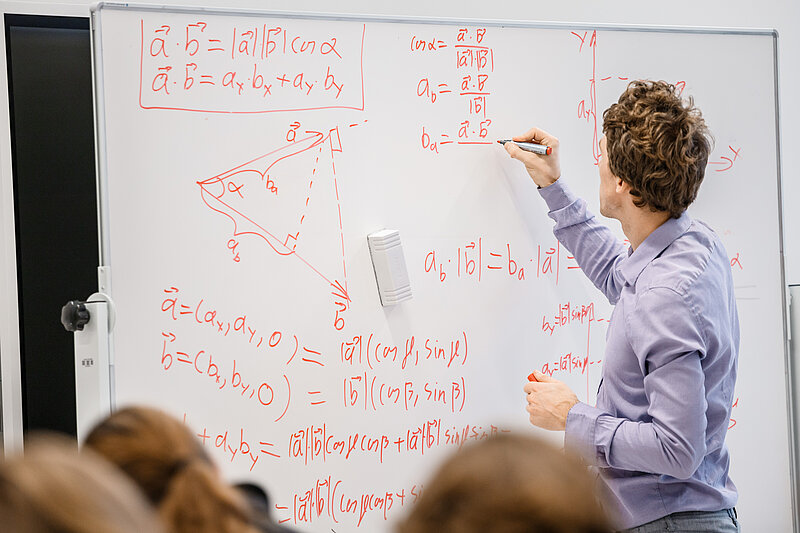
In the mandatory part of the programme, you will acquire the basics of theory in order to successfully attain elective courses. In addition, in the mandatory part, you will get acquainted with selected laboratory works, develop your “soft skills”, learn the basics of multiphysical modelling and complete internship to test and train your competence in the daily work of a real physicist. Specialised elective courses will enable you to grow into a professional in the field of your choice, where materials science, nanotechnology, laser physics, quantum physics, biophotonics, theoretical physics and modelling are just a few of the options. ERASMUS + studies during the semester will be an additional opportunity to gain international study experience and new knowledge in one of the many partner universities in Europe.
After graduation, you can continue your academic growth in doctoral studies or immediately enter the labour market. Our graduates are in high demand for doctoral studies both at the University of Latvia and abroad. This education also ensures a safe opportunity to find a job in a research or high-tech company as soon as the studies are completed. It is very possible that you will already have found this job while studying – in the field of internship and master's thesis development.
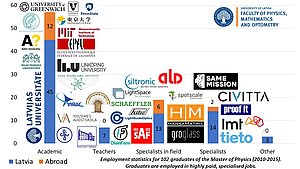
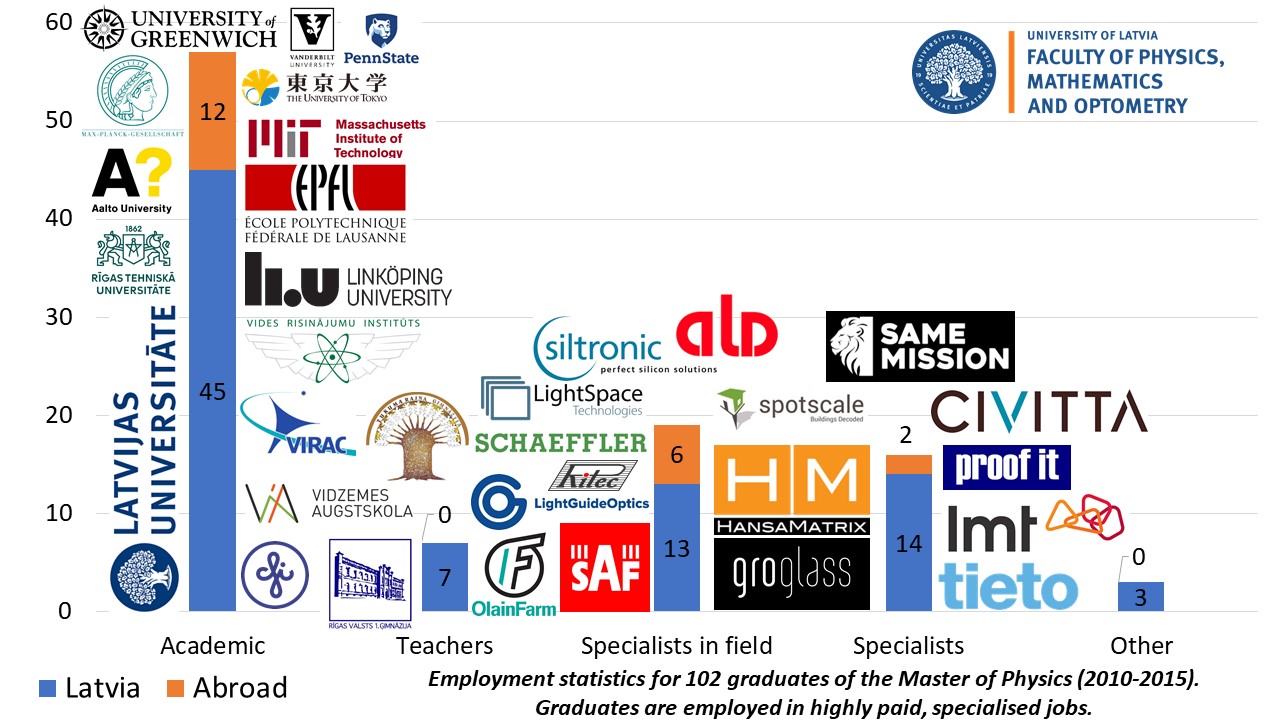
Explore the wide and varied work opportunities in the graph showing the information about the career progress after graduating from the programme.
- Previous education:
- First-cycle higher education* or second-cycle professional higher education (or equivalent) in Physics, Mathematics, or Computer Science.
or
- First-cycle higher education* or second-cycle professional higher education (or equivalent) in Natural Sciences or Engineering, including at least 5 credit points (7 ECTS) in Physics and 4 credit points (6 ECTS) in Mathematics. - Language proficiency:
- English language proficiency (for foreigners);
*Latvian nationals are required to demonstrate English language proficiency. This may be confirmed through internationally recognised English language test results, other evidence of English proficiency at a minimum of B2 level, or a grade in English on a previous educational certificate (the grade must be no lower than 6 on a 10-point scale), except where previous education was obtained in English.
* Foreign applicants whose previous education was completed outside the European Union (EU), European Economic Area (EEA), or the Swiss Confederation must submit one of the following recognised standardised test results issued within the past five years:
- SAT: minimum score of 1200
- GMAT: minimum score of 595
- GRE: minimum score of 320
If applicants submit SAT and GMAT or GRE results with equivalent scores, and the number of study places is limited, preference will be given to applicants with GMAT or GRE scores.
* Additional admission requirements for non-EU/EEA/Swiss citizens and non-EU long-term residents
The average grade in study courses must be 60% of the maximum;
All grades must be passing (at least 4 in a 10 point grading system);
All non-EU/EEA/Swiss applicants, except University of Latvia graduates, will be required to take part in an online interview as part of the admissions process.
EU/EEA/Swiss citizens, EU long-term resident status holders and Ukrainian civilians can compete for a state-funded study place (application deadline 5 July 2026)
Admission to a state-funded study place is determined according to the following criteria, with places awarded to candidates achieving the highest overall scores:
- Weighted average grade 60%
- Total (or average) grade of final examinations 40%
*Information on 10 points grading scale
Admissions open: 1 January 2026 (Foreign applicants)
Admission information:
Email: studies@lu.lv
eztf@lu.lv
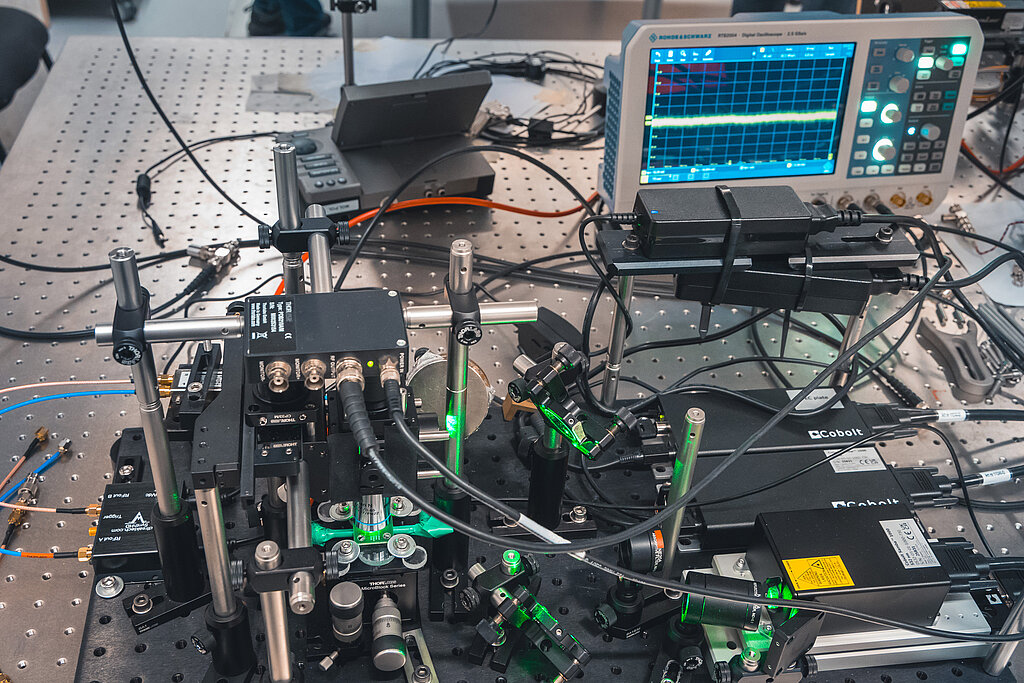
Graduates of the Master’s programme in Physics are highly sought after in rapidly growing fields such as quantum technologies, biophotonics, and microfluidics, both in Latvia and internationally.
PHYSICS = LU
NUMERICAL MODELLING
QUANTUM PHYSICS
ASTRONOMY
MATERIALS SCIENCE
BIOPHOTONICS
MICROFLUIDICS

Alumni review
When studying for a Master’s degree in Physics, the most important skill is learning how to learn. Once you master that, everything else gradually falls into place — you study mathematics and physics, and suddenly you begin to understand how everything works. In my view, that is the main outcome one should gain from studying at the Faculty of Physics, Mathematics and Optometry at the University of Latvia. Being immersed in a scientific environment, students develop critical thinking skills and information literacy; they learn how to filter information effectively and evaluate its reliability. My former classmates now work in programming, risk analysis, insurance companies, banks, and similar institutions. Some have chosen completely different paths, but all of them have found their place, and in one way or another, they use the knowledge gained during their physics and mathematics studies in their professional fields.
Programme director
