
 CONFERENCE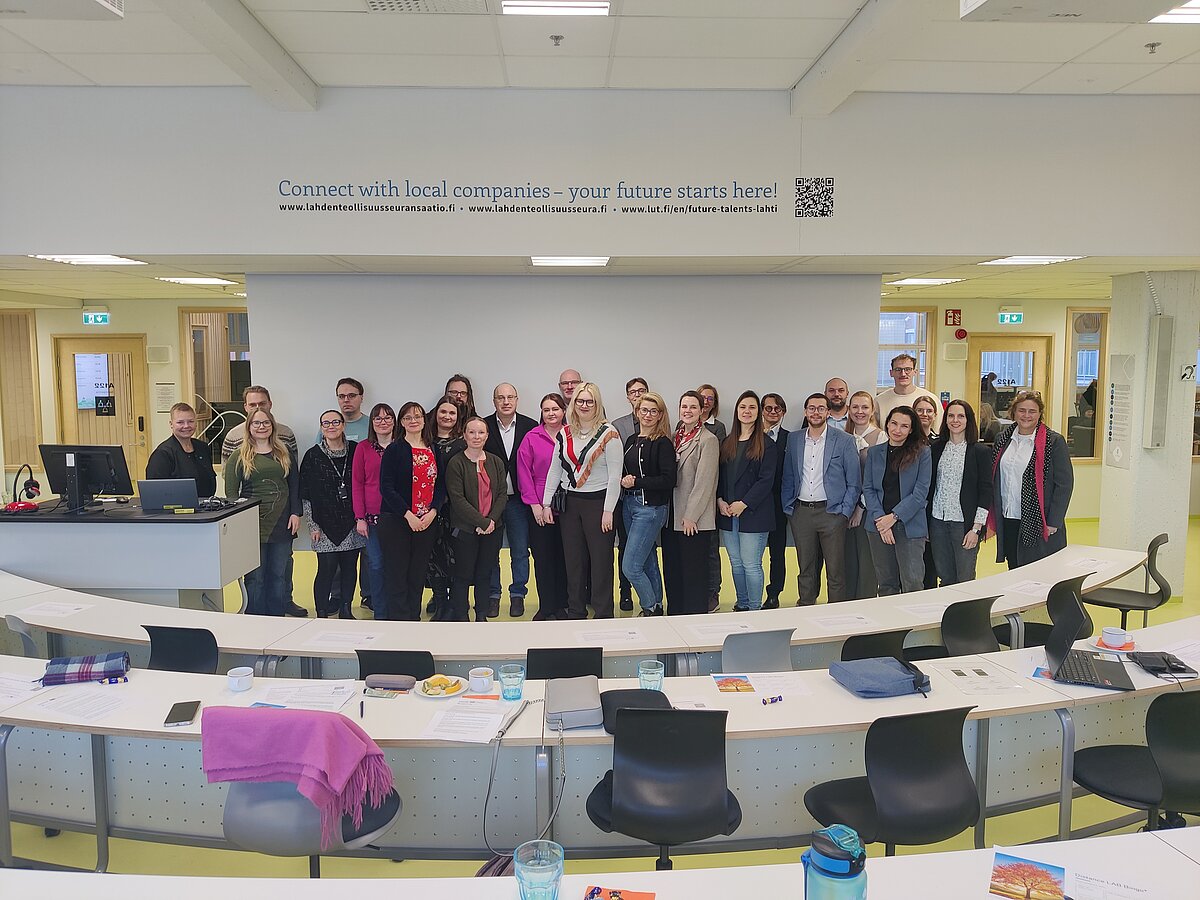
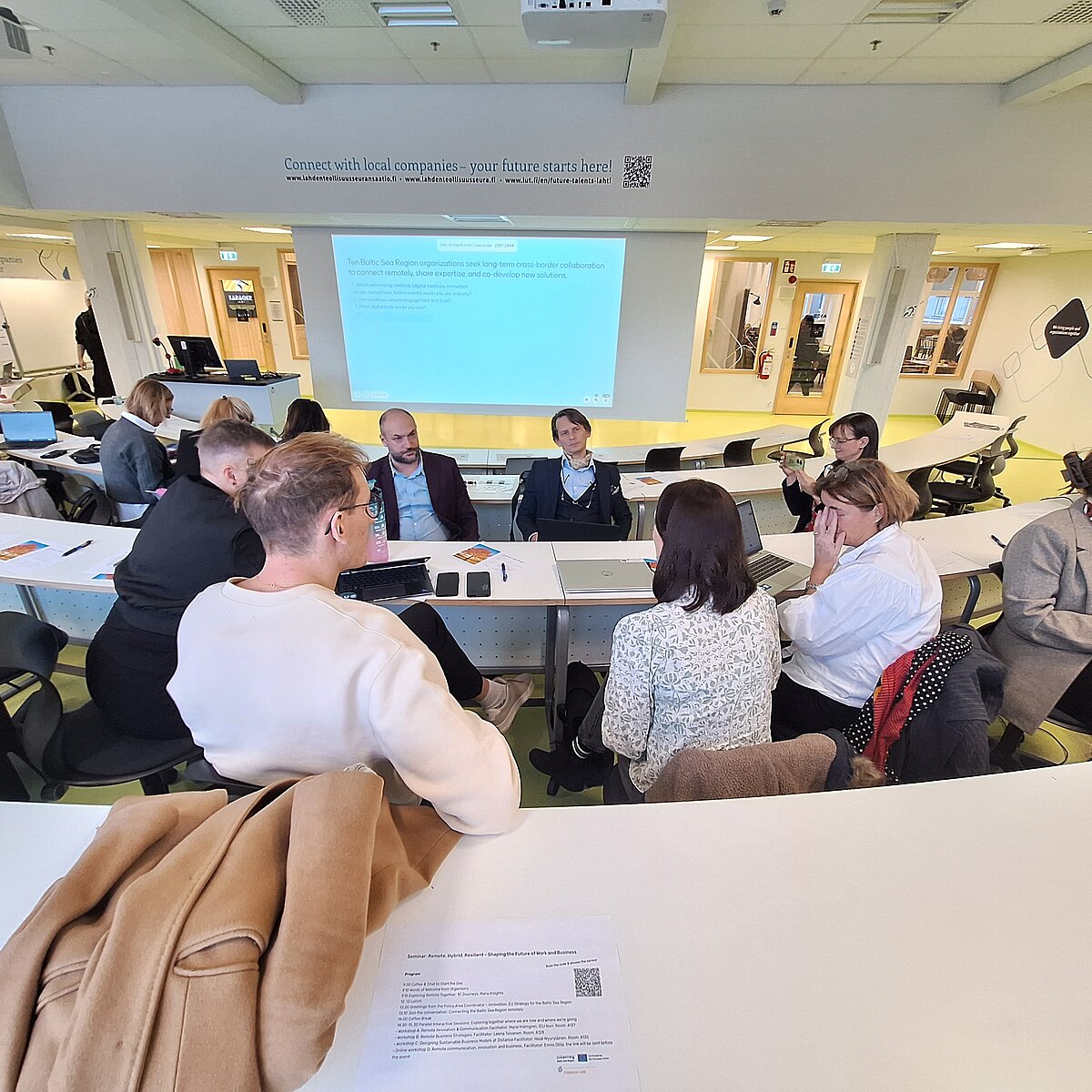
The way we work, innovate, and connect has fundamentally changed. To navigate this shift, the Distance LAB project brought together curious minds from across the Baltic Sea Region on November 19, 2025, for a pivotal seminar: “Remote, Hybrid, Resilient – Shaping the Future of Work and Business.”
Held at Lahti University of Applied Sciences, the event was a showcase of the project’s mission: to build a stronger, more connected, and innovative region regardless of physical distance. Business leaders, educators, researchers, and policymakers gathered to share the tools and strategies needed to thrive in a remote-first world.
Exploring Remote Together: The Distance LAB Journey
Following opening remarks by Heidi Myyryläinen (LAB University of Applied Sciences) and Leena Toivanen (Centria University of Applied Sciences), the first session of the seminar focused on practical solutions for enhancing the business environment in the digital era.
Marie Holmgren (IUC Norr) introduced the "Business Lab" tool—a solution designed to foster remote collaboration and business development. More information is available here: https://distancelab.eu/open-innovation/
Živilė Paužaitė (Kaunas Science and Technology Park) presented the "Remote Networking Method." This tool serves as a guideline for planning and organizing effective online events, ensuring high-quality participant engagement. More information is available here: https://distancelab.eu/networking-methods/
A significant portion of the seminar was dedicated to human resource management in remote work settings. Ingrid Gjelsvik and May Britt Roald (Møre and Romsdal County Council) emphasized the importance of structured communication and clear expectations. They highlighted the necessity for managers to master "remote empathy" and digital facilitation by utilizing technological solutions while simultaneously developing soft skills. The soft skills improvement tool developed during the project has proven to be particularly valuable for numerous organizational leaders. More information is available here: https://distancelab.eu/distance-soft-interaction-skills-tool/
Laura Palovuori (Centria University of Applied Sciences), along with Sami Heikkinen, Marja Jordberg-Gilabert, and Heidi Myyryläinen (LAB University of Applied Sciences), further explored this topic by analyzing the correlation between interpersonal skills, sustainability, and employee well-being in a hybrid work environment.
Living Labs and International Multidisciplinary Living Labs Network
One of the fundamental pillars of the "Distance LAB" project is testing innovations in real-world environments. Representatives from Latvia, Poland, and Lithuania—including Dāvis Vītols, Uldis Fridrihsbergs, Anna Moltere, Marek Ostafil, and Linas Eriksonas—presented the "Living Lab" concept and its potential to enable organizations to generate innovation practically anywhere.
The eight "Living Labs" developed during the project serve as a platform for practicing open innovation and coordinating international business clusters, fostering cross-border collaboration. Dāvis Vītols, an expert from the University of Latvia, emphasized that design thinking and co-creation methods are currently more crucial than ever. By engaging representatives from various industries, it is possible to create truly meaningful solutions for end-users that have been validated in real-world conditions (outside the laboratory).
A valuable resource for achieving this goal is the Co-creation Method Book developed within the project (available here: https://distancelab.eu/livinglabs/#flipbook-df_5229/1/). The methods and guidelines included in the booklet can also be effectively applied to remote work by utilizing the specially designed Google Slides templates (available here: https://docs.google.com/presentation/d/1nfORX1BLCxO6S1CB1DG1afC7Z_5DknOqhr8p7Odf-NE/edit?usp=sharing).
More information about Living Labs: https://distancelab.eu/livinglabs/
The seminar also served as a bridge between practitioners and policymakers. Esa Kokkonen, Policy Area Coordinator for Innovation within the EU Strategy for the Baltic Sea Region, provided the strategic context for why projects like Distance LAB are essential for the region's competitiveness.
Discussion “Connecting the Baltic Sea Region remotely”, moderated by Dāvis Vītols, Laura Palovuori, and Emmi Ollila, several key insights were highlighted regarding both the Baltic Sea Region countries and remote work:
While each country takes pride in its unique characteristics, values, locations, people, and businesses, there are simultaneously several unifying factors that foster continued cooperation. These include the geopolitical situation, the Baltic Sea itself, shared traditions, weather conditions, and other aspects.
To ensure successful and productive remote work, every employee requires certain primary prerequisites, such as a comfortable work environment, high-quality internet connection, regular breaks, clear guidelines, and a supportive work culture. At the same time, individuals can improve their daily work routine with simple techniques: planning tasks the day before, engaging in self-reflection to acknowledge accomplishments, and avoiding back-to-back online meetings by scheduling breaks in between. Another valuable recommendation is to perform quick household chores during breaks to effectively shift focus and rest the mind.
The "Remote, Hybrid, Resilient" seminar affirmed that innovation is the foundation of a strong collaborative ecosystem. Through Distance LAB and its established International Multidisciplinary Living Labs Network, we ensure the project's sustainability and are practically constructing the workplace of tomorrow—secure and open to new opportunities. We express our gratitude to all speakers, partners, and attendees for contributing to this goal.
More information:
Distance LAB Hub website - https://distancelab.eu/
Project website: https://interreg-baltic.eu/project/distancelab/
Facebook page: https://www.facebook.com/distancelab
LinkedIn page: https://www.linkedin.com/company/distancelab/
Zane Zeibote, UL project manager, e-mail: zane.zeibote@lu.lv, tel. (+371) 29417214
Dāvis Vītols, UL project expert, e-mail: davis.vitols@lu.lv, tel. (+371) 26652750
