CONFERENCE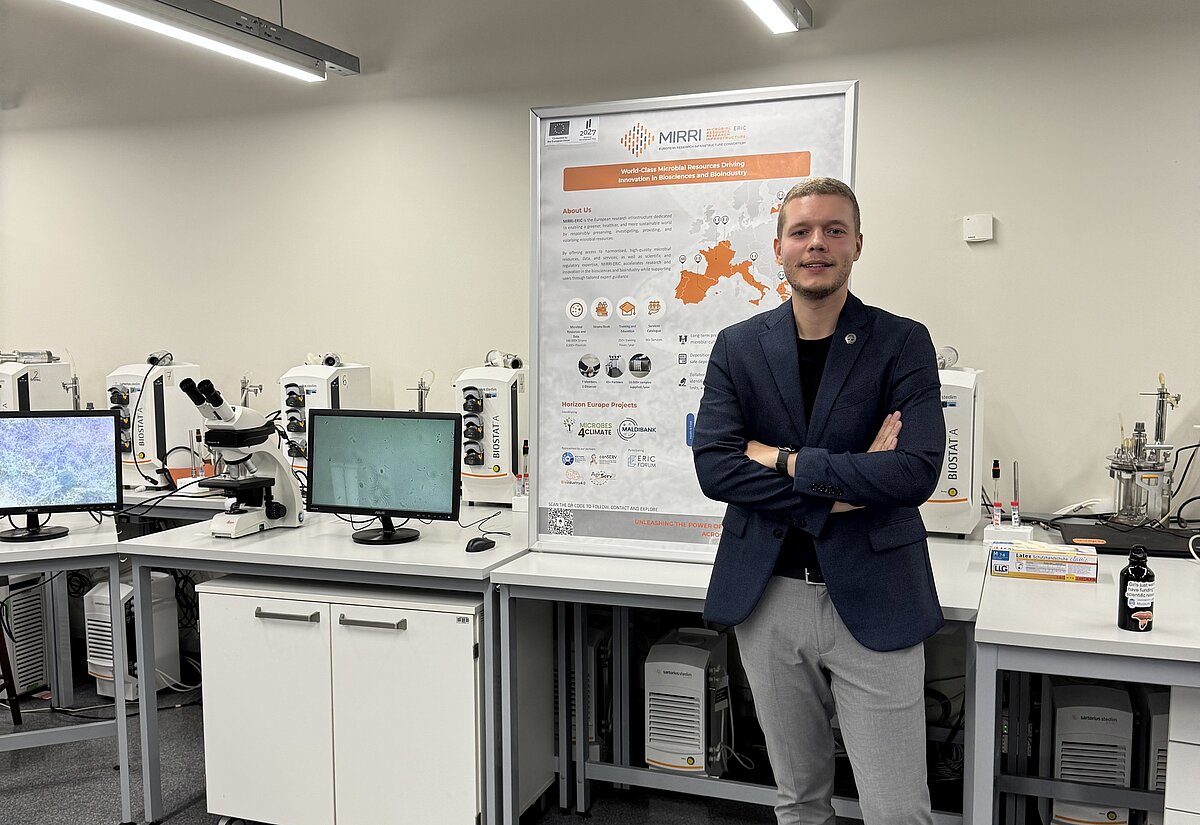
An information session on MIRRI-ERIC (Microbial Resource Research Infrastructure – European Research Infrastructure Consortium) was held during the event. Attendees learned about its operating principles, objectives, and the services offered to the scientific community, as well as how the infrastructure facilitates the preservation, accessibility, and utilization of microbial resources. Emphasis was also placed on the significance of Latvia’s participation and the benefits that this collaboration brings to local scientists and research institutions in the fields of biotechnology and biomedicine.
A separate activity focused on cultivable mushrooms—covering their biology, cultivation, and practical applications. Participants explored the characteristics of shiitake and oyster mushrooms and learned that a mushroom is not merely an above-ground fruiting body but an extensive mycelial network that can be utilized in food production, health promotion, and biotechnological processes.
The event provided an opportunity to speak with specialists, ask questions, and receive informational materials, encouraging a perspective that views microorganisms and mushrooms as vital resources for building a sustainable future.
The activities of the Latvian National Node of the Microbial Resource Research Infrastructure, as well as the organization of the event, are supported by the ERDF co-funded project No. 1.1.1.5/3/25/I/011 “University of Latvia and Institutes in the European Research Area—Excellence in Research and Collaboration.”