
 LU konference
Par mums
Latvijas Mikroorganismu kultūru kolekcija (LMKK) ir Latvijas Universitātes Medicīnas un dzīvības zinātņu fakultātes Mikrobioloģijas un biotehnoloģijas institūta struktūrvienība. LMKK ir lielākā mikrobioloģisko resursu krātuve Latvijā. Tās darbība ir vērsta uz bioloģiskās daudzveidības saglabāšanu ex situ, kā arī uz mikrobioloģijas un biotehnoloģijas jomu attīstību, kas Latvijai ir tradicionāli raksturīgas un perspektīvas.
Kolekcijā glabājas vairāk nekā 1 700 kultūru – baktērijas, raugi un micēlijsēnes. Lielākā daļa mikroorganismu ir izolēti Latvijā un ir unikāli paraugi, bieži vien vienīgie sava veida eksemplāri. Visi mikroorganismi tiek uzglabāti metaboliski neaktīvā stāvoklī šķidrajā slāpeklī, nodrošinot to ilgtermiņa dzīvotspēju un ģenētisko stabilitāti.
LMKK kolekcijas mikroorganismi tiek izmantoti pētniecības un izglītības vajadzībām Latvijas Universitātē un citās akadēmiskajās institūcijās, kā arī komerciāliem pasūtījumiem. LMKK aktīvi iesaistās Latvijas Universitātes studiju procesā – katru gadu vairāki studenti izstrādā bakalaura un maģistra darbus, izmantojot kolekcijas materiālus.
LMKK ir Pasaules kultūru kolekciju federācijas (WFCC), Eiropas kultūru kolekciju organizācijas (ECCO), Pasaules mikroorganismu datu centra (WDCM) un Eiropas Mikroorganismu resursu pētniecības infrastruktūru konsorcija (MIRRI-ERIC) dalībniece.
Turklāt LMKK ir MIRRI-ERIC Latvijas nacionālā mezgla koordinatore. Kā starptautiskā depozitārija iestāde saskaņā ar Budapeštas līgumu LMKK pieņem baktērijas, sēnes (tostarp raugus) un plazmīdas saturošas baktērijas patentēšanas vajadzībām, izņemot patogēnos mikroorganismus, kas pieder 3. un 4. bioloģiskās bīstamības grupai.
Services
Mikroorganismu kultūru izsniegšana:
28,46 EUR + PVN par kultūru;
Deponēšana
- Publiskai piekļuvei – bez maksas;
- Patentēšanai – 426,86 EUR + PVN par kultūru;
- Mikroorganismu konfidenciāla uzglabāšana, kur deponētājs saglabā visas īpašumtiesības (safe-deposit);
35,57 EUR + PVN par kultūru gadā;
Tīru mikroorganismu kultūru izolēšana, attīrīšana un raksturošana;
Konsultācijas klientiem.
Laboratorijas vadītāja
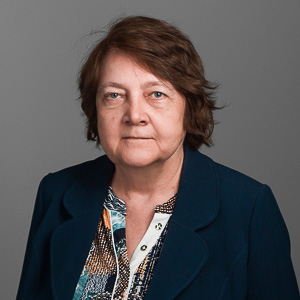
Asoc. Prof. Vizma Nikolajeva
vizma.nikolajeva@lu.lv

Pētnieks, lektors
PhD Māris Seņkovs
maris.senkovs@lu.lv
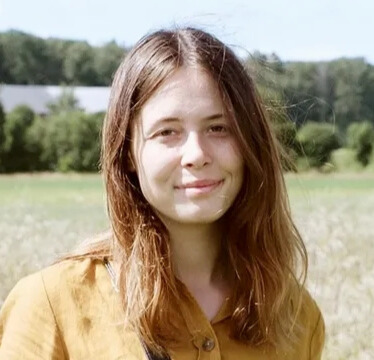
Biologs
Samanta Berena

Zinātniskais asistents
Dāvis Dūcis
davis.ducis@lu.lv
Aktuālās publikācijas
2026
Sustek-Sánchez F., Eelmets E., Nigul L., Kärblane K., Laasmaa M., Balode-Sausina M., Berzina S.A., Ducis D., Kaktina E., Jaškūne K., Rognli O.A., Rostoks N. and Sarmiento C. (2026) Isolation and transformation of perennial ryegrass (Lolium perenne L.) protoplasts for the in vivo assessment of guide RNAs editing efficiency. Front. Plant Sci. 16:1744085. doi:10.3389/fpls.2025.1744085
2025
Coppola A., Nikolajeva V., Lauritano C. 2025. Evaluation of the unexplored antimicrobial activity against human pathogens of two PUAs and Pheophorbide a from marine microalgae. Applied Sciences, 2025, 15, 13221. https://doi.org/10.3390/app152413221
Seņkovs M., Dubova L., Alsiņa I., Krīgere I., Lazdiņa D., Vendiņa V., Marcinkeviča S., Nikolajeva V. Composition of organic fertilizers containing microorganisms and their effect on soil microbiological activity and plant growth. Applied Biosciences, 2025, 4, 57. https://doi.org/10.3390/applbiosci4040057
Aznar, R., Mistou, M.Y., Rahi, P., Legras, J.L., Boroduske, A., Stefaniu, A., Lima, N., Karagouni, A.D., Perre, V.V.D. and Melo, A.M., 2025. MIRRI-ERIC's position on the recent evolution of the international code of nomenclature of prokaryotes. Systematic and Applied Microbiology, 48(2), p126587 https://doi.org/10.1016/j.syapm.2025.126587
Janceva S., Svarta A., Nikolajeva V., Zaharova N., Rieksts G., Andersone A. Forest logging residue valorization into valuable products according to circular bioeconomy. Forests, 2025, 16, 1418. https://doi.org/10.3390/f16091418
Mezulis M., Arbidans L., Nikolajeva V., Lauberts M., Grinfelds U., Klavins M. Environmentally friendly extraction of bioactive compounds from spruce and pine needles to obtain extracts with antioxidant and antimicrobial activity. Environmental and Climate Technologies, 29, 184-200. https://doi.org/10.2478/rtuect-2025-0013
Borska E., Kviesis J., Ramata-Stunda A., Nikolajeva V., Ansone-Bērtiņa L., Borodušķis M., Kļaviņš M. Bioactive lipids and allelopathic potential of the invasive plant Heracleum sosnowskyi: insights into its fatty acid composition, antimicrobial and cytotoxic effects. Frontiers in Pharmacology. 16, p.1-15. https://doi.org/10.3389/fphar.2025.1582694
2024
Ņečajeva J., Borodušķe A., Nikolajeva V., Seņkovs M., Fiļipovičs M., Jakobija I. et al. Characterisation and dynamics of the fungal communities of Avena fatua and Echinochloa crus-galli seeds in soil seed bank. Weed Research, 64(4), 310–320. https://doi.org/10.1111/wre.12651
Janceva S., Andersone A., Zaharova N., Nikolajeva V., Svarta A. Soil amendments based on forest logging residues on dill (Anethum graveolens l.) productivity and composition. Environment. Technology. Resources. Proceedings of the 15th International Scientific and Practical Conference. Volume 1, 177-181. https://doi.org/10.17770/etr2024vol1.7983
Janceva S., Andersone A., Lauberte L., Zaharova N., Nikolajeva V. Fruit shrubs twigs as a source of valuable oligomeric polyphenolix compounds with antibacterial and antifungal potential. Environment. Technology. Resources. Proceedings of the 15th International Scientific and Practical Conference. Volume 1, 173-176. https://doi.org/10.17770/etr2024vol1.7982
Andersone A., Janceva S., Zaharova N., Nikolajeva V., Jurkjane V. Aronia melanocarpa (black chokeberry) branches biomass as a source of valuable biologically active compounds with antioxidant and antimicrobial potential. Environment. Technology. Resources. Proceedings of the 15th International Scientific and Practical Conference. Volume 1, 34-38. https://doi.org/10.17770/etr2024vol1.7981
Zommere A., Klavins L., Nikolajeva V., Kukela A., Kaipanen K., Korpinen R., Klavins M. Extraction and investigation of the lipophilic fraction from Norway spruce (Picea abies) and Scots pine (Pinus sylvestris) forestry side-stream biomass. Wood Sci Technol 58, 1259–1284. https://doi.org/10.1007/s00226-024-01566-x
Bolmanis E., Grigs O., Elīna Didrihsone, Senkovs M., Nikolajeva V. Pilot-scale production of Bacillus subtilis MSCL 897 spore biomass and antifungal secondary metabolites in a low-cost medium. Biotechnol Lett 46, 355–371 . https://doi.org/10.1007/s10529-024-03481-4
2023
Kurpnieks O., Senkovs M., Rimkus A. Challenges of SSF process for pea and wheat bran valorization using Trichoderma spp. for biocontrol agent prodution. Environment. Technology. Resources. Proceedings of the 14th International Scientific and Practical Conference. Volume 1, 93-100. https://doi.org/10.17770/etr2023vol1.7306
Pastare L., Žogota M., Kienkas L., Boroduskis M., Ramata-Stunda A., Reihmane D., Senkovs M., Skudrins G., Nakurte I. Exploring the Potential of Supercritical Fluid Extraction of Matricaria chamomilla White Ray Florets as a Source of Bioactive (Cosmetic) Ingredients. Antioxidants, 12(5), 1092; https://doi.org/10.3390/antiox12051092
Rimkus A., Namina A., Dzierkale M.T., Grigs O., Senkovs M., Larsson S. Impact of Growth Conditions on the Viability of Trichoderma asperellum during Storage. Microorganisms, 11(4), 1084; https://doi.org/10.3390/microorganisms11041084
Andersone A., Janceva S., Petersone L., Krasilnikova J, Zaharova N., Nikolajeva V., Rieksts G., Telysheva G. Lignocellulosic Waste Compounds for Pancreatic Lipase Inhibition: Preliminary Extraction by Freon, Obtaining of Proanthocyanidins and Testing on Lipase Activity. Metabolites, 13(8), 922; https://doi.org/10.3390/metabo13080922
Andersone A., Janceva S., Petersone L., Skadiņš I., Nikolajeva V., Logviss K., Zaharova N., Rieksts G., Telysheva G. A comparative analysis of the proanthocyanidins from fruit and non-fruit trees and shrubs of Northern Europe: Chemical characteristics and biological activity. Sustainable Chemistry and Pharmacy, 36, 101266; https://doi.org/10.1016/j.scp.2023.101266
Aunina K., Ramata-Stunda A., Kovrlija I., Tračuma E., Merijs-Meri R., Nikolajeva V., Loca D. Exploring the Interplay of Antimicrobial Properties and Cellular Response in Physically Crosslinked Hyaluronic Acid/ε-Polylysine Hydrogels. Polymers, 15(8), 1915; https://doi.org/10.3390/polym15081915
Borodušķe A., Ķibilds J., Fridmanis D, Gudra D., Ustinova M., Senkovs M., Nikolajeva V. Does peptide-nucleic acid (PNA) clamping of host plant DNA benefit ITS1 amplicon-based characterization of the fungal endophyte community? Fungal Ecology, 61, 101181 https://doi.org/10.1016/j.funeco.2022.101181
Nakurte I., Žogota M., Pastare L., Kienkas L., Senkovs M., Boroduskis M., Ramata-Stunda A. Valorization of Bioactive Compounds from By-Products of Matricaria recutita White Ray Florets. Plants, 12(2):396 DOI: 10.3390/plants12020396
Šleinus D., Sinka M., Korjakins A., Obuka V., Nikolajeva V., Brencis R., Savicka E. Properties of Sound Absorption Composite Materials Developed Using Flax Fiber, Sphagnum Moss, Vermiculite, and Sapropel. Materials, 16(3), 1060; https://doi.org/10.3390/ma16031060
Andersone A., Janceva S., Petersone L., Ramata-Stunda A., Nikolajeva V., Zaharova N., Rieksts G., Telysheva G. Anti-Inflammatory, Anti-Bacterial, and Anti-Fungal Activity of Oligomeric Proanthocyanidins and Extracts Obtained from Lignocellulosic Agricultural Waste. Molecules 2023, 28(2), 863; https://doi.org/10.3390/molecules28020863
Ņečajeva J., Borodušķe A., Nikolajeva V., Senkovs M. Epiphytic and Endophytic Fungi Colonizing Seeds of Two Poaceae Weed Species and Fusarium spp. Seed Degradation Potential In Vi tro. Microorganisms, 11(1), 184; https://doi.org/10.3390/microorganisms11010184
Ramkumar N., Plantus K., Ozola M., Mishnev A., Nikolajeva V., Senkovs M., Ošeka M, Veliks J. Photoredox-Catalyzed Direct C-H Monofluoromethylation of Heteroarenes. Diversity, 15(1), 8; https://doi.org/10.3390/d15010008
Projekti

LMKK ir iesaistīts ES Horizon-INFRA-2024-TECH-01 projektā "MALDIBANK: Multi-domain Open MALDI Spectra Archive for Identification of Microorganisms" kopā ar MIRRI-ERIC partneriem.


LMKK sadarbībā ar Lavijas Biomedicīnas pētijumu un studiju centru veic Latvijas Zinātņu padomes projektu “Genomikā un transkriptomikā balstīta maz raksturotu Streptomyces spp. celmu antimikrobiālo mehānismu kombinēšana antagonistisku sinkomu veidošanai pret ošu kalšanu un ozolu akūto kalšanu izraisošiem patogēniem” (lzp-2024/1-109).
LMKK iesaistās ERAF līdzfinansētā projekta Nr. 1.1.1.5/3/25/I/011 “Latvijas Universitāte un institūti Eiropas pētniecības telpā – izcilība pētniecībā un sadarbībā” apakšprojekta izpildē “MIRRI-ERIC Latvijas nacionālais partnerības plāns 2025.-2029.gadam”.
Iepriekšējie projekti


“Inovatīvas pretiekaisuma un antipatogēnas sistēmas, kuru pamatā ir proantocianidīni, kas izolēti no augļu krūmu lauksaimniecības lignocelulozes atkritumiem” (lzp-2022/1-0599).
Kontaktinformācija
Latvijas mikroorganismu kultūru kolekcija
Latvijas Universitāte, Medicīnas un dzīvības zinātņu fakultāte
Mikrobioloģijas un biotehnoloģiju institūts
Jelgavas iela 1 Rīga, LV-1004, Latvija
Telefons: +371-67033925
E-pasts: collect@edu.lu.lv